From Business Jet to Spy Plane: How a Civilian Jet Design Nearly Became a Military Surveillance Platform
Among civilian aircraft, business jets have historically exhibited some of the most impressive performance. Highly efficient, low-drag airframes and vast fuel capacities enable ranges exceeding 7,000 nautical miles (12,964 km), and many can approach the speed of sound while reaching altitudes exceeding 50,000 feet (15,240 m). But while most manufacturers focus on moving passengers or conducting electronic surveillance within that envelope, German manufacturer Grob proposed taking things much further.
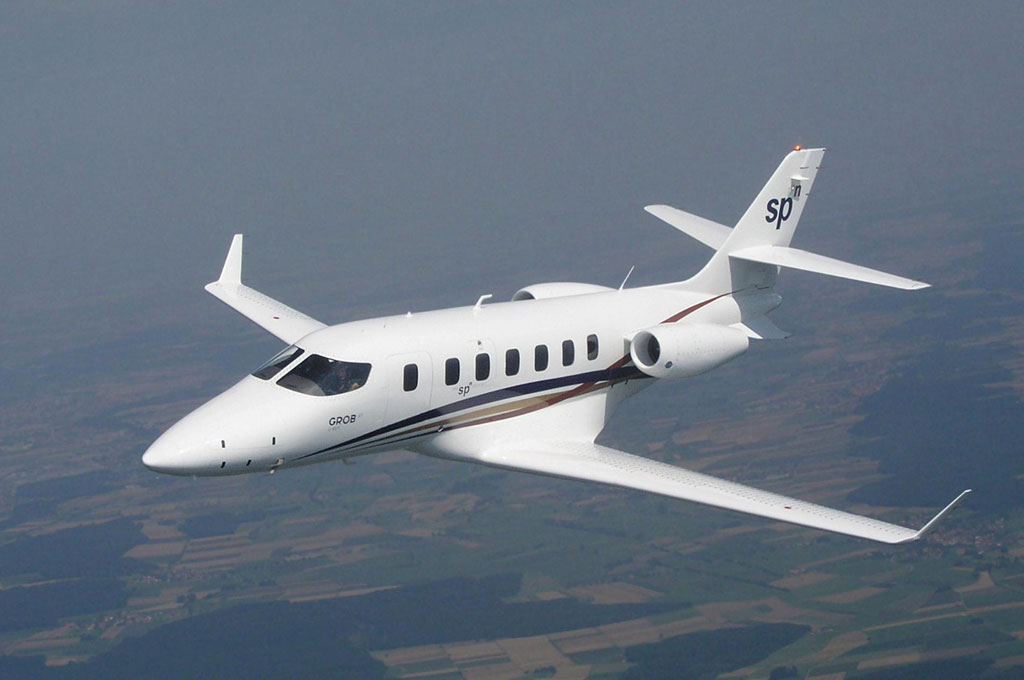
Established in 1971, Grob Aerospace initially manufactured small, two-seat gliders and motor gliders. They later moved on to conventional aircraft and, in the 1980s, developed two uniquely capable high-altitude research aircraft capable of reaching nearly 80,000 feet (24,384 m). When the company attempted to enter the business jet segment by building four pre-production examples of the G180 light jet, it didn’t take long for a high-altitude jet concept to emerge.
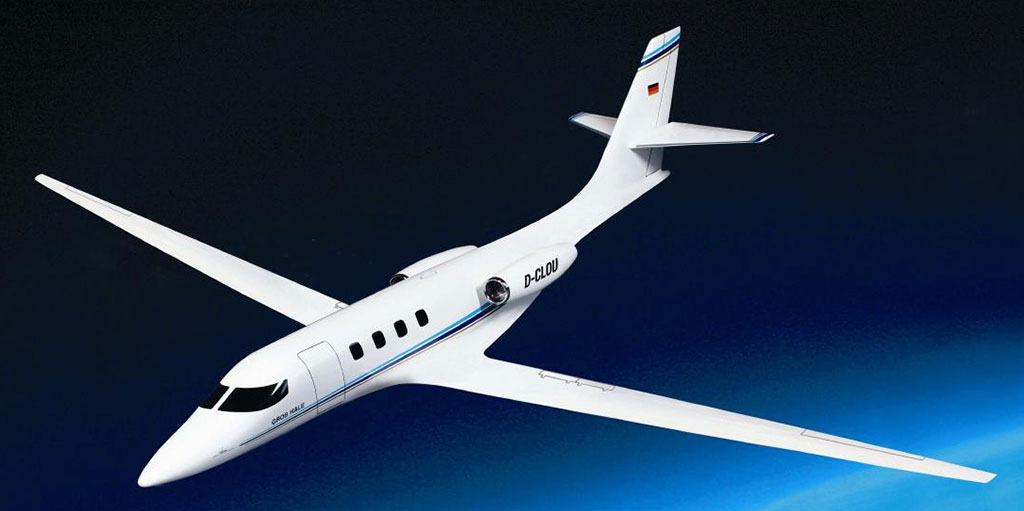
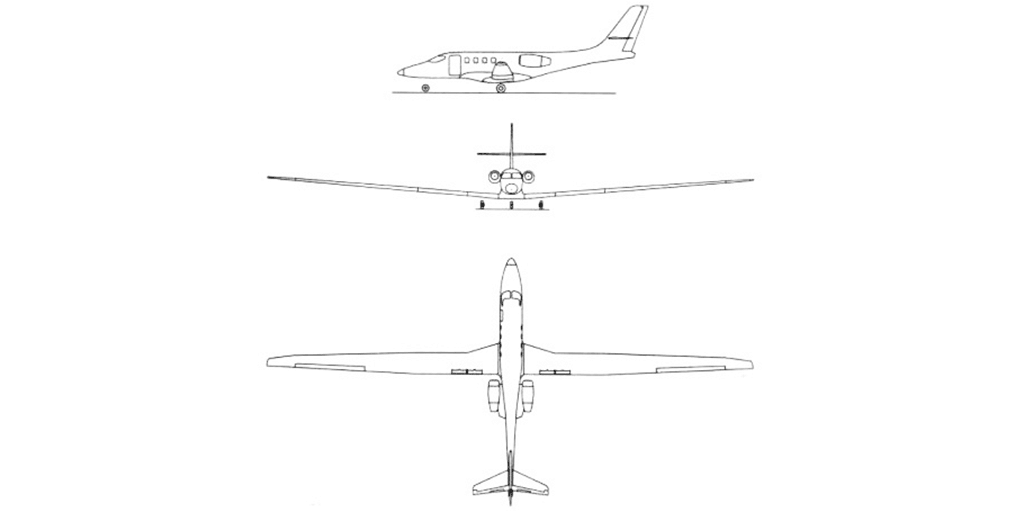
Designated the G600, the concept was designed specifically for High Altitude, Long Endurance (HALE) surveillance missions. Using the standard, 6-8 passenger G180 as a baseline, Grob more than doubled the wingspan from 49 feet (15m) to 117 feet (35.6m), essentially designing a completely new wing optimized for high-altitude operation.
As the G600 would have used the existing G180 fuselage and Williams FJ44 turbofan engines, the wing was the primary factor in attaining higher altitudes, and it did so effectively. While the standard G180 was only capable of flight to 41,000 feet (12,497 m), the G600 was projected to operate as high as 65,000 feet (19,812 m).
Perhaps even more impressive than the altitude capability was the range. Due to lower fuel consumption at high altitudes and the increased fuel capacity of the larger wing, the G600 was projected to have a range of 5,540 nm (10,250 km) and an endurance of over 17 hours. A longer-range version was also explored that would have extended the total range to a stunning 11,340 nm (21,000 km) and provided an endurance of 33 hours.
As such figures stretch the limits of flight crews, Grob also explored an unmanned version of the jet. The company positioned it as a more economical alternative to the Northrop Grumman RQ-4B Global Hawk, touting significantly lower acquisition and operating costs.
Ultimately, the Grob jet would never progress beyond the basic G180 variant. The program was suspended indefinitely when Grob Aerospace filed for insolvency in November 2008. And while India’s Tata Advanced Systems Limited (TASL) formally acquired the intellectual property rights for the platform in 2020, no further development has been made public, and the high-altitude versions remain conceptual.
Topics Related To: AVIATION HISTORY

The Spacemobile: NASA’s Secret Weapon for Winning America’s Hearts
The Goodyear Gizmo: A 290-Pound Helicopter, Inflatable Rotors, and Convertiplane Dreams