The Goodyear Gizmo: A 290-Pound Helicopter, Inflatable Rotors, and Convertiplane Dreams
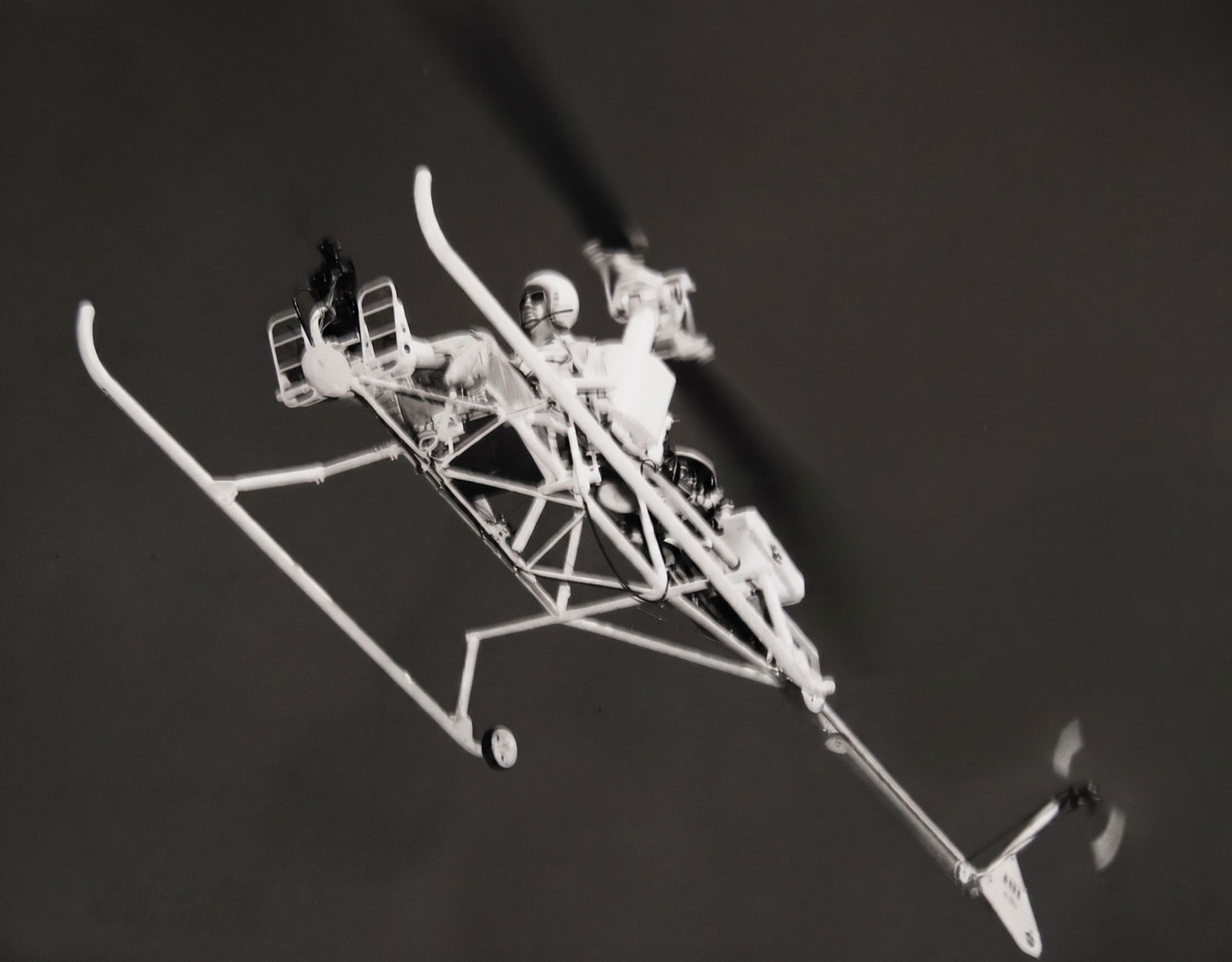
Any mention of Goodyear invariably brings to mind tire production, but in the 1950s, it branched out into experimental inflatable aircraft and an ultralight helicopter slated to fly with inflatable rotor blades. The tiny helicopter was called the GA-400R “Gizmo,” and it was one of the last aircraft the company ever produced.
The path from tire production to aircraft manufacturing developed over decades. As early as 1918, the company began manufacturing patrol airships, harnessing its expertise in rubberized fabric to construct the large envelopes that contained the helium necessary for flight. Later, in WWII, the Goodyear Aircraft Corporation manufactured complete aircraft under license, including the Corsair fighter and some Grumman Duck amphibians.
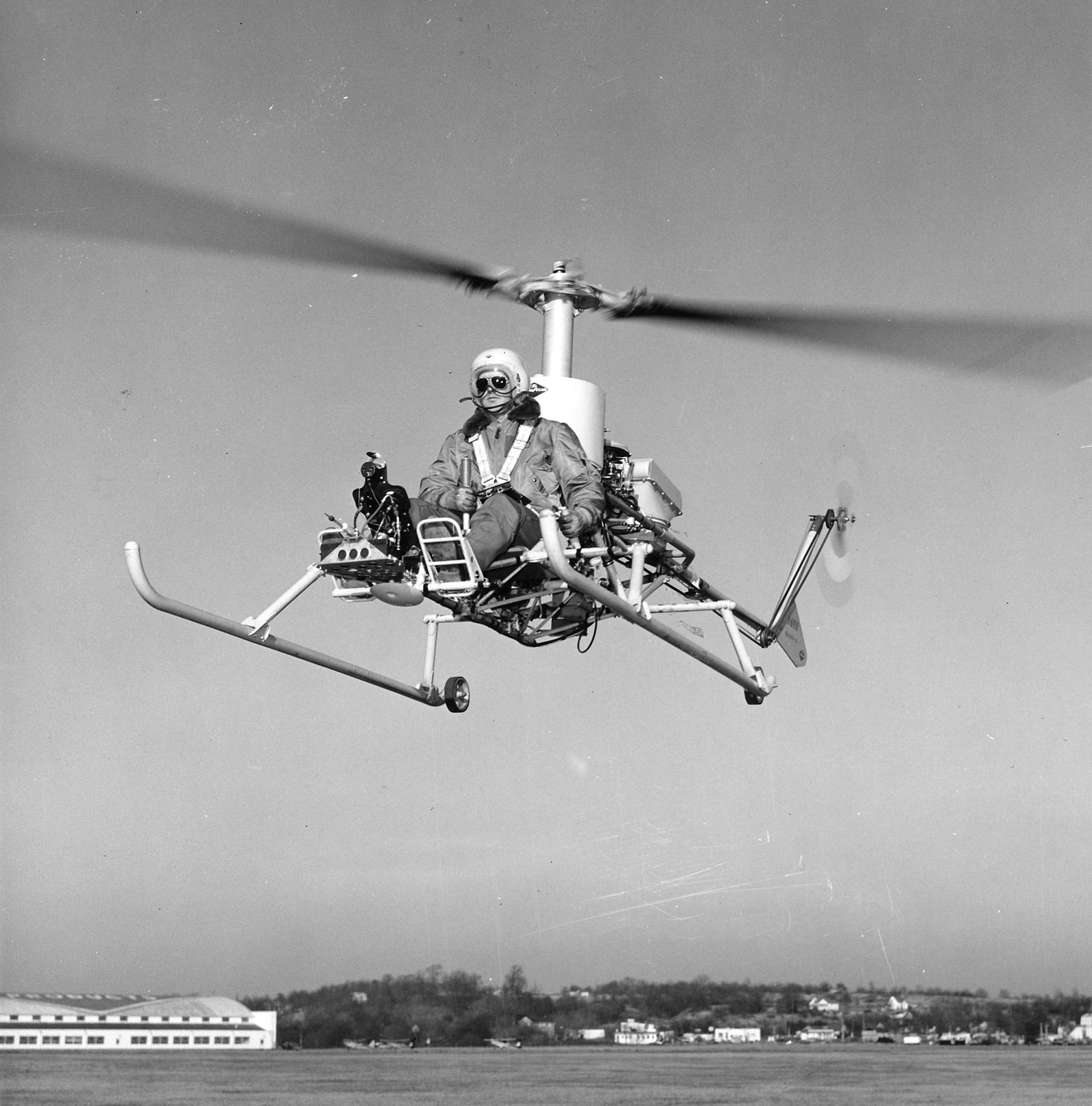
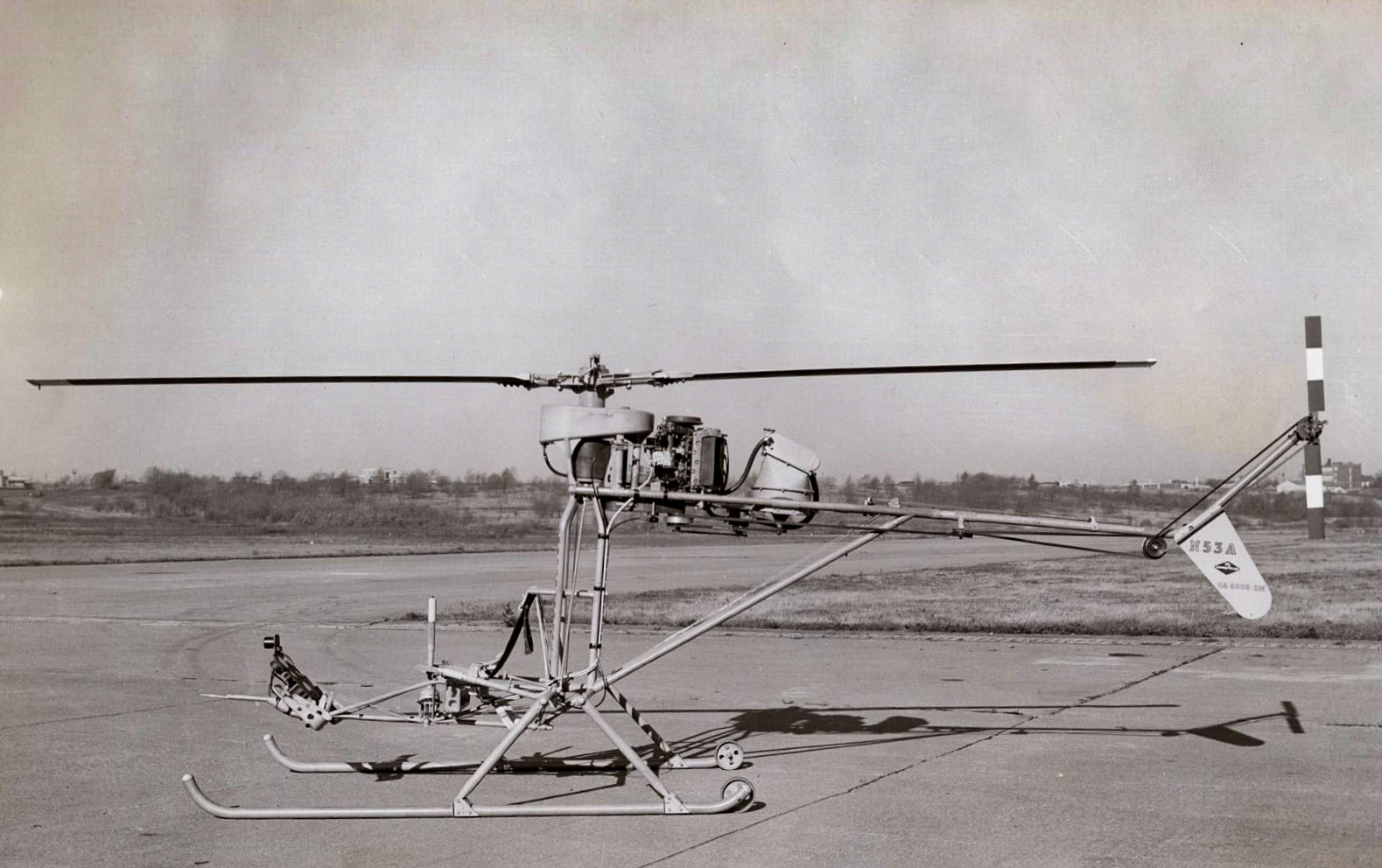
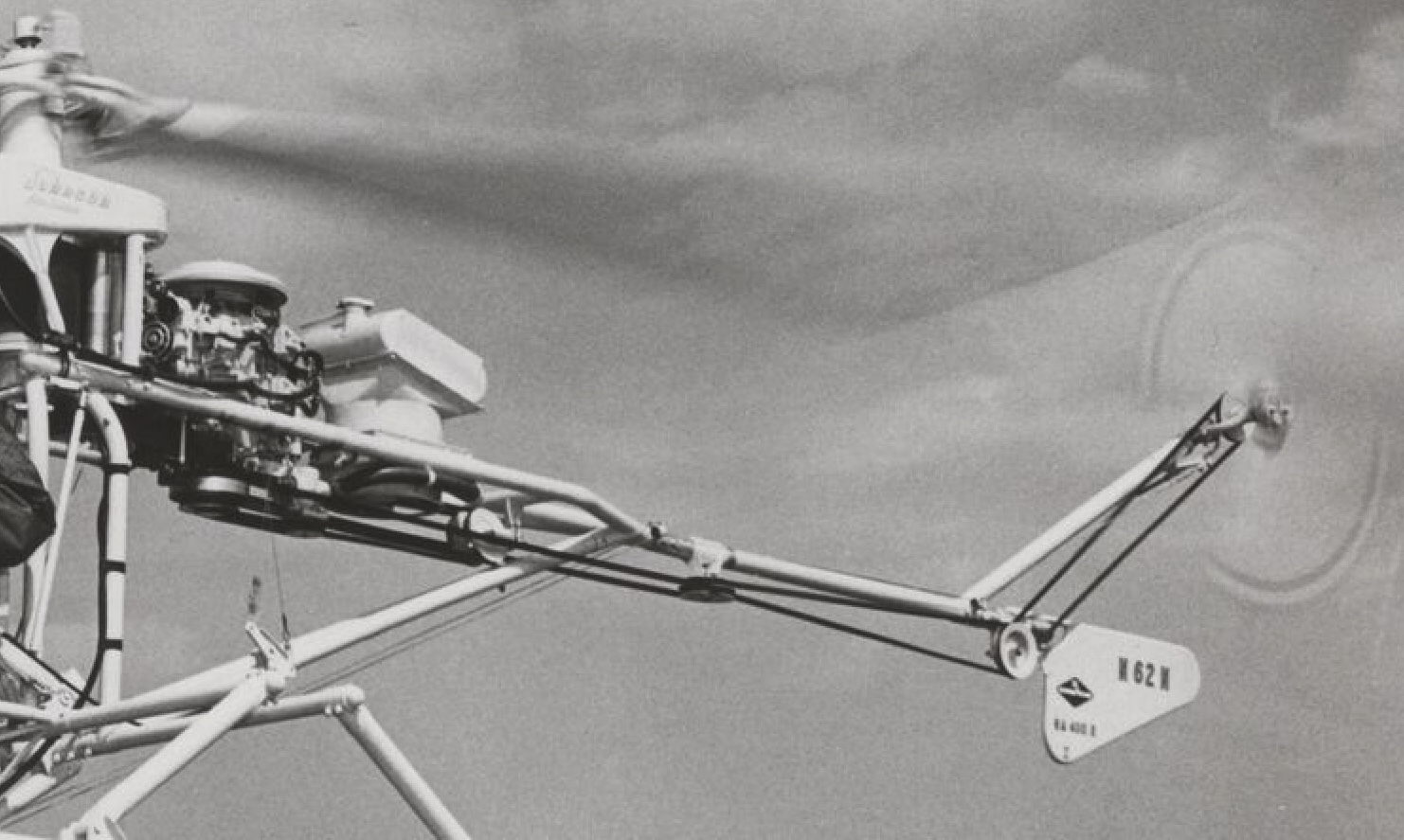
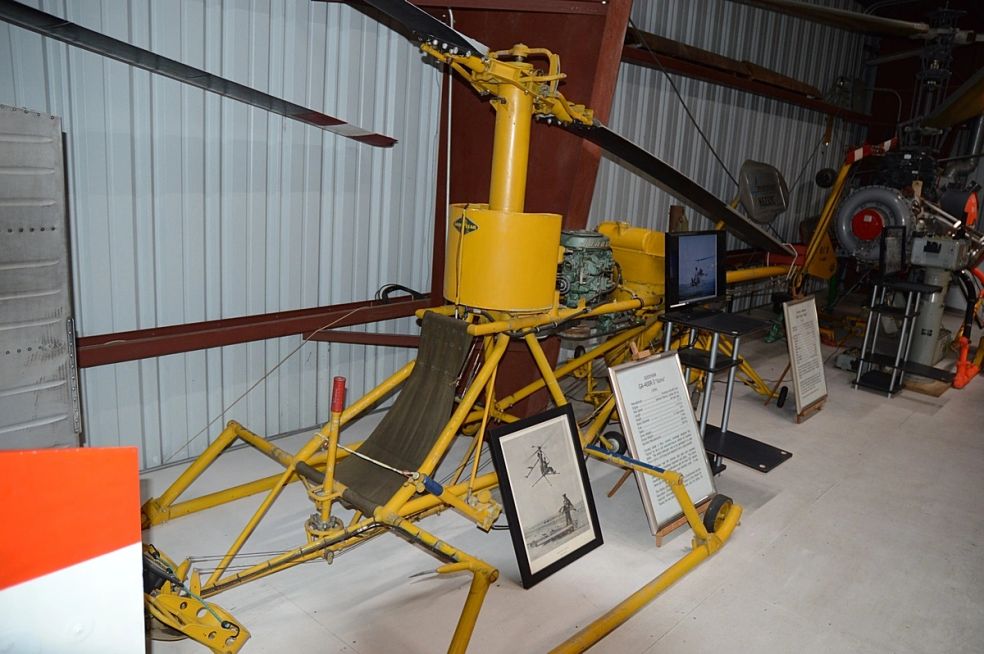
In the post-war years, after manufacturing over 4,000 Corsairs, the company began experimenting with unique heavier-than-air aircraft, and the first was the diminutive Goodyear GA-400R Gizmo. Just 21 feet (6.5 m) long and powered by a commercially available, 38-horsepower, water-cooled, 2-cycle boat engine from Johnson Outboard.
Initially conceived by a company engineer in March of 1954, the concept advanced to reality in just 10 weeks, with the first flight taking place on May 9, 1954, at the company’s airport (now balloonport) on Wingfoot Lake in Akron, Ohio.
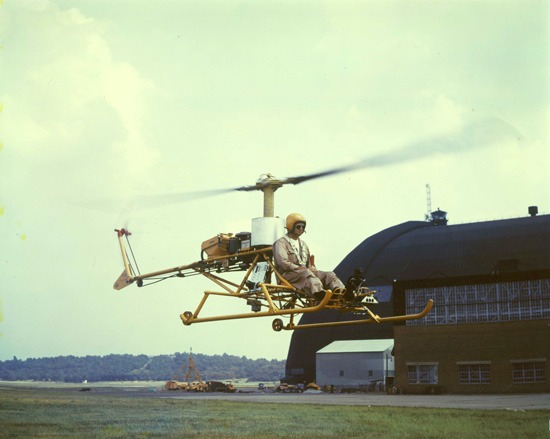
Capable of carrying a single occupant and 4 gallons (15.2 liters) of fuel, the Gizmo was publicly advertised as a military solution for courier/liaison and even tactical duties. Marketing material touted its 245-pound (111 kg) empty weight and the ability to be packed into a 21” x 22” x 152” (0.53 m x 0.56 m x 3.86 m) box. They also touted its 55 mph (89 km/h) cruise speed and estimated service ceiling of 12,000 feet (3,658m). Given its 176-pound (80 kg) payload and 50-mile (80 km) range, however, it’s difficult to imagine how useful it would have been in actual military operations.
It’s possible Goodyear eventually arrived at the same conclusion because, aside from an appearance in an employee recruitment advertisement, little was said about the Gizmo for over two years. Then, in November 1956, it once again emerged in the press, this time touted as a future testbed for experimental inflatable fabric rotor blades.
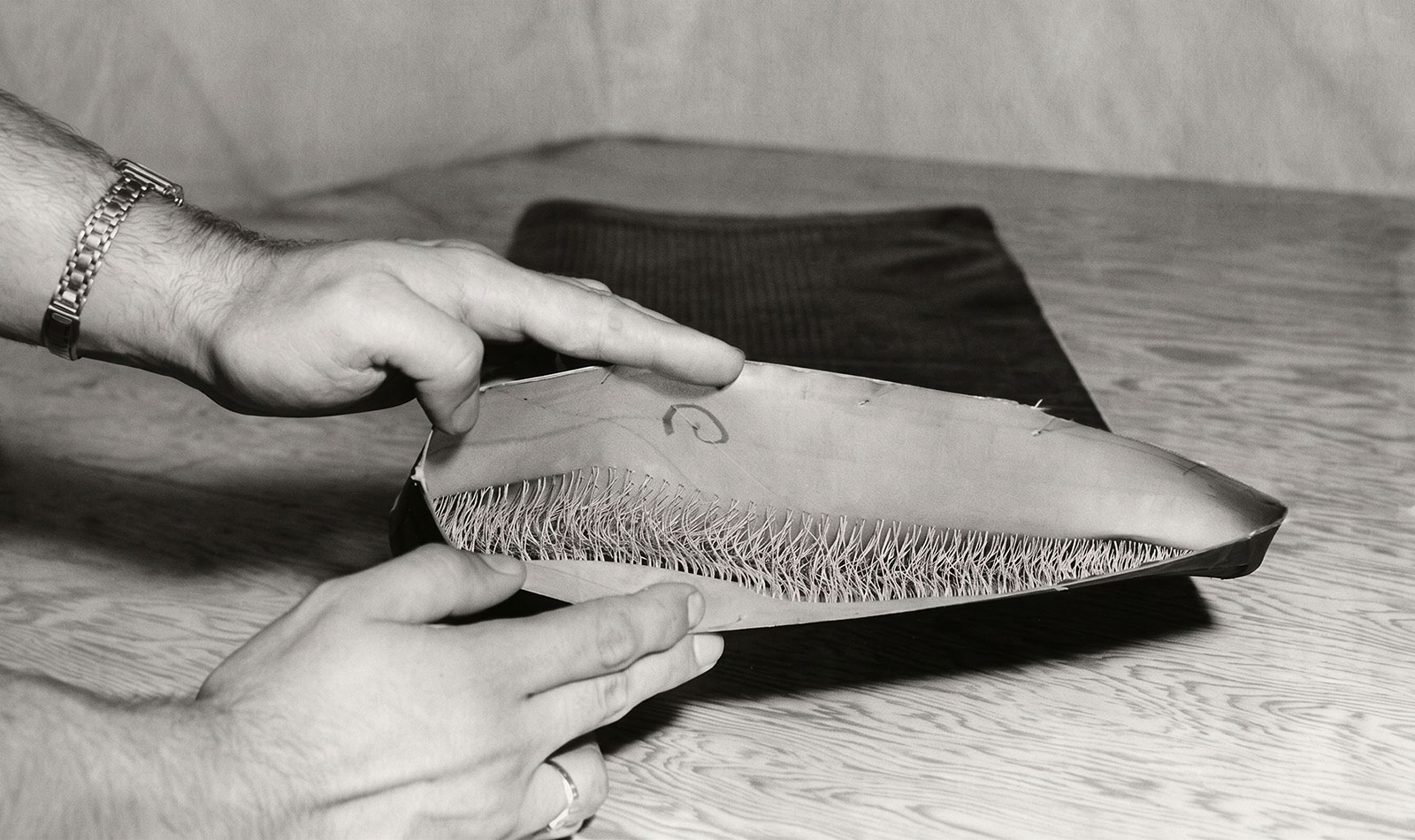
The inflatable rotor blades were explored in response to a US Navy Bureau of Aeronautics contract, in which the Navy was researching “convertiplanes,” or aircraft that could utilize both fixed and rotary wings to achieve both high speed and vertical takeoff and landing.
In response to this contract, Goodyear developed an inflatable rotor blade design made from layers of high-strength cloth called “Airmat.” It was woven with “drop threads” that interconnect the layers to form the airfoil shape. The blades resisted bending through surface tension introduced by the inflation pressure and the tension applied by centrifugal forces during rotation. A small accessory compressor could be used to retain shape in the event of a blade puncture, and should a blade bend under high vertical forces, it would revert to its original shape when the forces are removed.
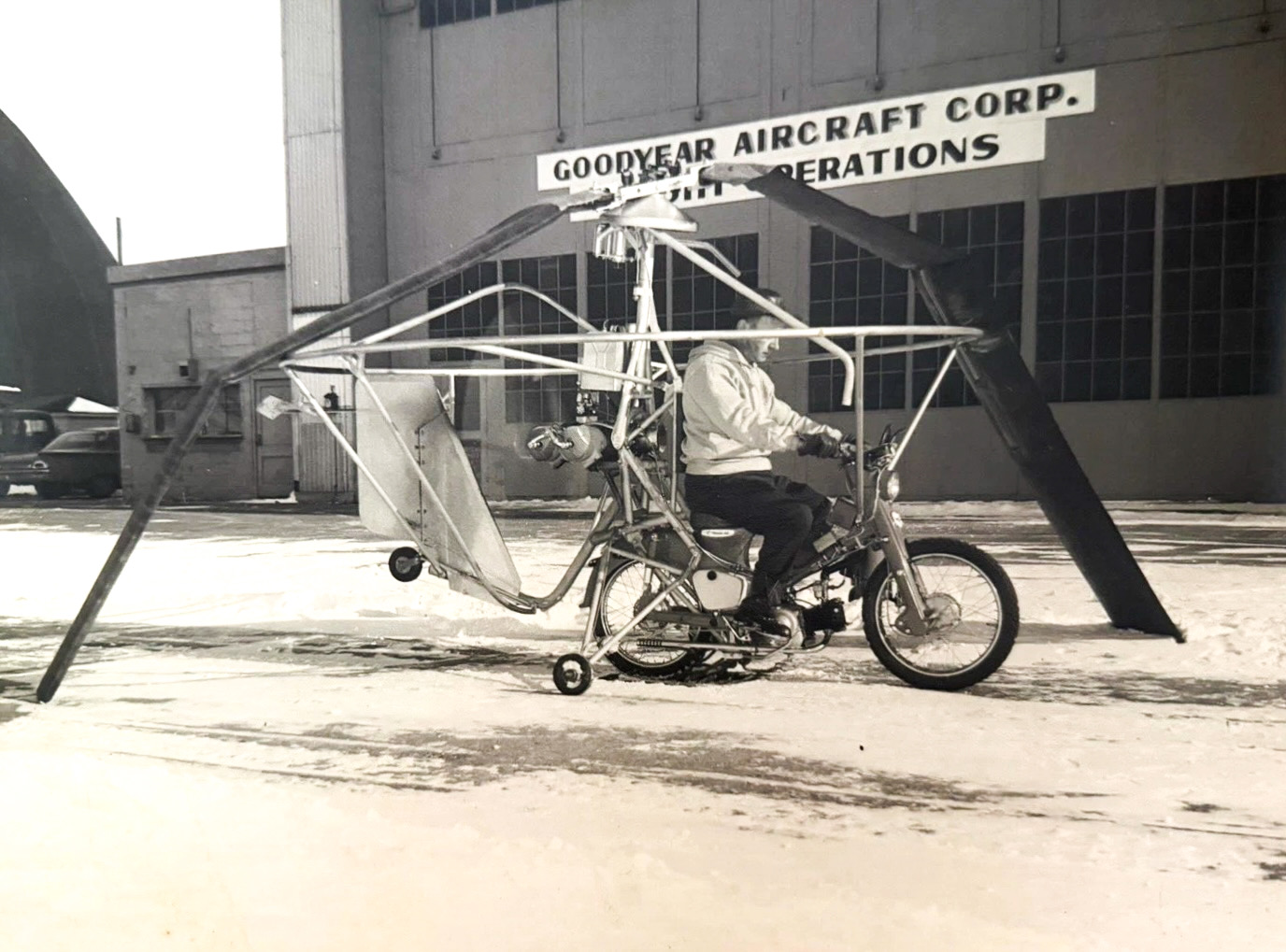
As part of the Airmat testing, Goodyear modified a 90cc Suzuki moped as a testbed to evaluate the behavior of the rotor blades. It utilized a chainsaw engine to drive a pusher propeller, leaving the overhead rotor blades unpowered, like an autogiro. A tail provided some directional control, and an aluminum ring protected the operator from the spinning rotor blades when centrifugal force decayed and the blades lost structural rigidity, causing them to flop downward. There is no evidence that this testbed ever took flight.
While the initial samples of Airmat blades were relatively small and scaled for the Gizmo, the longer-term goal was to adapt the technology to far larger aircraft. A January 1972 technical report from a Sikorsky Aircraft engineer for the USAF Flight Dynamics Laboratory at Wright-Patterson Air Force Base in Dayton, Ohio outlined the concept.
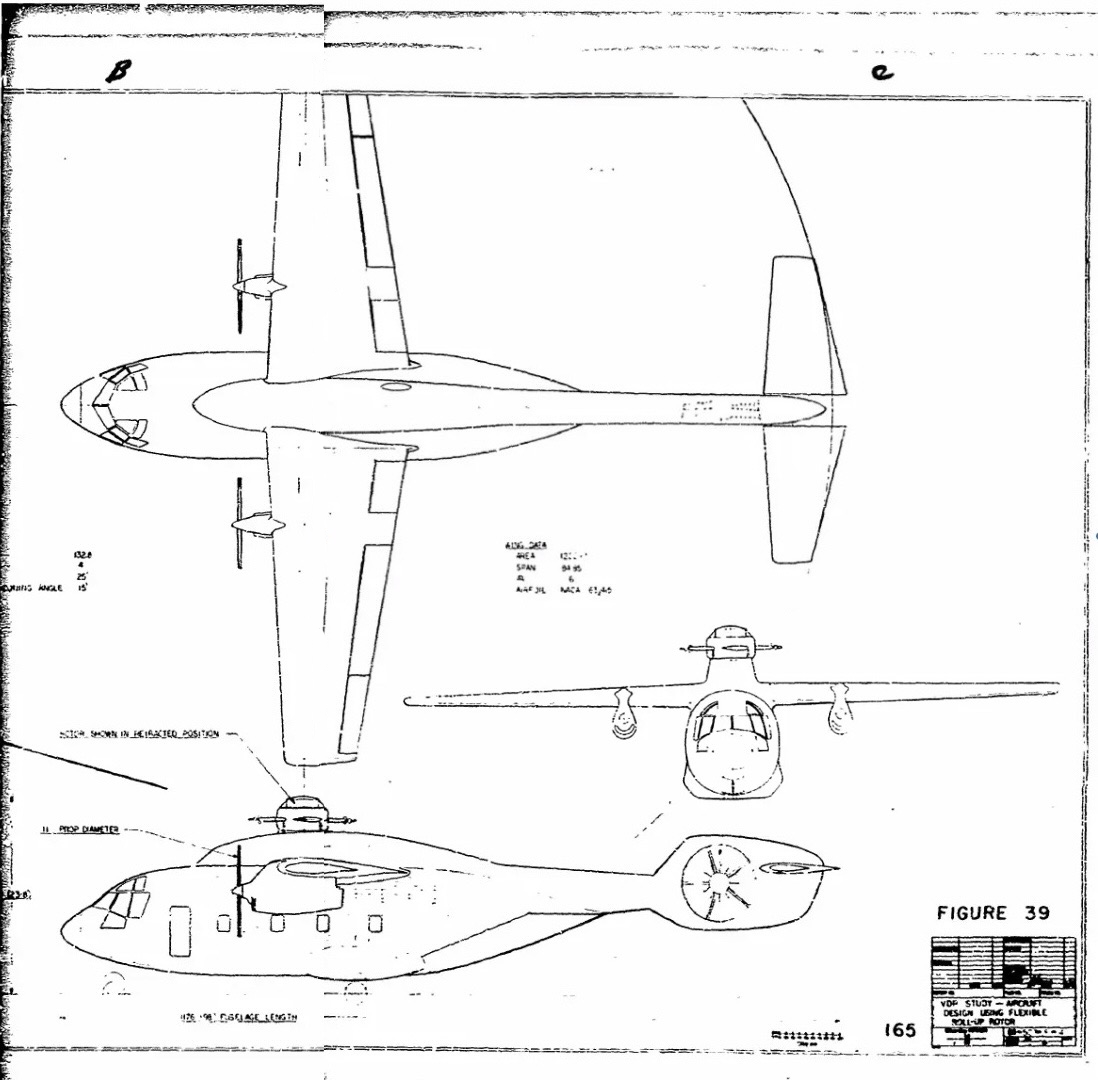
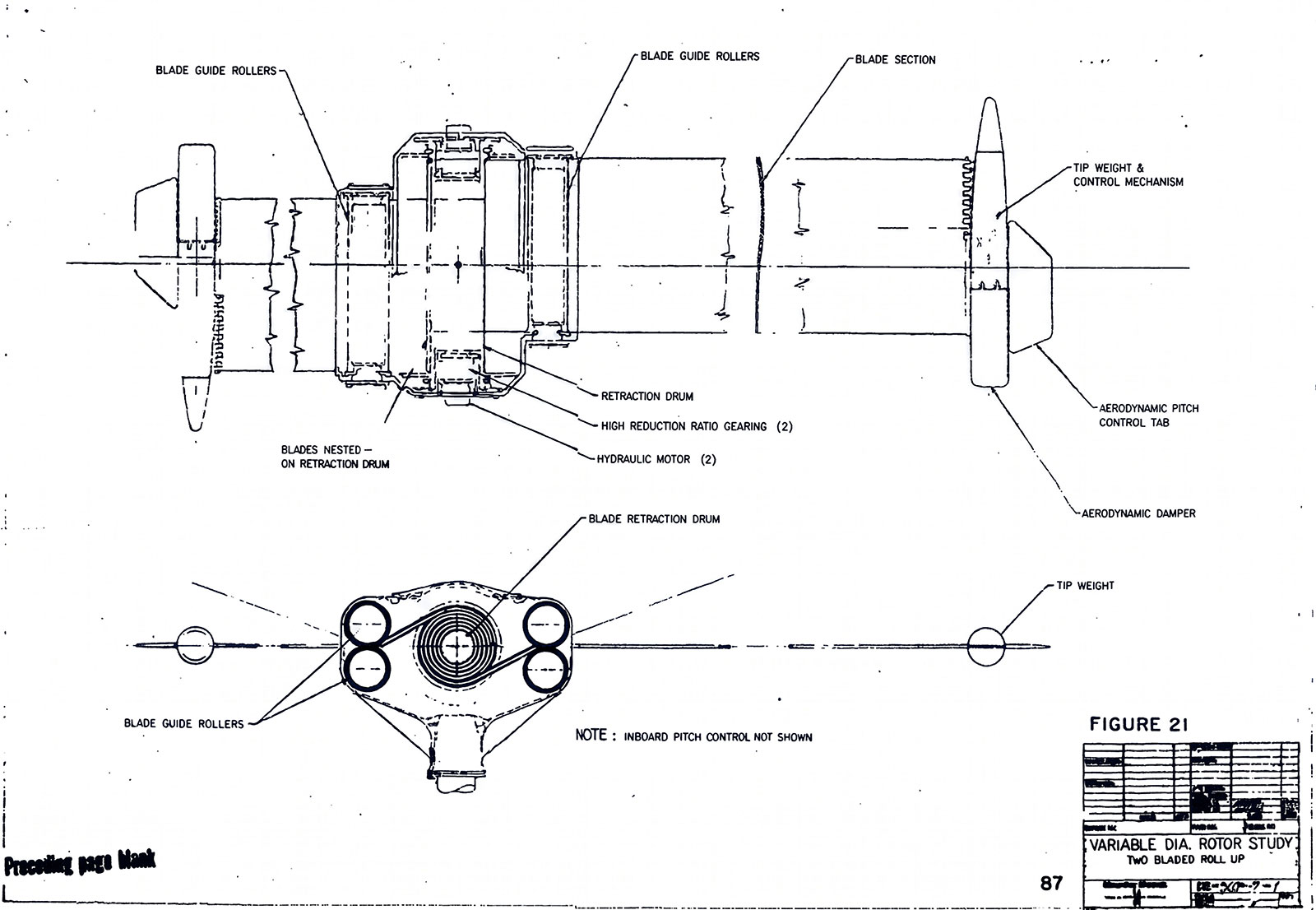
The report includes diagrams showing how a large convertiplane could utilize Goodyear’s Airmat blades, taking off vertically with the rotor blades and then switching to conventional flight with the fixed wings for cruise. As the speed increased, the rotor system would retract the rotor blades into the rotor head, rolling them onto an internal spool like a car’s seat belt and stowing them entirely for efficient high-speed flight. At the end of the flight, the rotor blades would be fed out, inflated, spun up, and then utilized for a vertical, helicopter-like landing.
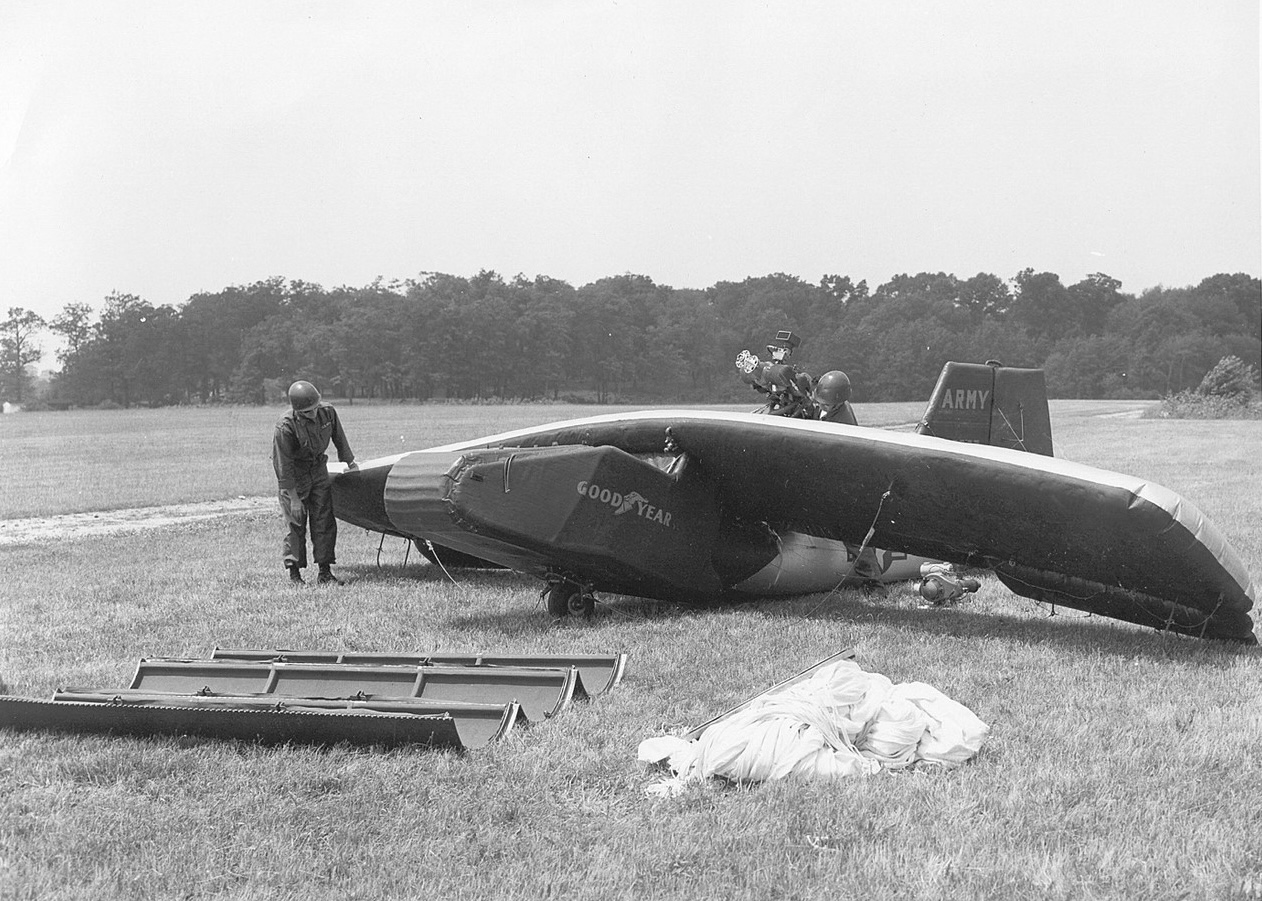
Despite the great efforts to research and develop the concept, it would never come to fruition. The large convertiplane was never manufactured or flown, and no evidence exists showing the inflatable Airmat rotor blades were ever used in flight aboard the Gizmo. The company did, however, develop, build, and fly twelve “Inflatoplanes” in the late 1950s and early 1960s to demonstrate how their inflatable material could be utilized for packable fixed-wing aircraft. Among other uses, the company proposed that the Inflatoplanes could be dropped behind enemy lines to serve as rescue planes for stranded soldiers as a means of evacuation.
The Gizmo, however, was retired from use entirely, both as a competitor for military contracts as well as a demonstrator for Airmat technology. Fortunately, it was preserved, first being donated to the Experimental Aircraft Association Museum in Oshkosh, Wisconsin, and later transferred to the Classic Rotors Museum in Ramona, California, where it remains today.
While the Gizmo never achieved the original goal of winning a military contract or its secondary goal of serving as a testbed for inflatable rotor blades, it nevertheless showcases the hard work and creativity of Goodyear’s engineers over the years, serving as an example of engineering ambition unrestrained by conventional thinking.
Topics Related To: AVIATION HISTORY
The Spacemobile: NASA’s Secret Weapon for Winning America’s Hearts
The McDonnell XP-67 “Moonbat” Represented Ambition Outpacing Engineering
From Business Jet to Spy Plane: How a Civilian Jet Design Nearly Became a Military Surveillance Platform

Northrop HL-10 Lifting Body Aircraft