The Spacemobile: NASA’s Secret Weapon for Winning America’s Hearts
In the 1960s, the space race was in full swing, and while Apollo astronauts were undergoing intensive training and engineers were wearing their slide rules out from constant use, another equally important mission was underway – securing funding and public support.
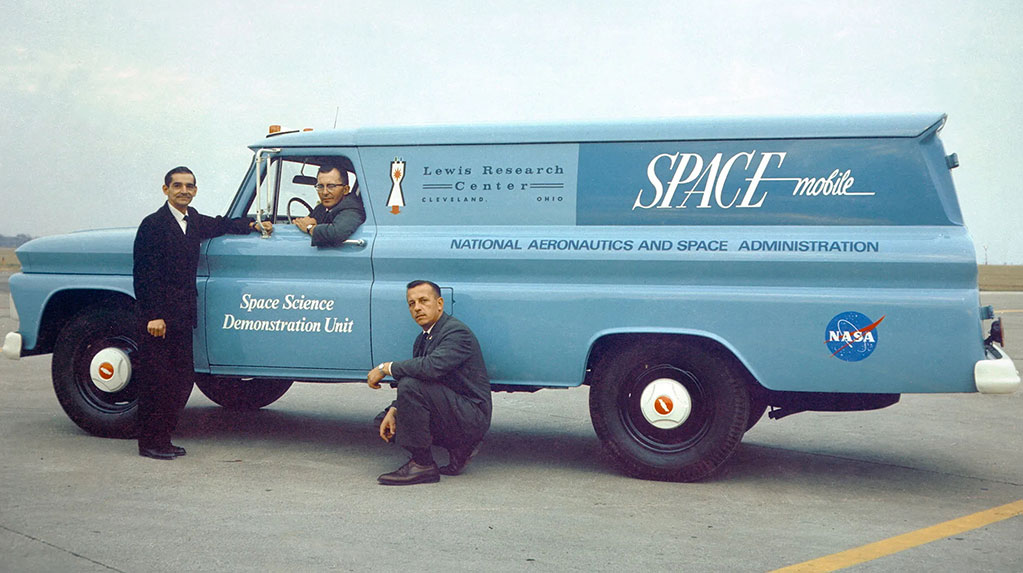
As it happened, an existing solution was already in place prior to the Congressional scrutiny that would threaten the Apollo program later in the decade – Spacemobiles.
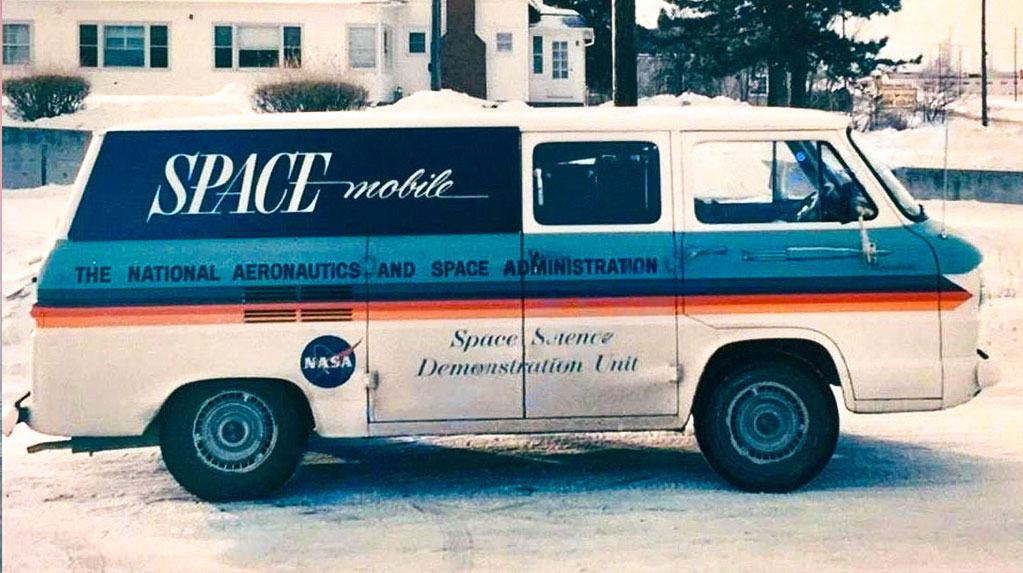
Initially tasked with public outreach and education through visits to schools and community groups, NASA’s fleet of “Space Science Demonstration Units,” or Spacemobiles, traveled throughout the country from the Lewis Research Center in Cleveland, Ohio as well as the Manned Spacecraft Center in Houston, Texas and the Goddard Space Flight Center near Washington, DC. They carried exhibits and models, and featured dedicated speakers who introduced space science to various audiences. The initiative was part of NASA’s founding legislation that explicitly made public education a core mission.
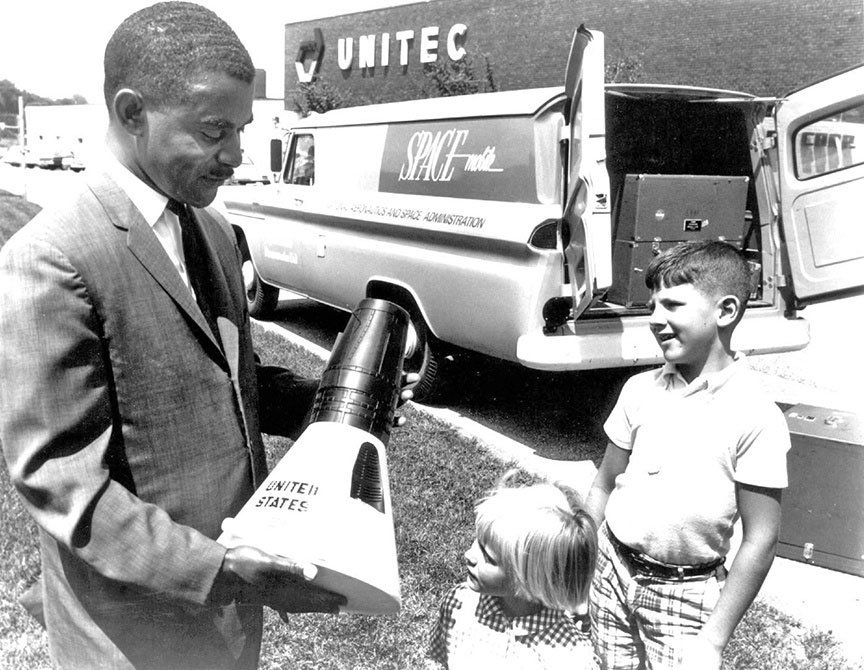
The demonstrations conducted for audiences were creative and varied. Accounts state that the speakers brought a device resembling a bicycle wheel with small rocket motors attached to demonstrate action and reaction, and also demonstrated how, after being dipped into liquid nitrogen, a tennis ball dropped to the floor would shatter rather than bounce. Chevy Apache and Corvair vans were utilized, with one reportedly visiting the UK at one point.
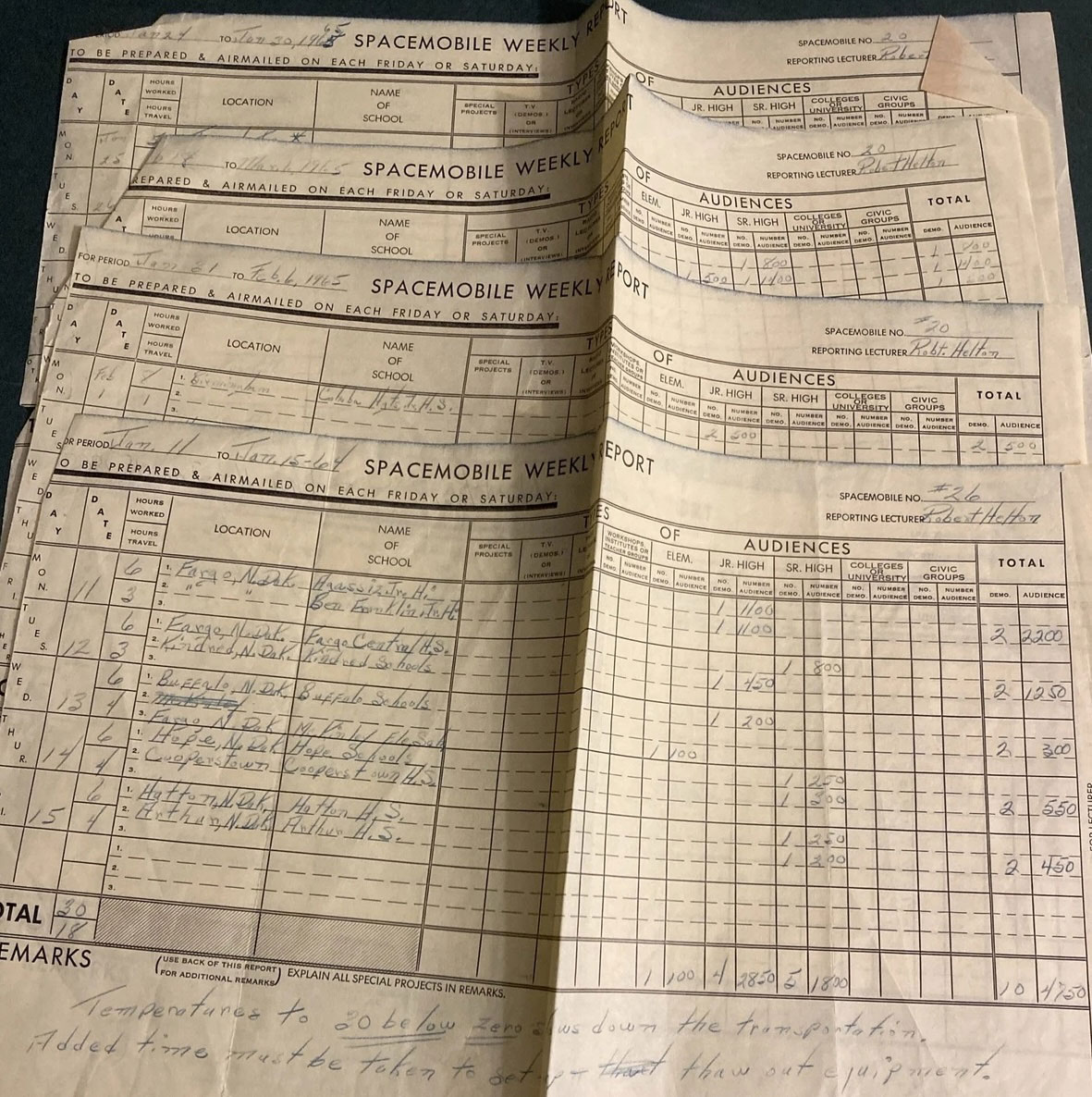
As rising Vietnam War costs forced Congress to scrutinize spending across the board, the high costs of the space race sparked multiple funding battles, some of which were decided by relatively close votes. While the Spacemobile program was not created as a lobbying tool, it was a perfect fit for the role, and the large-scale enthusiasm and goodwill it created helped to tip the congressional scales in favor of continued NASA funding.
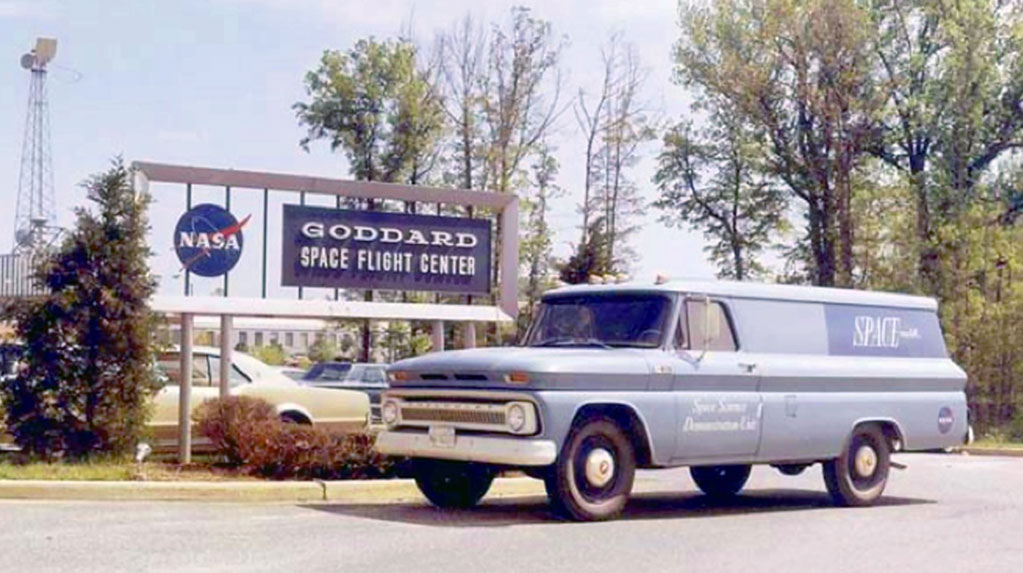
Unfortunately, no original Spacemobiles exist today, and pending a faithful reproduction from the vintage automobile community, we’re left with only photos of their existence. But in the end, the Spacemobile did its job. It helped transform the Apollo missions into something Americans felt they owned, and captured their attention just in time to witness – and support – some of NASA’s most historic missions.
Topics Related To: AVIATION HISTORY
The Goodyear Gizmo: A 290-Pound Helicopter, Inflatable Rotors, and Convertiplane Dreams
The McDonnell XP-67 “Moonbat” Represented Ambition Outpacing Engineering
From Business Jet to Spy Plane: How a Civilian Jet Design Nearly Became a Military Surveillance Platform
Northrop HL-10 Lifting Body Aircraft