Air-to-Air Artistry: The Story Behind an Iconic Aviation Photo
For the most part, air-to-air photography tends to be well-executed but somewhat formulaic and predictable. Grab nearly any aviation magazine or aircraft brochure, and you’ll most likely be presented with the same recurring elements: perfect lighting, a picturesque backdrop, and, for propeller-driven aircraft, a shutter speed that shows the propeller as a full disc of motion blur.
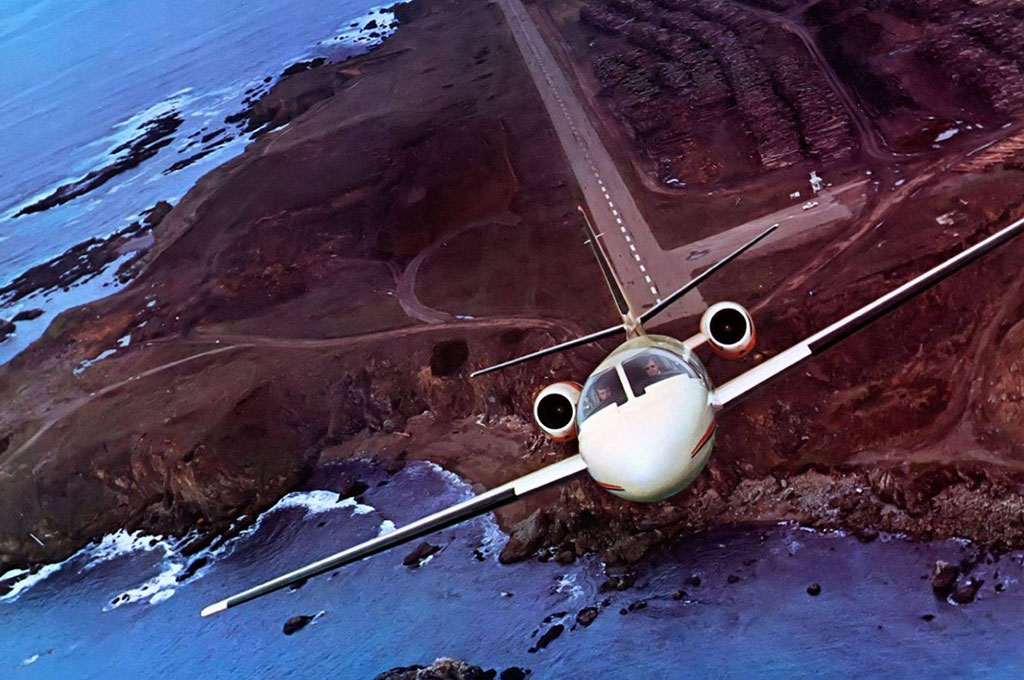
In the early 1970s, that predictable formula was shattered by iconic photographer Paul Bowen.
The subject of the photo shoot was the very first production Cessna Citation business jet. Novel in concept and design, it evolved the business jet segment by introducing simplicity, benign handling, and economy in a smaller package than the industry had ever seen. It was positioned to make quite a splash in the market, and Cessna wanted to kick things off with stunning visuals.
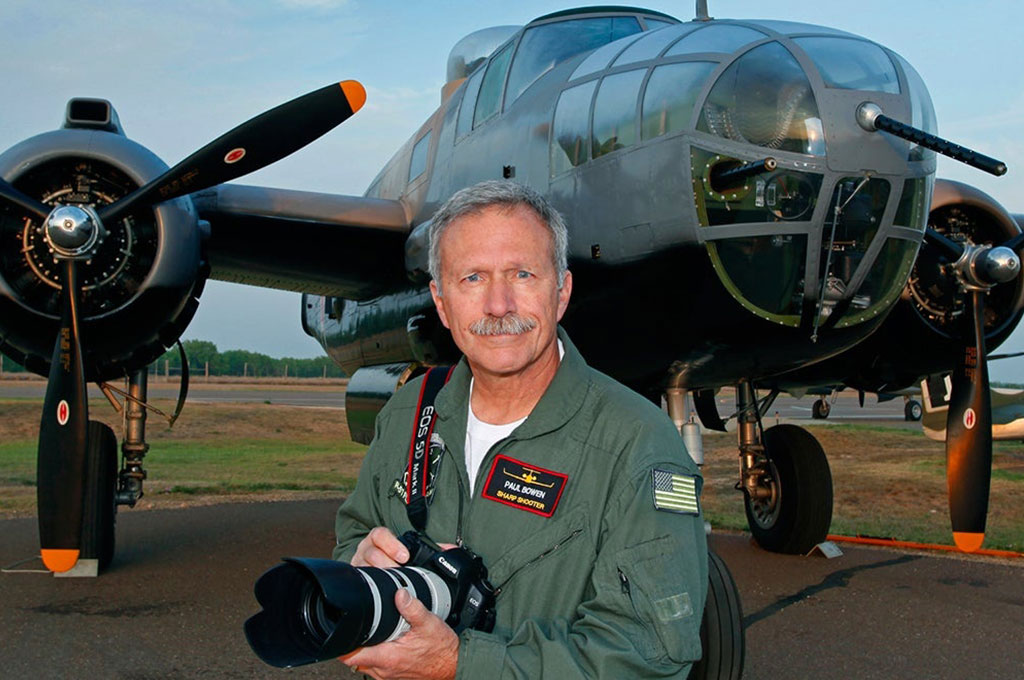
Naturally, they turned to Paul. For years, he has established himself as a legendary photographer who works with lighting, shutter speeds, and apertures as other artists work with oils or clay. He proposed conducting an air-to-air shoot on the California coastline. But, to set the shoot apart, he proposed conducting a low pass over a closed private airport that jutted out into the Pacific atop rugged, rocky terrain and capturing the shot while climbing out from the runway.
Of course, the camera and location are only two elements of a successful air-to-air shoot – significant expertise and experience are required to orchestrate the formation flying and coordination among everyone involved. Fortunately, Paul excelled in that area, as well.
For this shoot, Paul used a Cessna 210 as the photo ship. The 210 is a high-wing, single-engine, propeller-driven airplane with retractable landing gear, capable of nearly 200 mph in cruise. Because it has a cantilever wing without external wing struts, the clear downward view makes it a popular platform for aerial photography of ground targets.
For air-to-air photography of other aircraft, the 210 was capable but had some limitations. Notably, there was no clear rearward view from the passenger cabin. Paul solved this problem by constructing a special extended tail cone that housed two cameras – one for 35mm slides, and a 2-1/4” Hasselblad with an 80mm lens that shot square transparencies.
The twin cameras were motorized, and cables were fed into the cabin where they could be triggered remotely. Paul pre-set the focus and exposure based on experience and time of day. Because the Citation had no propellers, he didn’t worry too much about shutter speed.
With the cameras, aircraft, and flight crews in alignment, all that was left was to wait for the weather to follow suit. When it did, the team set out. They made only a few low passes over the runway so their flying wouldn’t annoy nearby residents and lead to angry phone calls.
The result speaks for itself. The stunning photo soon adorned Cessna marketing material and was even used for commercially available posters. It was so successful, Cessna hired Paul to repeat the shot years later, when a newer version of the Citation was launched.
For the second shoot, Paul was happy to have his preferred photoship – a vintage, WWII-era North American B-25 Mitchell bomber. With a fully open tail gunner seat facing aft, the B-25 allows completely unobstructed rearward views and is the ultimate platform for air-to-air work.
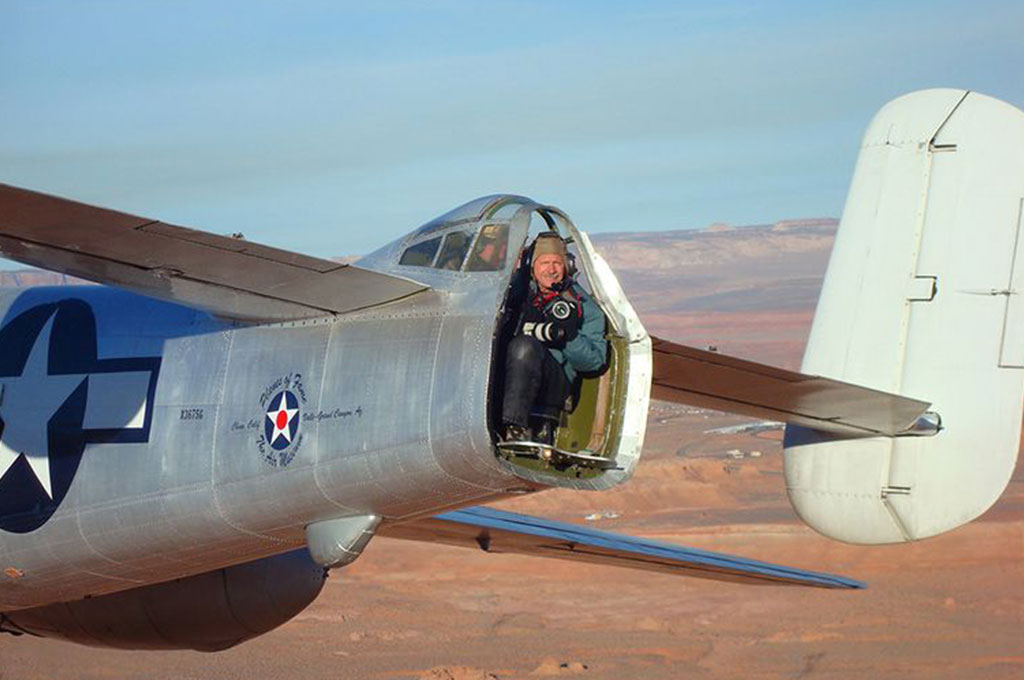
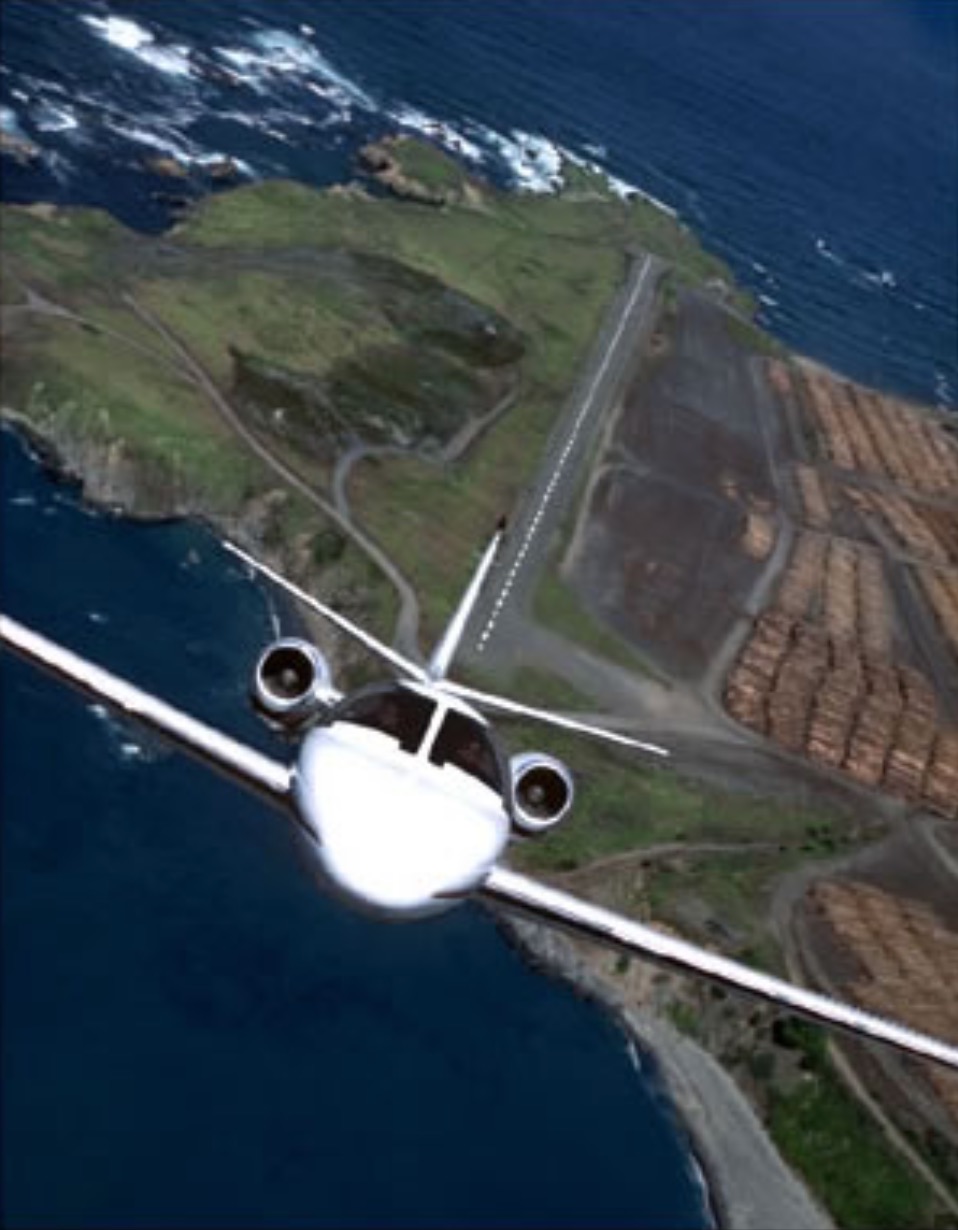
Like the first shoot, they performed only 2-3 low passes over the coastal airfield. Because the B-25 was such a draggy airframe, they made a few operational changes. They agreed beforehand that when it began to lose airspeed in the pull-up and climbout, it would break left, and the Citation would break right.
The second shoot was a success. The team did, however, receive calls about two airplanes “chasing each other,” but by then Paul had accepted that such calls were simply unavoidable during these shoots, and things soon smoothed over.
These photos are impressive because of the craft and experience behind them. Paul Bowen knew his equipment, understood the intricacies of formation flying, and chose a location and position that elevated the subject. For anyone who appreciates aviation photography, they are examples of how the work should be done.
Paul continues to shoot stunning air-to-air photos today and, as seen in this short documentary, continues to use his beloved B-25 as his preferred photoship.
Topics Related To: AVIATION HISTORY
The Spacemobile: NASA’s Secret Weapon for Winning America’s Hearts
The Goodyear Gizmo: A 290-Pound Helicopter, Inflatable Rotors, and Convertiplane Dreams