

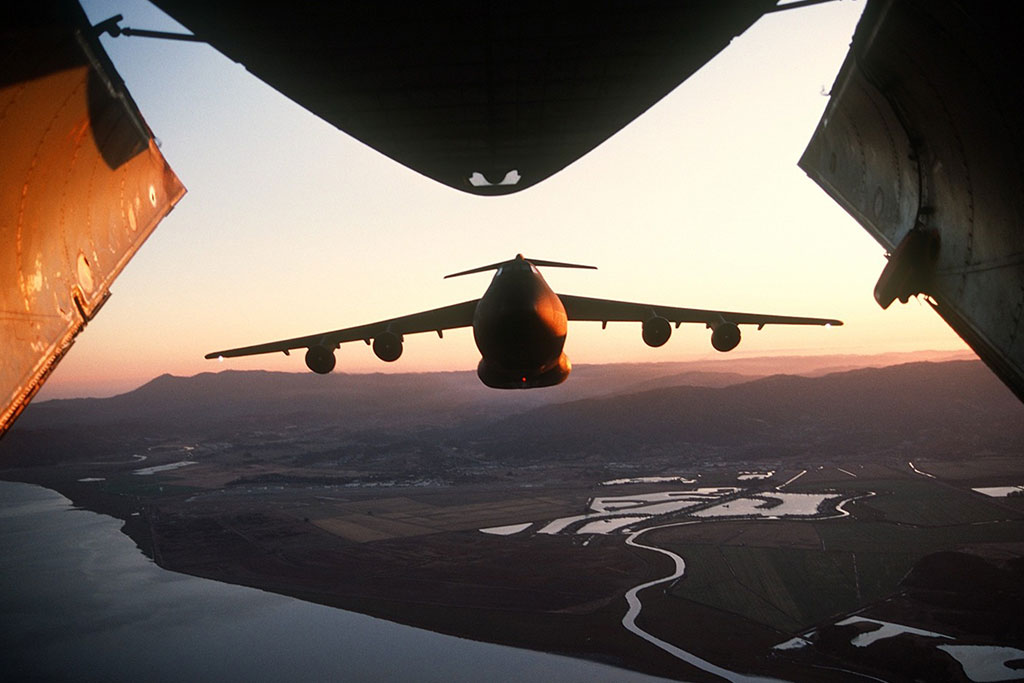
Air-to-Air Formation with a Lockheed C-5 Galaxy
Shot from the open rear cargo ramp of a now-retired Lockheed C-141 Starlifter, a Lockheed C-5 Galaxy transport flies in close formation above an unspecified shoreline. Despite being the largest aircraft in the US Air Force, with a 222-foot wingspan, 28 wheels, and a tail over six stories tall, the C-5 is remarkably flexible, capable of operating into and out of shorter runways than its size might suggest. At light weights, the approach speed can be as low as 110-115 knots – slow among jets, and remarkably slow given the C-5’s massive size.
Topics Related To: AVIATION HISTORY
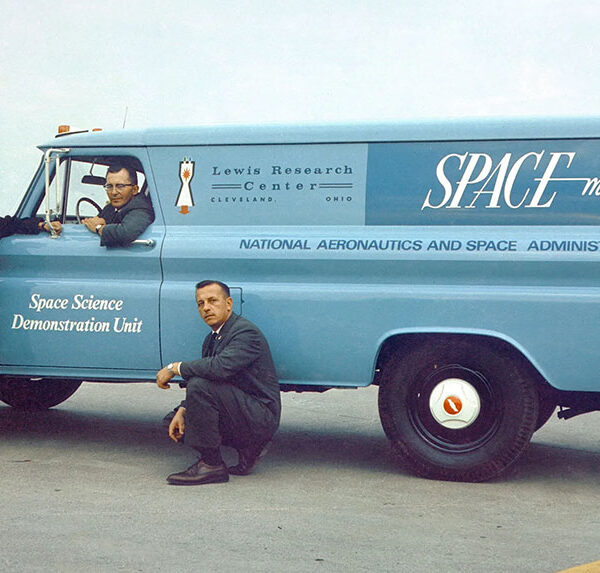
The Spacemobile: NASA’s Secret Weapon for Winning America’s Hearts
In the 1960s, NASA rolled out a fleet of educational vans called Spacemobiles. They traveled the country building enthusiasm for the Apollo program, turning Americans into space race supporters, one science demonstration at a time.
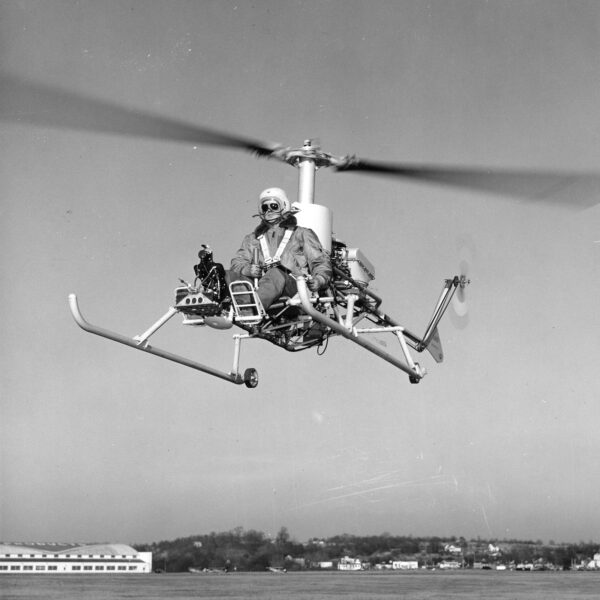
The Goodyear Gizmo: A 290-Pound Helicopter, Inflatable Rotors, and Convertiplane Dreams
The Goodyear Gizmo was a 290-pound helicopter from the 1950s that almost nobody knows about. Here’s the story of Goodyear’s helicopter experiment and its inflatable rotor blade ambitions.
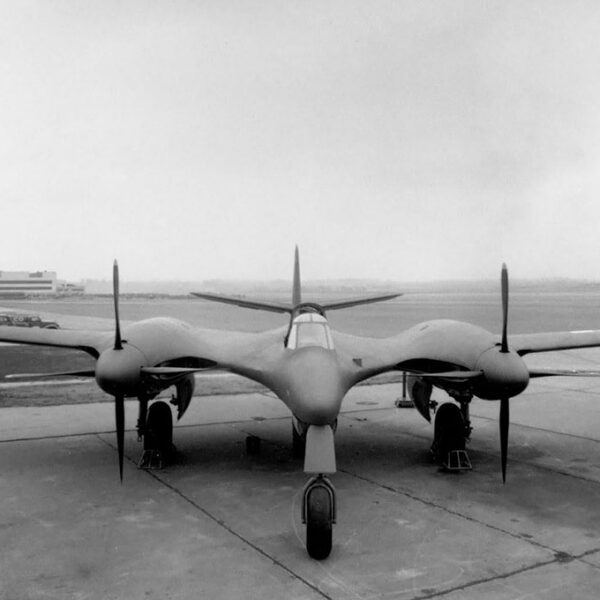
The McDonnell XP-67 “Moonbat” Represented Ambition Outpacing Engineering
The McDonnell XP-67 “Moonbat” combined cutting-edge technologies, including a blended-wing body and Continental XL-1430 engines, in pursuit of 472 mph performance. Engine overheating and aerodynamic instability ended the ambitious program before it could reach production.
