Helicopter Rescue Operations Without a Tail Rotor

An McDonnell-Douglas MD-900 Explorer EMS helicopter conducts rescue operations in Lofer, Austria. While the word “Notarzt” on the side directly translates to “emergency doctor,” it unintentionally also identifies a key feature of the MD-900 – the “NOTAR” system that replaces the tail rotor.
Through a series of internal fans, louvers, and a rotating aft sleeve, the NOTAR system provides directional control by carefully directing high-pressure air from one side of the tail boom to the other. This air interacts with the downwash from the main rotor, providing directional/yaw control without a traditional tail rotor.
While the technology never progressed beyond a few key helicopter models, it provided a far safer environment for medical staff and ground handlers. Without the hazard of a rotating tail rotor, they could safely approach the rear of the helicopter and load cargo or patients into and out of the rear clamshell doors.
Topics Related To: AVIATION HISTORY

The Spacemobile: NASA’s Secret Weapon for Winning America’s Hearts
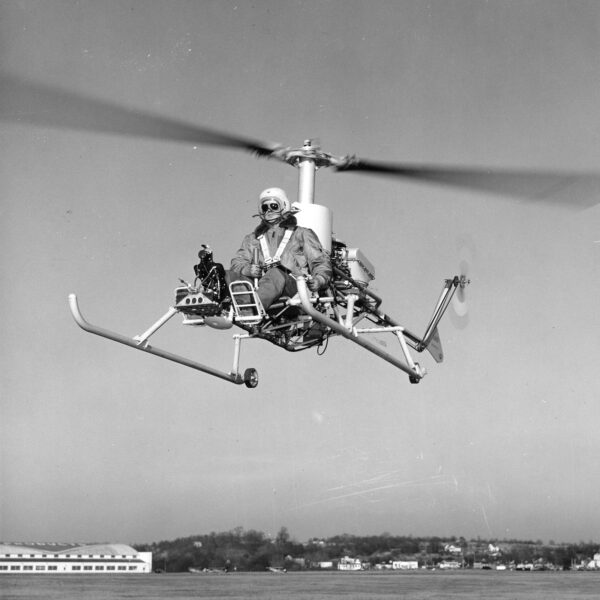
The Goodyear Gizmo: A 290-Pound Helicopter, Inflatable Rotors, and Convertiplane Dreams