Embraer Energia Patent Filing Shows Concrete Steps Toward Hybrid Turboprop Development
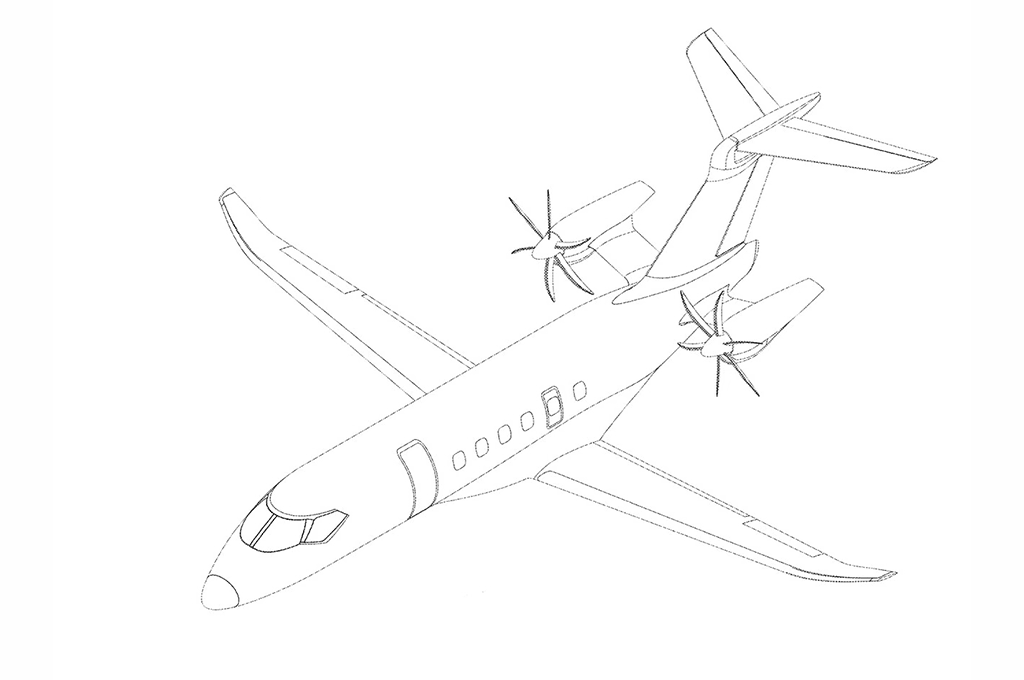
The Embraer Energia concept family of aircraft, first announced as a sustainability initiative, has moved from marketing renderings to protected intellectual property with the grant of US Design Patent USD1130272 in June 2026. As a design patent, this is intended to protect the visual appearance rather than functional features or performance characteristics. It does, however, indicate Embraer sees commercial potential worth protecting and defending.
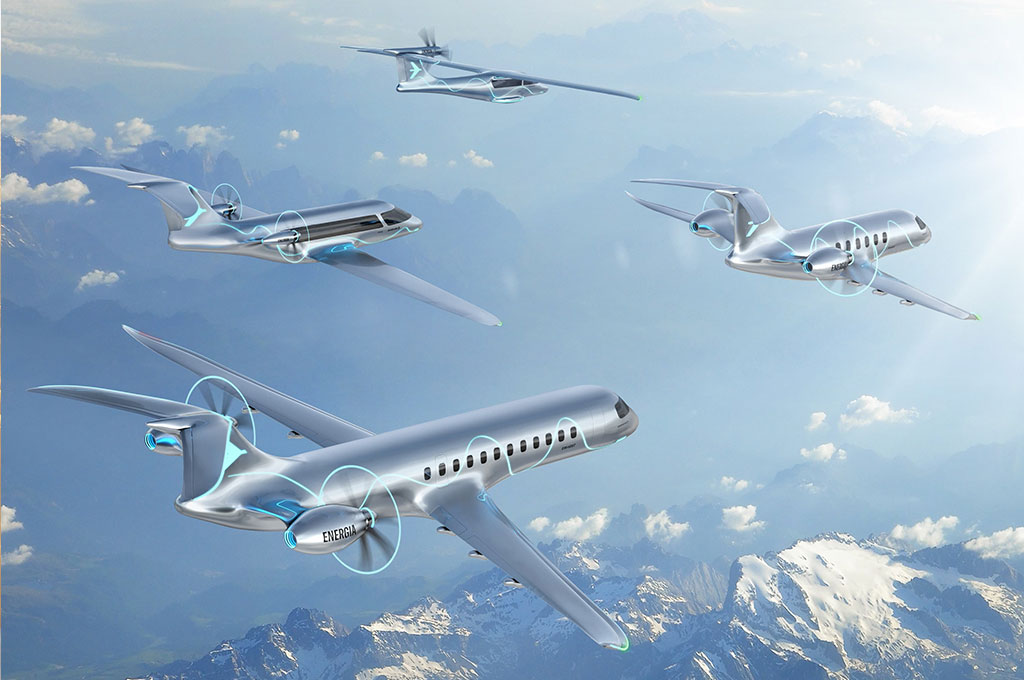
The patent filing occurred one year after the “Energia” family of concept aircraft was revealed, indicating interest in the future development of three of the four concept configurations.
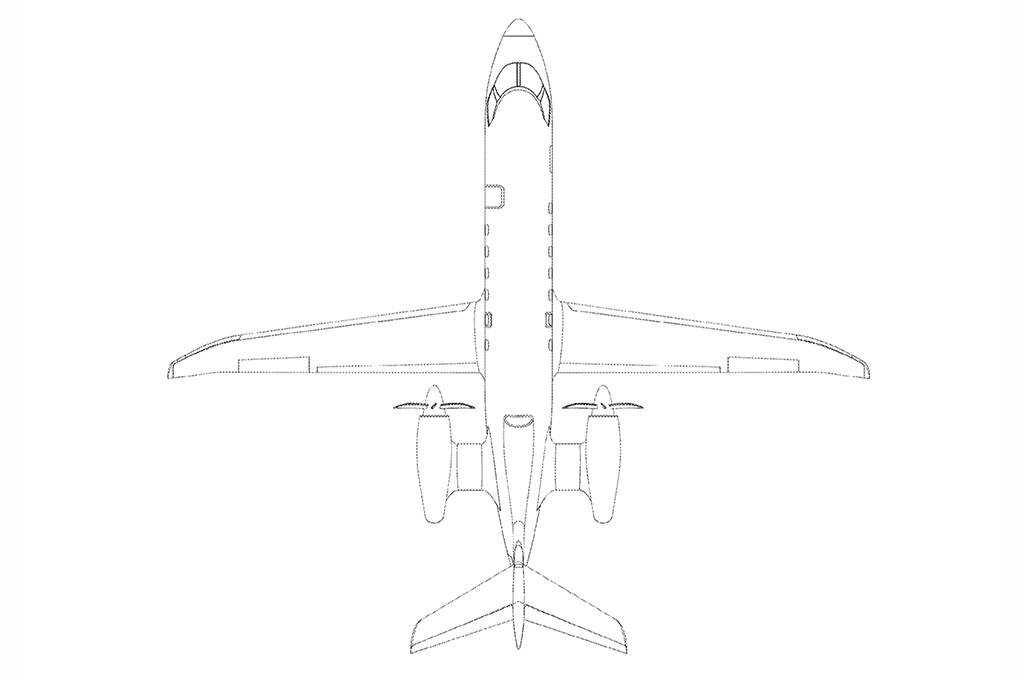
Patent drawings reveal four individual aircraft:
Short fuselage, non-hybrid powerplant variant
Long fuselage, non-hybrid powerplant variant
Short fuselage, hybrid powerplant variant
Long-fuselage, hybrid powerplant variant
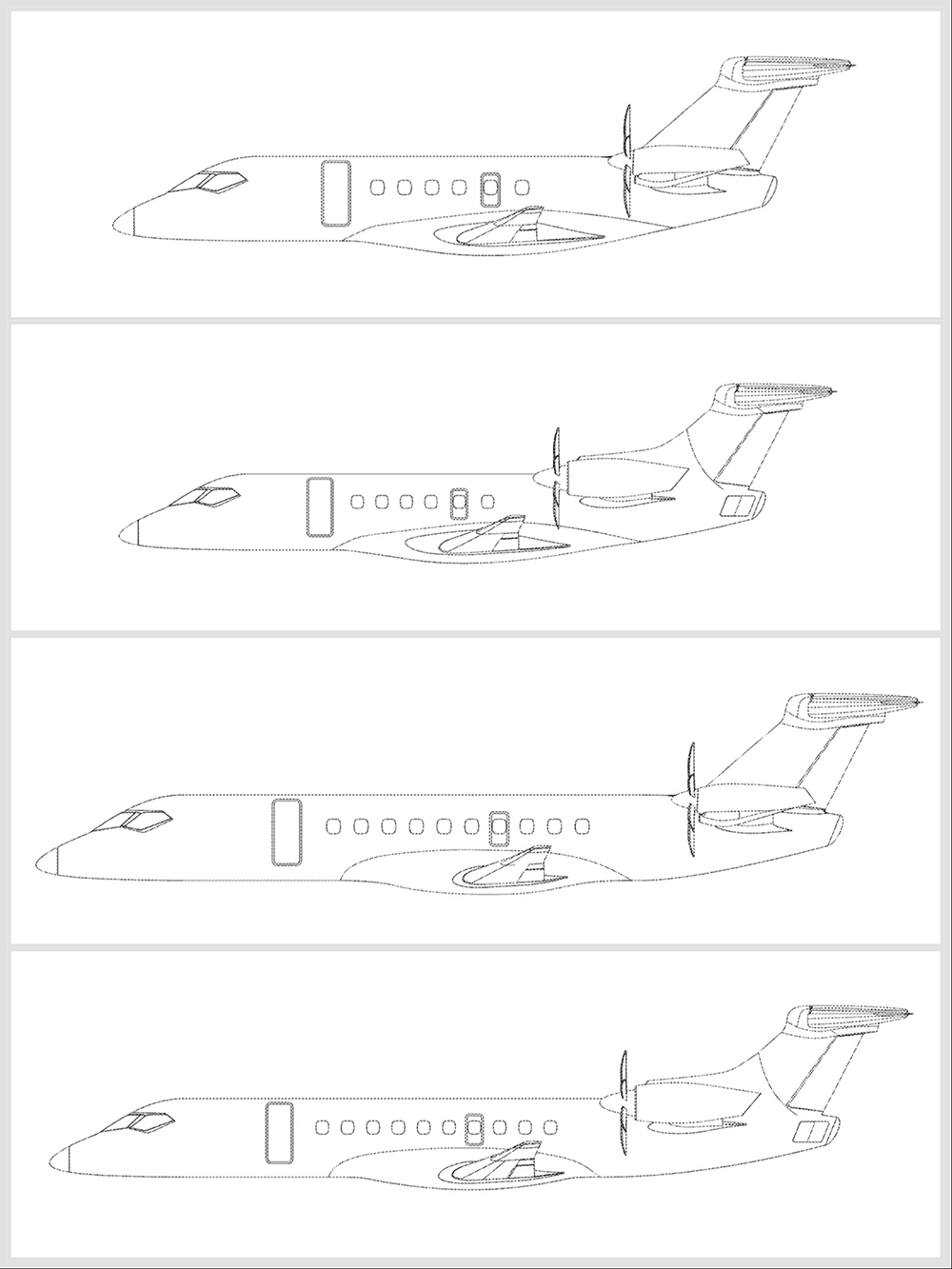
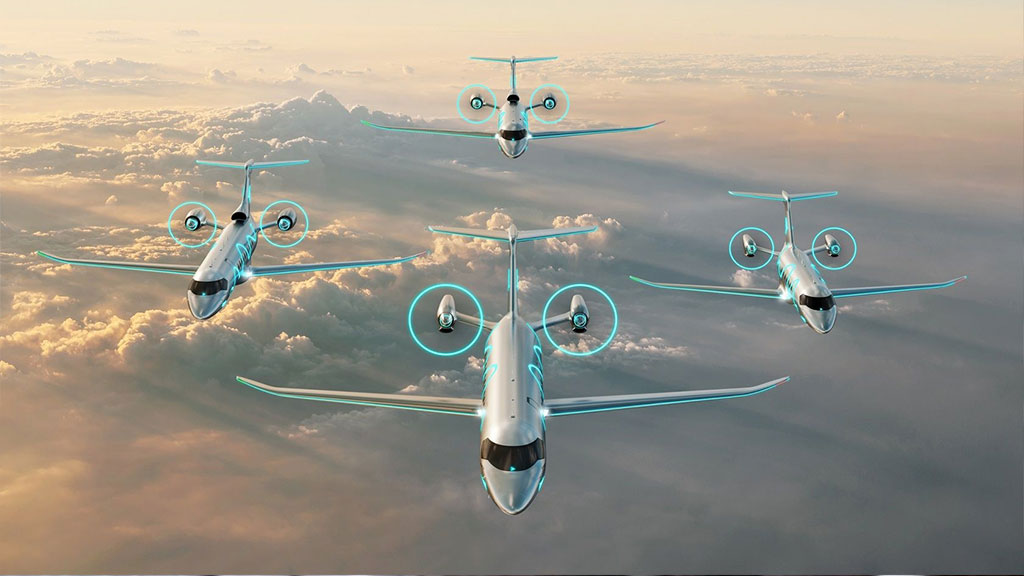
The general engine placement reflects that of three of the earlier Energia concept aircraft. Aft engines are positioned on long pylons that allow clearance for propellers. The propellers are mounted in a tractor/puller configuration, just ahead of a T-tail.
This engine positioning provides a few significant benefits. It allows for an entirely clean wing, devoid of extraneous pylons and structures that affect local airflow and aerodynamics. As the propellers are positioned farther from the ground, it also allows for shorter landing gear, saving weight and simplifying passenger boarding. Their location aft of the passenger cabin also lowers noise and vibration levels in the cabin as compared to configurations with wing-mounted engines.
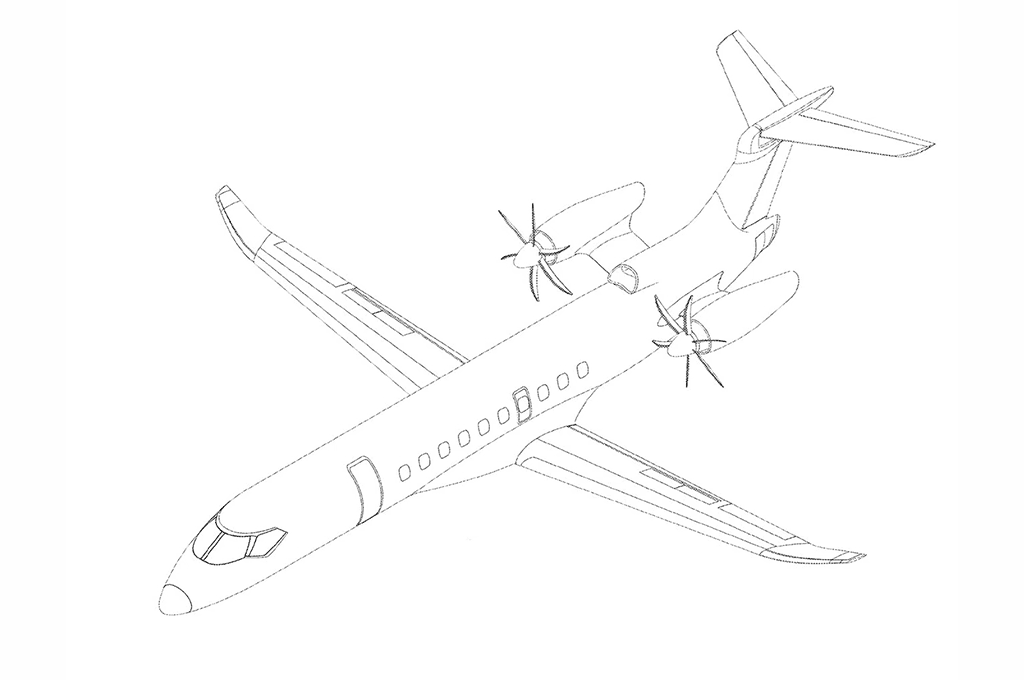
Two of the depicted concepts show a dorsal air intake between the engines and ahead of the tail, along with what appears to be an engine exhaust on the left side of the tailcone. These align with the Energia H2 Fuel Cell variant that Embraer proposes for zero-emission flight, using hydrogen fuel cells as a single power source or in a hybrid configuration with gas turbines or batteries.
The other two concepts align with the hybrid-electric and gas turbine/dual fuel Energia variants depicted in Energia marketing renderings. Embraer lists the technology readiness for all variants to occur between 2030 and 2040.
The single most notable development with the approval and publication of this patent is the Energia program’s progression from concept to protected intellectual property (IP). Design patents require examination and approval from the US Patent and Trademark Office (USPTO). The completion of this process represents a concrete investment in protecting specific configurations, and companies do not typically patent concepts they consider exploratory or dead.
So, while the patent does not confirm production or disclose performance specifications, certification pathways, or a timeline, it advances the Energia family beyond initial concept work, thus setting the stage for Embraer’s forthcoming push toward sustainable regional aviation.
Topics Related To: AVIATION HISTORY
The Spacemobile: NASA’s Secret Weapon for Winning America’s Hearts
The Goodyear Gizmo: A 290-Pound Helicopter, Inflatable Rotors, and Convertiplane Dreams