

Transportation of Tomorrow – How the Regent Viceroy Could Replace Ferry Transport

Powered by 12 electric motors and capable of carrying 12 passengers, the Viceroy Seaglider built by Regent Craft of Rhode Island strikes a unique silhouette during open-water testing.
As a wing-in-ground-effect vehicle, the Viceroy flies – but only at about 30 feet above the surface of the water. At this altitude, the wing benefits from a 40-50% reduction in aerodynamic drag, allowing it to speed along at 180 miles per hour using very little energy.

While many wing-in-ground-effect vehicles have flown over the years, the Viceroy introduces two key developments. Namely, the electric propulsion and a hydrofoil system. The latter resembles a set of small underwater wings that allows the Viceroy to rise out of the water and smooth the transition from watercraft to aircraft.
Aimed at the commercial ferry market, Regent Craft is also working to provide solutions for the military. Proposed military missions include troop transport, medevac, reconnaissance, and fleet support, bridging the gap between relatively slow surface transport and traditional air transport.
Most recently, the Viceroy was spotted conducting sea trials during the week of September 15, 2025 in Rhode Island’s Narragansett Bay as testing continues.
Topics Related To: FUTURE OF FLIGHT

Hermeus Quarterhorse UAV Breaks the Sound Barrier in Record Time
The unmanned Quarterhorse Mk 2.1 reached Mach 1.21 less than three months after its first flight, marking a major step toward hypersonic airliner development.
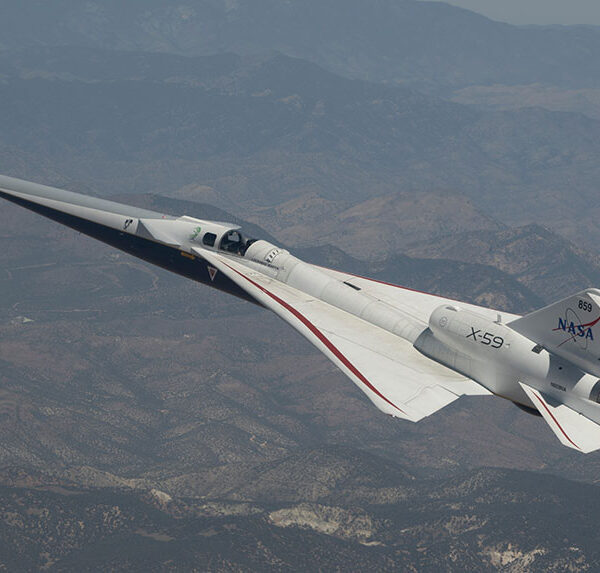
NASA Releases New X-59 Photo as Test Flights Top 55,000 Feet
A newly released image shows NASA’s X-59 from above, highlighting the airframe designed to eliminate sonic booms. Recent flights have exceeded 55,000 feet and have approached 900 miles per hour.

CFM’s Open Fan Engine Clears Key Milestones, with Flight Tests Targeting Late-2020s
CFM International completed critical design reviews for its Open Fan engine. Flight tests are on track this decade, with efforts aimed at achieving 20% better fuel efficiency than today’s engines.
