

Otto Update: Three Takeaways from the Phantom 3500 Preliminary Design Review
In a recent interview with Aviation International News, newly-promoted president and CEO Scott Drennan provided fresh insight into the progress of the Phantom 3500 super-midsize business jet currently under development. Drennan touched on the certification process with the FAA, described some design changes and revealed plans to build four test aircraft.
1) Outsourced Manufacturing Is Poised to Streamline Production
By any measure, designing, developing, and producing a clean-sheet aircraft is a massive undertaking. Aerodynamics and propulsion aside, perfecting hundreds of systems and components and ensuring they work together seamlessly requires years of effort and demands an experienced and talented workforce. Orchestrating the onerous certification that must follow requires a similar level of time and expertise.
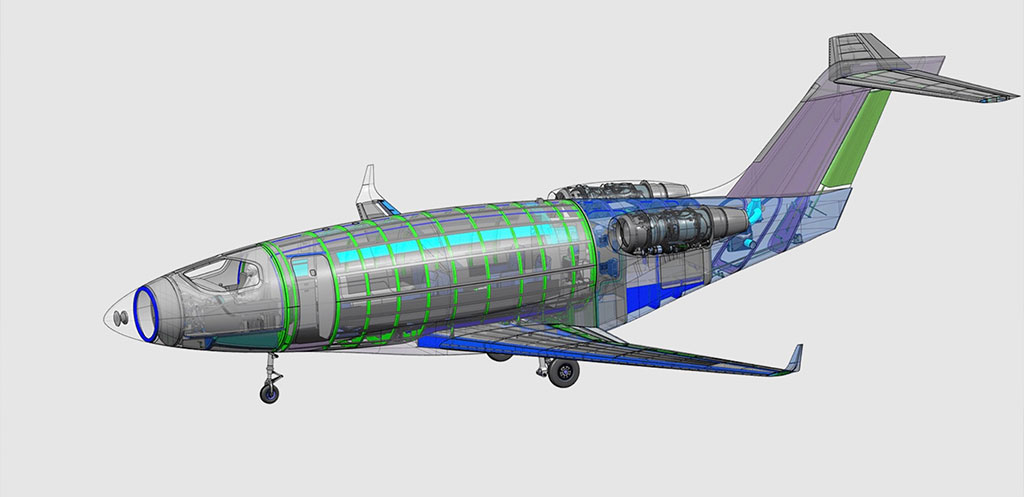
There are, however, ways to simplify and expedite the process. In the preliminary design review, Otto lists several subcontractors to whom the company will outsource manufacturing. Notably, Leonardo will manufacture the fuselage, and Sonaca will manufacture the wing and empennage.
Both of these represent wise decisions from an outsourcing standpoint. Leonardo is a well-established manufacturer of fixed-wing and rotary-wing aircraft that also has significant experience manufacturing aerostructures for other companies. Similarly, Sonaca manufactuers wings, control surfaces, and structural components for Boeing, Airbus, Embraer, and other OEMs.
By outsourcing the construction of such major airframe components, Otto sheds significant workload and avoids having to invest in expensive tooling. Perhaps more importantly, this avenue also has the potential to greatly reduce the time required to develop, test, and certify the Phantom 3500.
2) Amid Advanced Concepts, Simplicity is Embraced Where it Makes Sense
From day one, Otto has showcased advanced aerodynamics and cutting-edge design as its primary competitive advantage over other manufacturers. It presents laminar-flow technology, essentially meticulous airframe sculpting intended to minimize drag-producing, turbulent airflow, as the key to unlocking performance and efficiency. The claims are bold – 35% less drag, 60% less fuel consumption, and 90% fewer emissions than traditional designs.
Additionally, the company touts its novel windowless cabin design. Large, high-definition screens provide real-time external views to save weight and smooth the fuselage skin. And the Phantom’s internal cabin dimensions will be among the largest in its category.
But underneath the flashy tech, conservative ideologies reign. Unlike many of the industry’s newest aircraft, Otto eschews advanced fly-by-wire design, instead favoring traditional mechanical flight controls that utilize cables, pulleys, and hydraulic actuators.
While fly-by-wire offers significant advantages, including reduced weight, reduced mechanical complexity, easier airframe integration, and opportunities for advanced envelope protection and turbulence alleviation, it also introduces corresponding challenges in software development and certification. By sticking with traditional flight control technology, Otto can follow a predictable, well-established testing and certification process, likely reducing development time and costs.
Simplicity is also realized with certain aircraft systems, such as ice protection. Rather than integrating a traditional bleed-air anti-ice system for the wing, Otto has opted for a relatively simple electromechanical system that requires no pneumatic plumbing and comprises only three modular units.
Together, the philosophy of balancing unique, next-generation design with proven simplicity might prove to be Otto’s ticket to delivering an aircraft on time and on budget.
3) Some Key Challenges Remain
Among the newer technologies employed in the Phantom design, one has gone largely unnoticed. To help ensure the airframe is perfectly smooth to facilitate laminar flow over as much of the surface as possible, Otto is working with composite manufacturer Toray on a new composite material and process. This new process creates a seamless external surface that promises to deliver a significant drag reduction.
The challenge? The process itself is still progressing through testing and validation and has not yet been qualified. While there’s little reason to suspect undue delays from a manufacturer as well-established as Toray, the risk of unforeseen complications or delays nevertheless presents a risk to Otto’s development timeline.
The preliminary design review also confirms that certain design elements will remain in place for the final production aircraft. Notably, the production version will retain the unique fuselage and cabin shape with a variable cross-section. In other words, the cabin height and width will be greatest at the aircraft’s midpoint and will gradually taper to a smaller size toward the front and back.
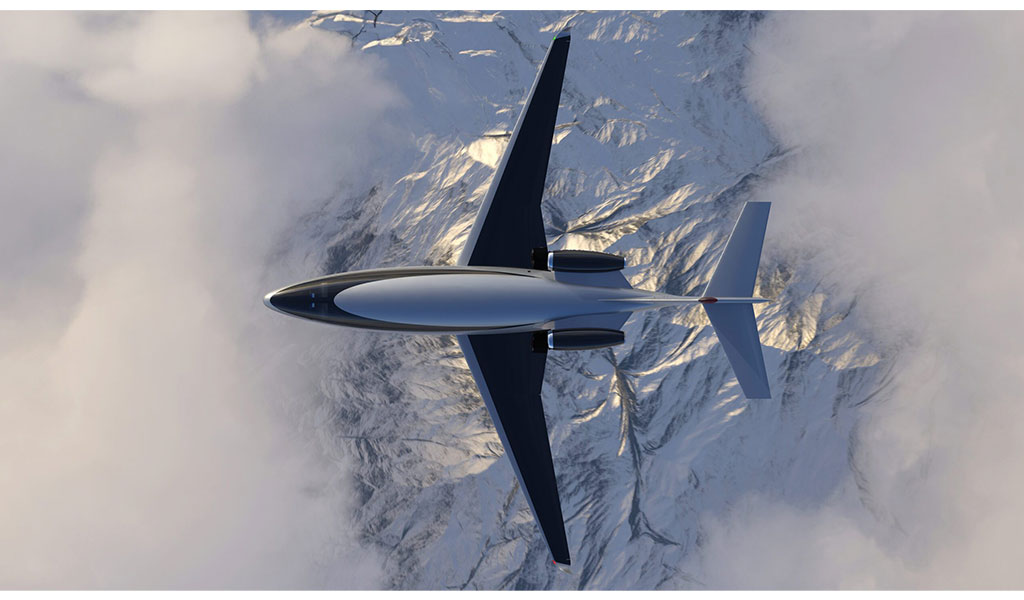
Aside from occupants having to contend with a cabin that tapers in size toward each end, the continuously varying cabin diameter also presents inefficiencies in manufacturing and completions. Most aircraft interiors are designed and fabricated around straight lines and right angles, making them relatively simple to build and customize. Conversely, the Phantom will require Otto and interior completion centers to carefully match cabinets, seating, and trim pieces to the unique wall curvature of each specific cabin location.
Each design element presents its own unique set of benefits and drawbacks. Like any other aircraft manufacturer, Otto is tasked with the same overall goal – to optimize the balance of those pros and cons, both individually and collectively, to deliver a successful product. These decisions will be validated through flight testing, certification, and ultimately by customer reception in the market.
Topics Related To: FUTURE OF FLIGHT
NASA Releases New X-59 Photo as Test Flights Top 55,000 Feet
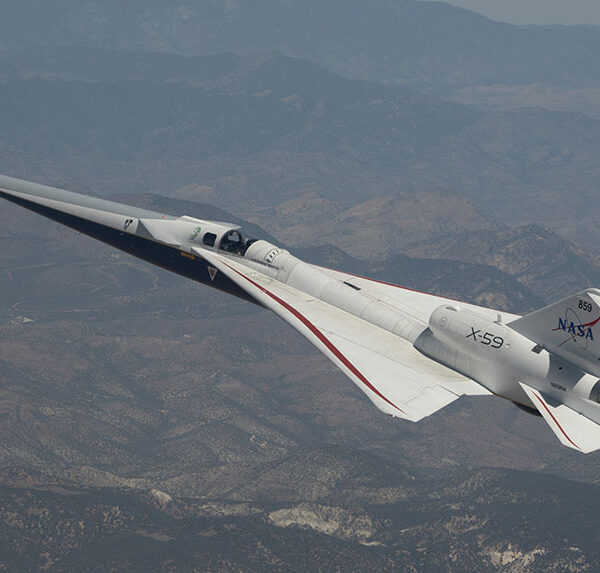
A newly released image shows NASA’s X-59 from above, highlighting the airframe designed to eliminate sonic booms. Recent flights have exceeded 55,000 feet and have approached 900 miles per hour.

CFM’s Open Fan Engine Clears Key Milestones, with Flight Tests Targeting Late-2020s
CFM International completed critical design reviews for its Open Fan engine. Flight tests are on track this decade, with efforts aimed at achieving 20% better fuel efficiency than today’s engines.
AW609 Civil Tiltrotor: 3 Things to Know About Leonardo’s Path to 2027 Entry Into Service
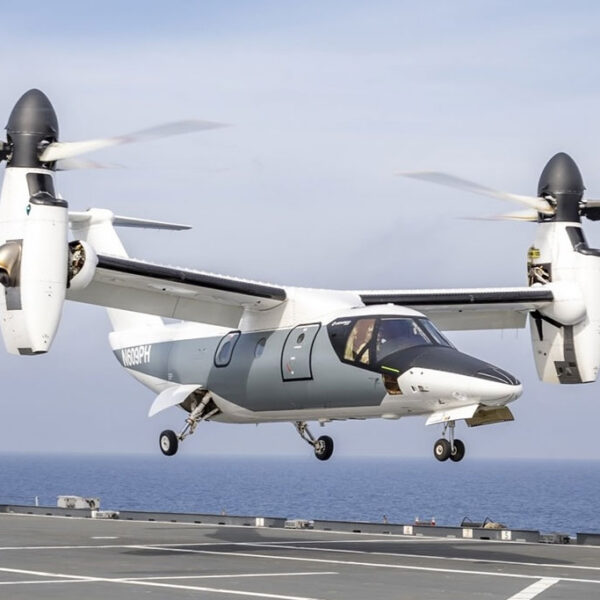
Leonardo’s AW609 tiltrotor targets 2027 civil certification as three milestones, including a flying next-generation prototype, demonstrate progress toward certification.
