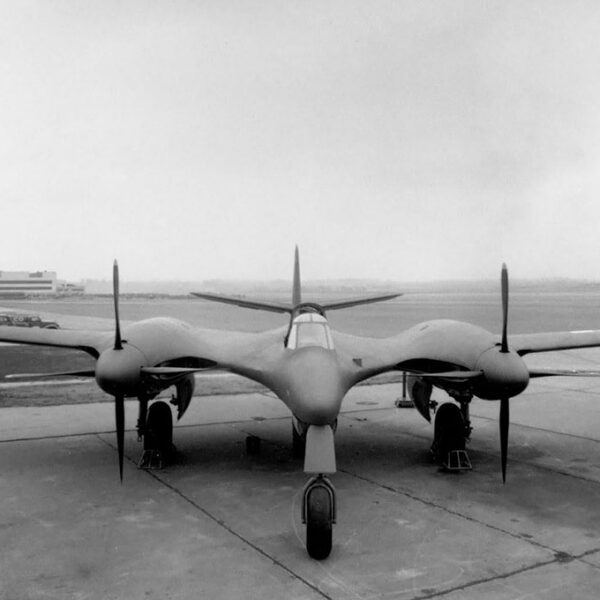
Rent-a-Plane: The Hertz Experiment That Vanished Into Thin Air
In 1957, the Hertz car rental company began offering airplanes for rent. After passing a short evaluation flight, a pilot could walk up to a counter, present their pilot certification, and obtain a Hertz-branded Cessna to fly to their destination. But, despite the efforts of such a large, well-established brand, the program began to unravel just two years later.
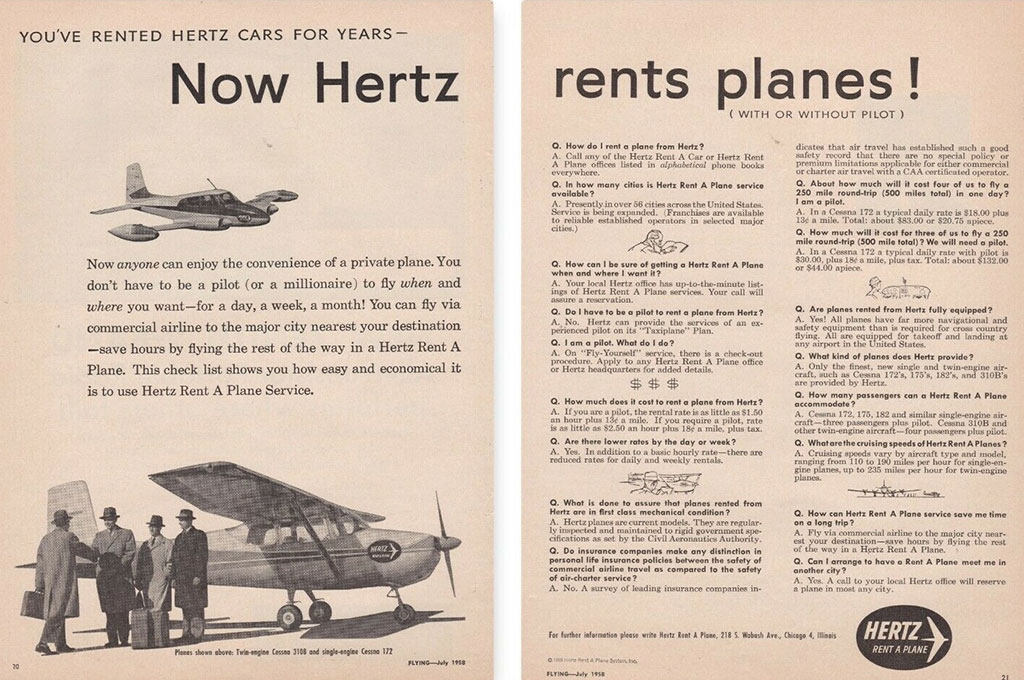
It was a novel concept. Hertz initially offered a network of single-engine Cessna 172s available at franchises in 56 cities across the United States. For a rate of $1.50 per hour plus 13 cents per mile, pilots could rent and fly the planes as much as required. At these rates, a round trip totaling two hours would cost roughly $372 today.
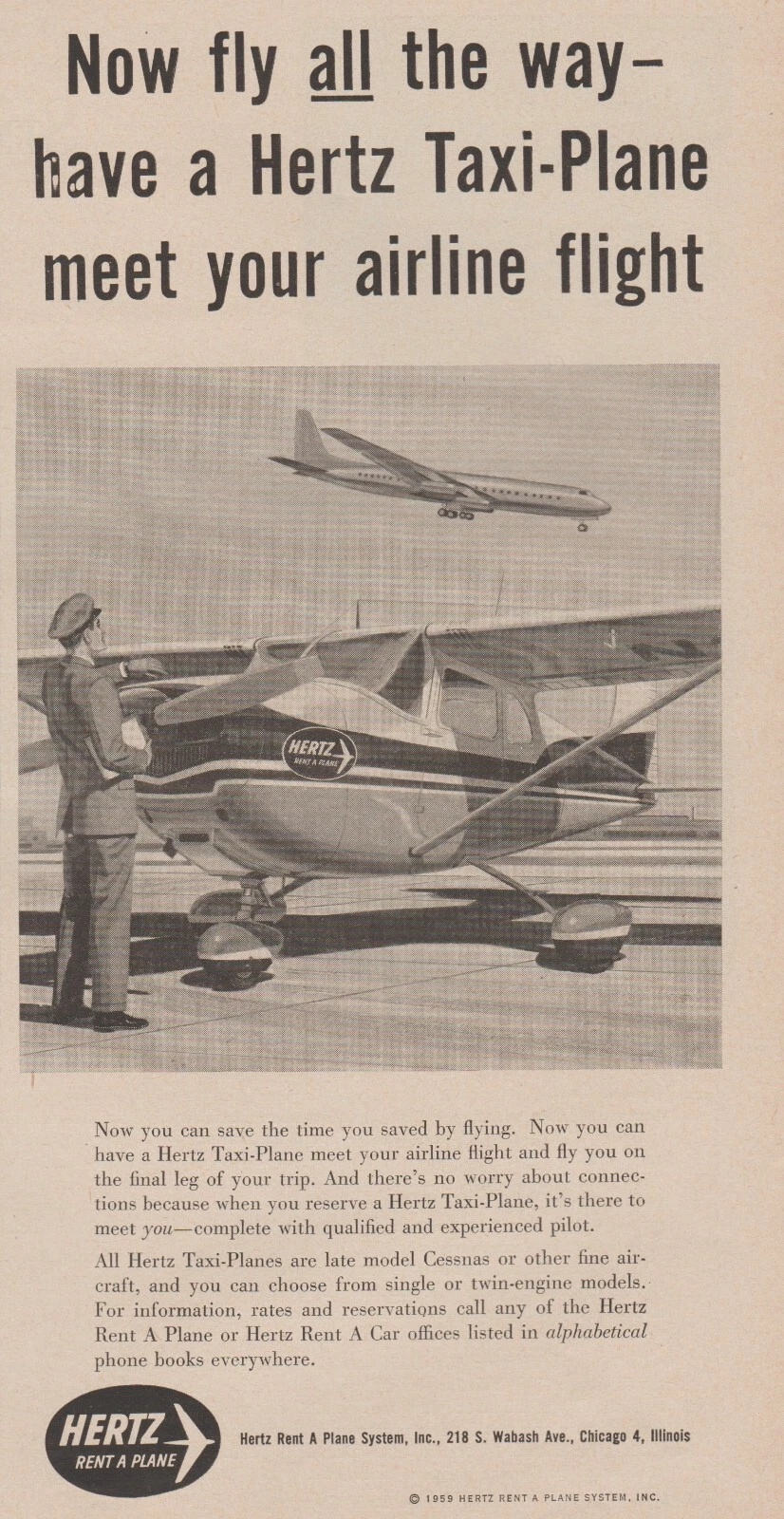
Hertz positioned the program as a solution to the first-mile/last-mile challenge of airline travel. The company suggested that customers travel long distances via the airlines, then, as with a Hertz automobile, transition to a Hertz Rent-a-Plane to cover the remaining distance to their ultimate destination. With airline travel still evolving and the hub-and-spoke route structure emerging, the concept had potential – and not just for licensed pilots.
For customers without pilot licenses, Hertz offered a “Taxiplane” plan. This plan provided a single pilot with the aircraft, leaving three empty seats in the smaller Cessnas. The resulting arrangement ultimately resembled that of an on-demand charter operator – and it was when federal officials took notice that the concept began to unravel.
This occurred in late 1959. An official from the Civil Aeronautics Board (CAB), which was the predecessor to the Federal Aviation Administration (FAA), submitted a report suggesting that Hertz was an “indirect air carrier,” subject to the same regulations as existing airlines and charter operators. This would introduce certification requirements, fare oversight, and operational restrictions that would destroy the business model.
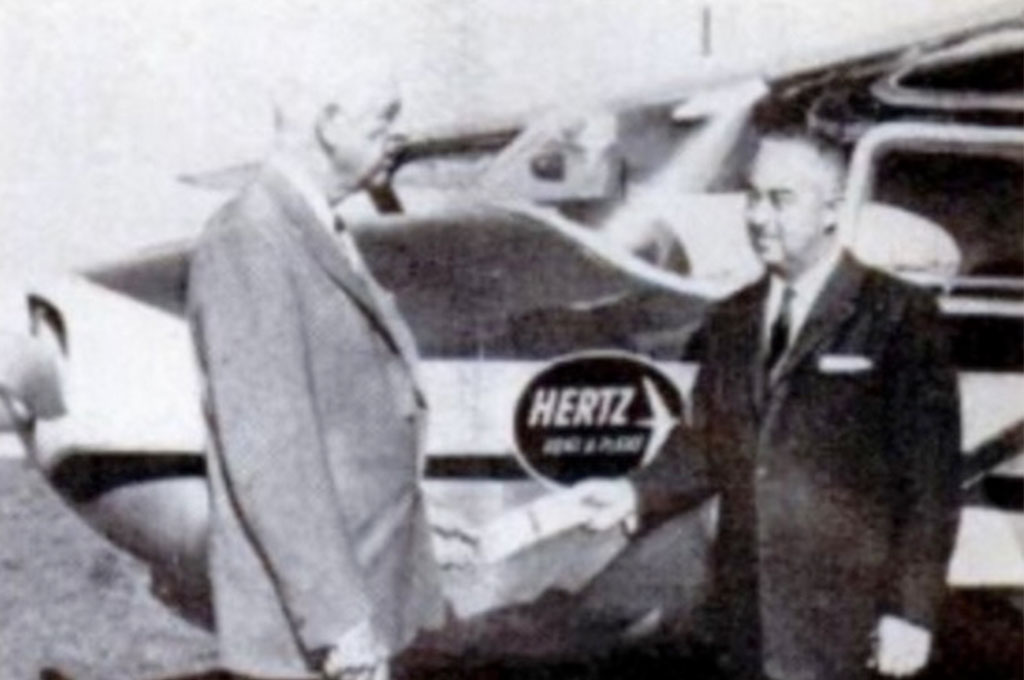
Hertz argued that franchisees – not Hertz itself – owned and operated the airplanes, and added that Hertz merely provided merchandising, sales, and administration. Walter L. Jacobs, president of Hertz and the Rent-a-Plane subsidiary, stated that he did not believe these functions should be regulated as airline operations were at the time.
A letter to franchisees stated that “Under these circumstances, we did not believe that we would be able to operate and develop such a system profitably at this time.” Ultimately, the company saw that regulation and its complexities were inevitable and shut down operations entirely.
The closure would have little impact on Hertz and its franchisees. The Cessnas used in the operation were standard, off-the-shelf models that were simply reintegrated into existing flight operations, such as flight training, without fanfare. In fact, the airplanes all wore standard Cessna paint. Accordingly, removal of a small Hertz logo near the nose was all that was required to return them to regular service.
Hertz promised that flight would be as easy as renting a car. That promise proved more challenging than expected. Today, companies like Joby and Archer make the same promise with electric flight, smartphone apps, and next-generation advanced air mobility infrastructure. The tools and technology have evolved, but the vision remains, and time will tell whether the economics and regulations will allow it to endure.
Topics Related To: AVIATION HISTORY
The Spacemobile: NASA’s Secret Weapon for Winning America’s Hearts
The Goodyear Gizmo: A 290-Pound Helicopter, Inflatable Rotors, and Convertiplane Dreams