Airport Design: The Tangential Runway Concept
Among the more innovative concepts to emerge from the aviation industry, most are predictably centered around the aircraft themselves. Ever-evolving engine designs sip less fuel, advanced wing designs create less drag, and the latest avionics unlock new levels of safety and efficiency.
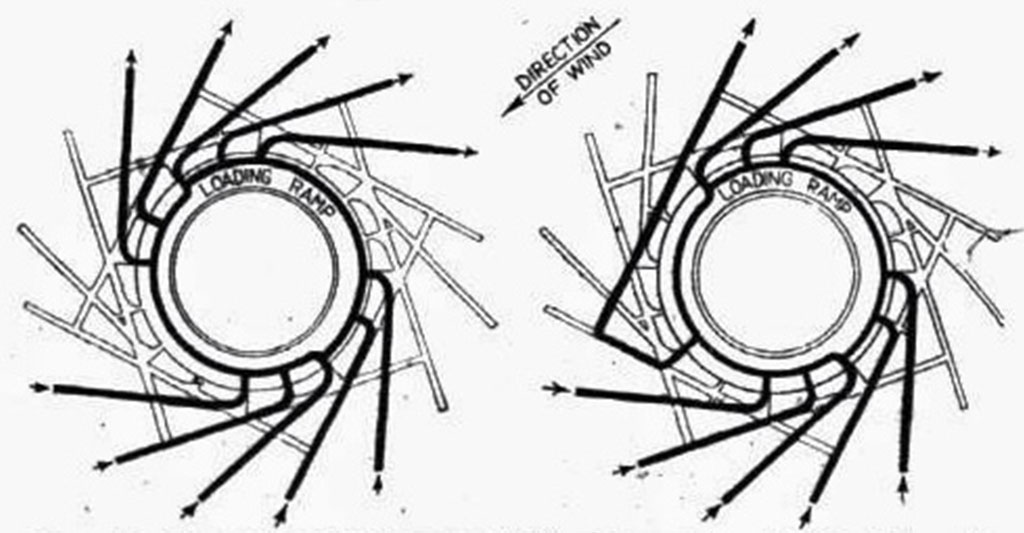
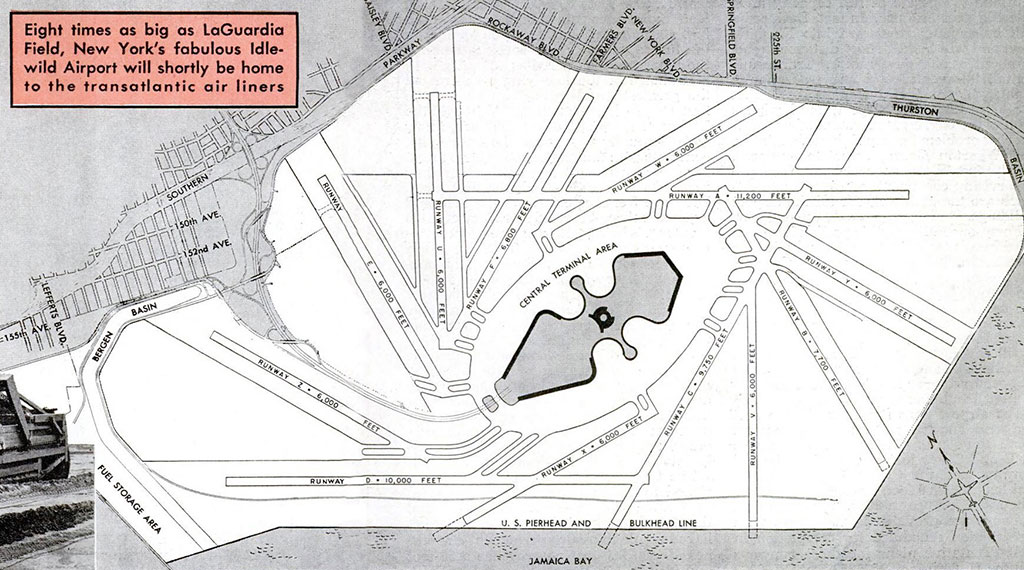
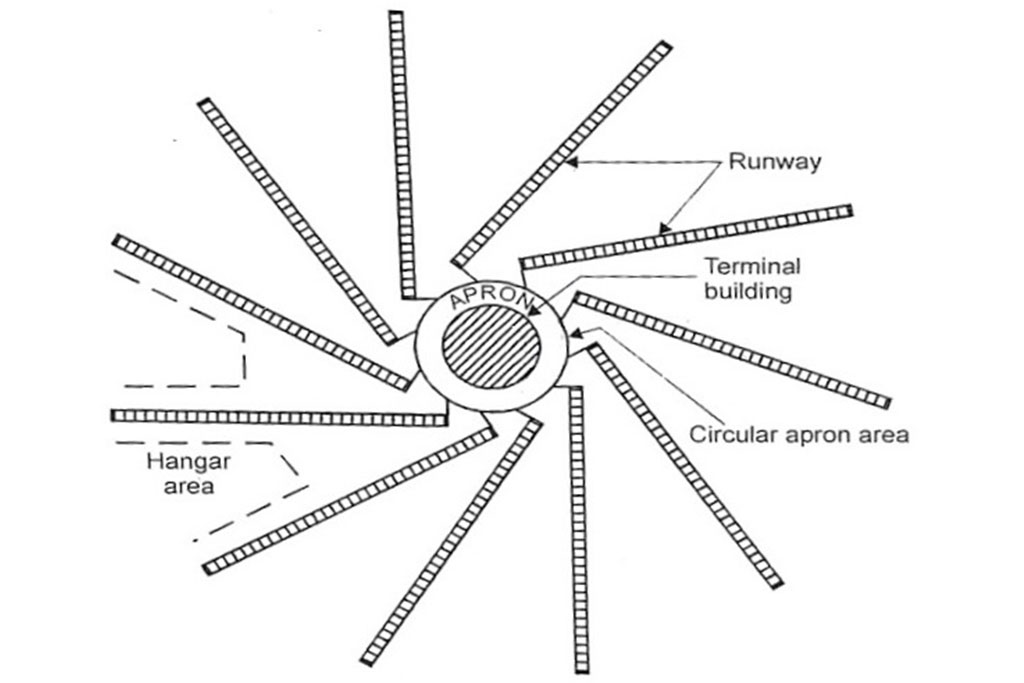
However, in the early 1940s, a strikingly different concept emerged that centered not on the design of aircraft, but rather on the design of airports. Known as the tangent (or tangential) runway layout, it reimagined the arrangement of runways around a terminal in an attempt to boost efficiency and throughput. From above, the design resembled a pattern of spokes radiating outward from the hub of a bicycle wheel, marking a notable departure from the airport design standards prevalent at the time.
As evidenced by the lack of tangential runways today, the concept was unsuccessful. But what advantages made it appealing to airport planners, and what drawbacks ultimately precluded the concept from success?
BENEFITS
- Less taxiing. By assigning arrivals to land on runways that terminate near the terminal, the subsequent taxi routes to gates would be short. Similarly, departures would be sent to runways originating near the terminal, again reducing taxi distances.
- Fewer crosswinds. With such a variety of runways radiating from a central terminal, both arrivals and departures can utilize runways that are aligned with the wind. This would, in theory, result in fewer cancellations and delays, particularly in winter weather when the combination of a contaminated runway and crosswind might exceed operational limits of aircraft and/or operators.
- More compact airport footprint. Because the tangential layout inherently positions one end of each runway in close proximity to the terminal, the overall layout is both smaller and less complex than traditional large airports.
- Less concentrated noise footprint. By regularly changing active runways to match the changing wind direction, flight paths would no longer be concentrated within a small number of approach/departure corridors. Instead, they would be more evenly distributed around the entire perimeter of the airport.
CHALLENGES
- Lower throughput. Without a parallel runway layout that’s commonplace today, simultaneous approaches would not be feasible. Simultaneous departures would be possible on two adjacent runways, and a third runway could be utilized for arrivals, but the design nevertheless would lack the capacity of many modern airports.
- Proximity to buildings and structures. To realize the aforementioned benefits of short taxi times, runways would have to be positioned in relatively close proximity to the terminal and associated buildings, such as firefighting facilities and deice pads. However, modern safety area requirements would necessitate ample space surrounding the runway, positioning the runways farther away and thereby negating much of the benefit.
- Cost. For the tangential runway concept to be successful, multiple runways would have to be constructed – inherently more than comparable airport designs with traditional runway layouts. The cost would not be limited to concrete; each runway would require its own approach infrastructure, both physical and procedural. Such an airport would require two to three times as many instrument approaches to be calibrated and maintained, and ongoing maintenance and snow removal would be similarly daunting as compared with traditional airport designs.
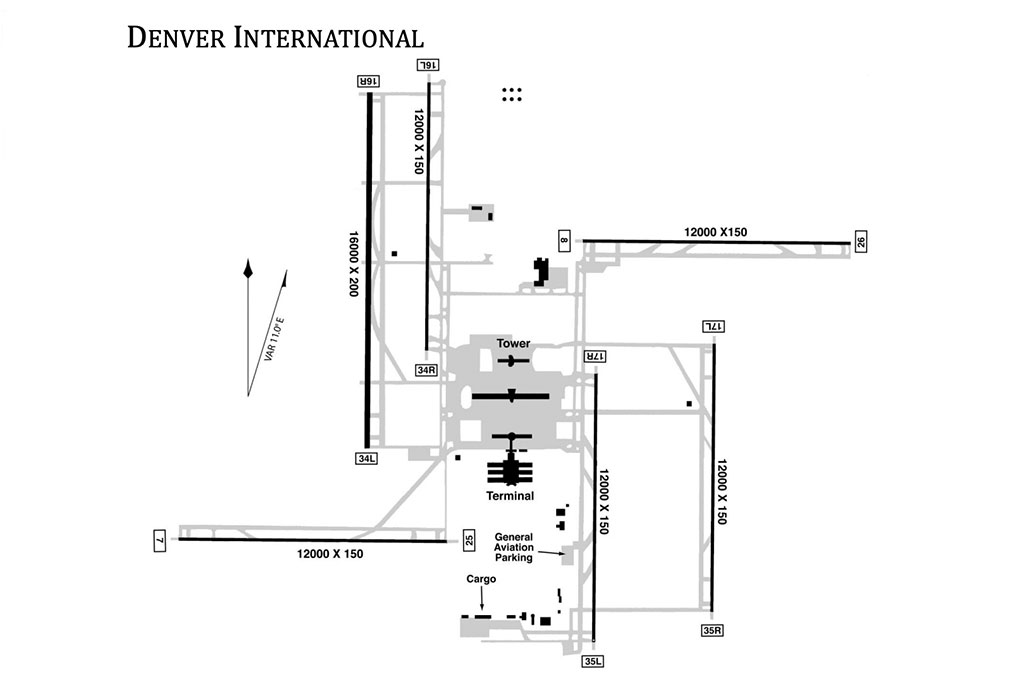
Ultimately, the tangential runway concept never caught on and remains a curious footnote in airport design history. While this is likely attributable to the balance of qualities listed above, it also reflects the complexities inherent in airport redesign. Virtually all airports grow and expand gradually, tackling capital expenditures and zoning challenges incrementally, whereas very few airports have the opportunity to start from an entirely clean slate that this concept would require.
Topics Related To: AVIATION HISTORY
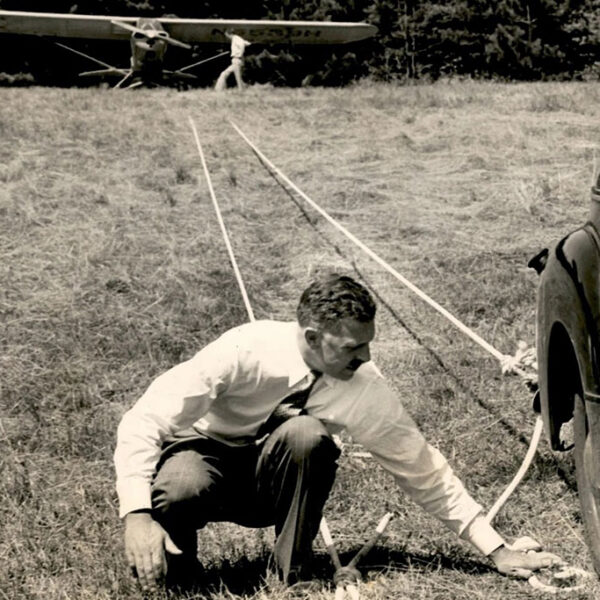
Piper Cub Catapult Takeoff
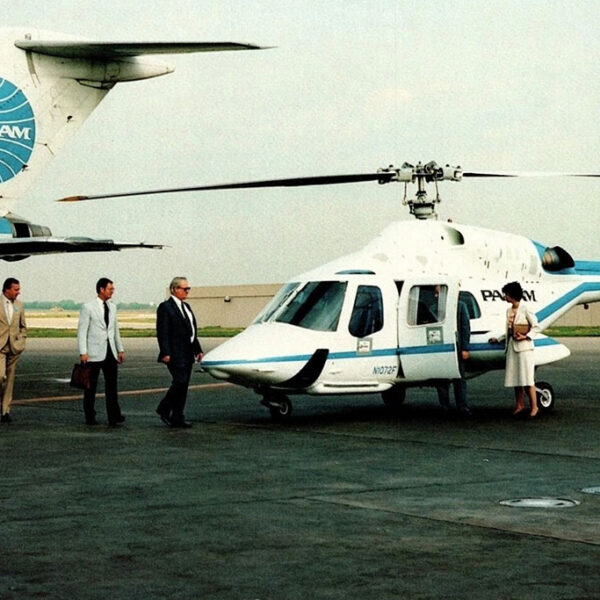
Pan Am Helicopter Transfer