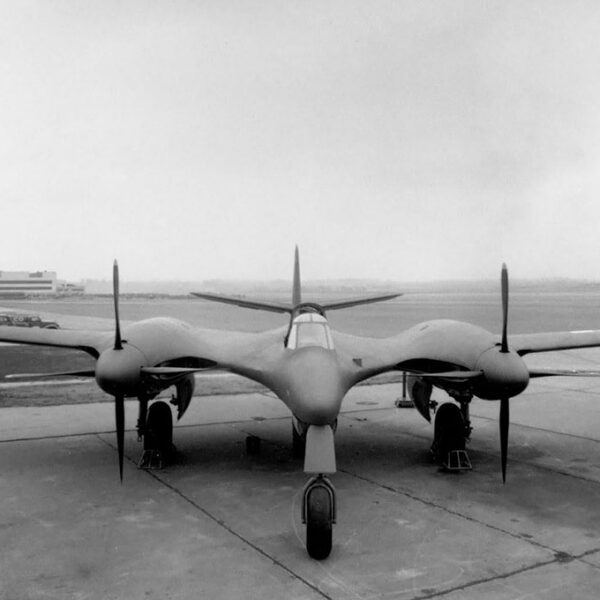
Boeing YC-14 Transport Jet Prototype
In the early 1970s, the US Air Force launched the Advanced Medium Short Takeoff and Landing Transport program to evaluate options for the military’s next-generation cargo aircraft. Among the requirements was the ability to operate from a runway only 2,000 feet in length.
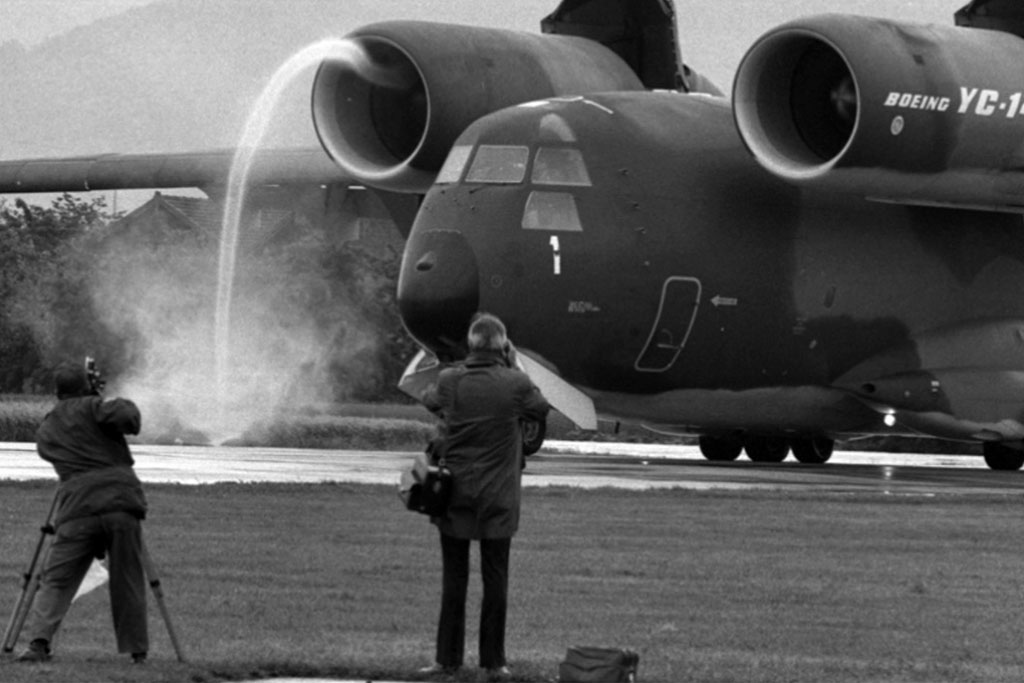
Lifting heavy payloads into and out of such short runways requires flight at speeds far lower than those of typical jet aircraft. Boeing’s proposal, the YC-14, placed two General Electric CF6 turbofan engines atop the wings and employed various aerodynamic technologies to maximize lift at low speeds. The same engine type used on the Boeing 747, these produced some 51,000 pounds of thrust, nearly equaling the aircraft’s empty weight.
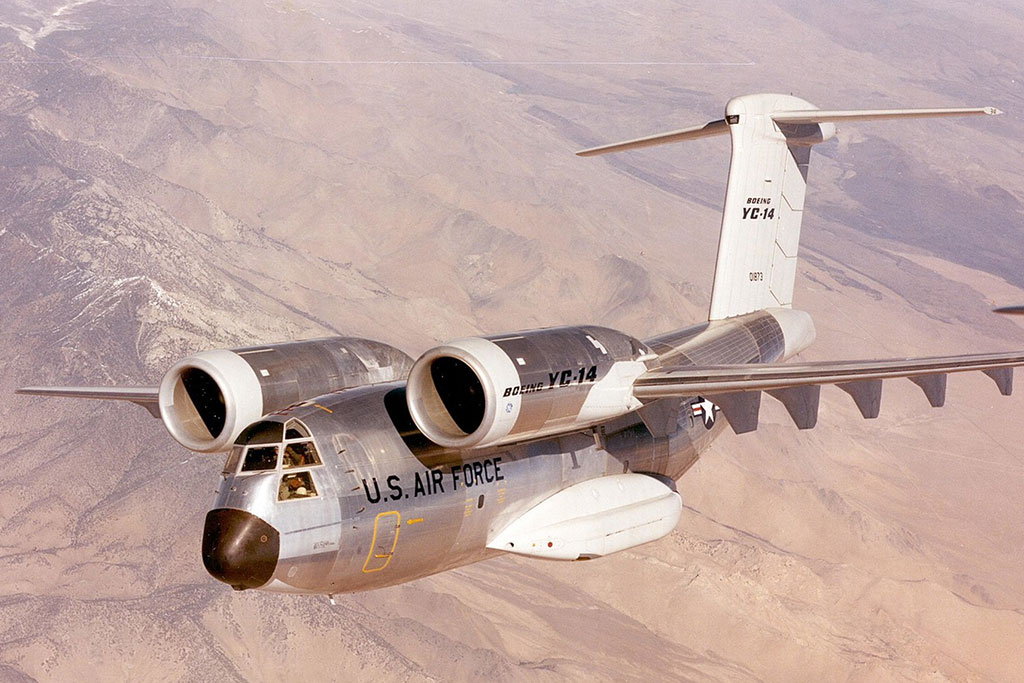
The design was a technical success. The YC-14 met or exceeded the program’s requirements, demonstrating outstanding short-field capability and the ability to fly as slow as 59 knots. Nevertheless, the military ultimately changed its mission requirements to favor strategic capability. This led to the development of the Boeing C-17 Globemaster III. Both YC-14s were preserved and are now on display in museums in Arizona.
Topics Related To: AVIATION HISTORY
The Spacemobile: NASA’s Secret Weapon for Winning America’s Hearts
The Goodyear Gizmo: A 290-Pound Helicopter, Inflatable Rotors, and Convertiplane Dreams