Three Takeaways from the Futuristic Otto Aerospace Phantom 3500
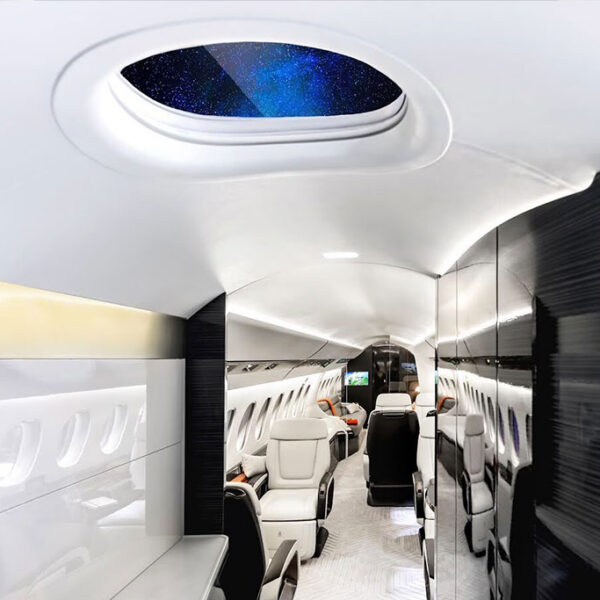
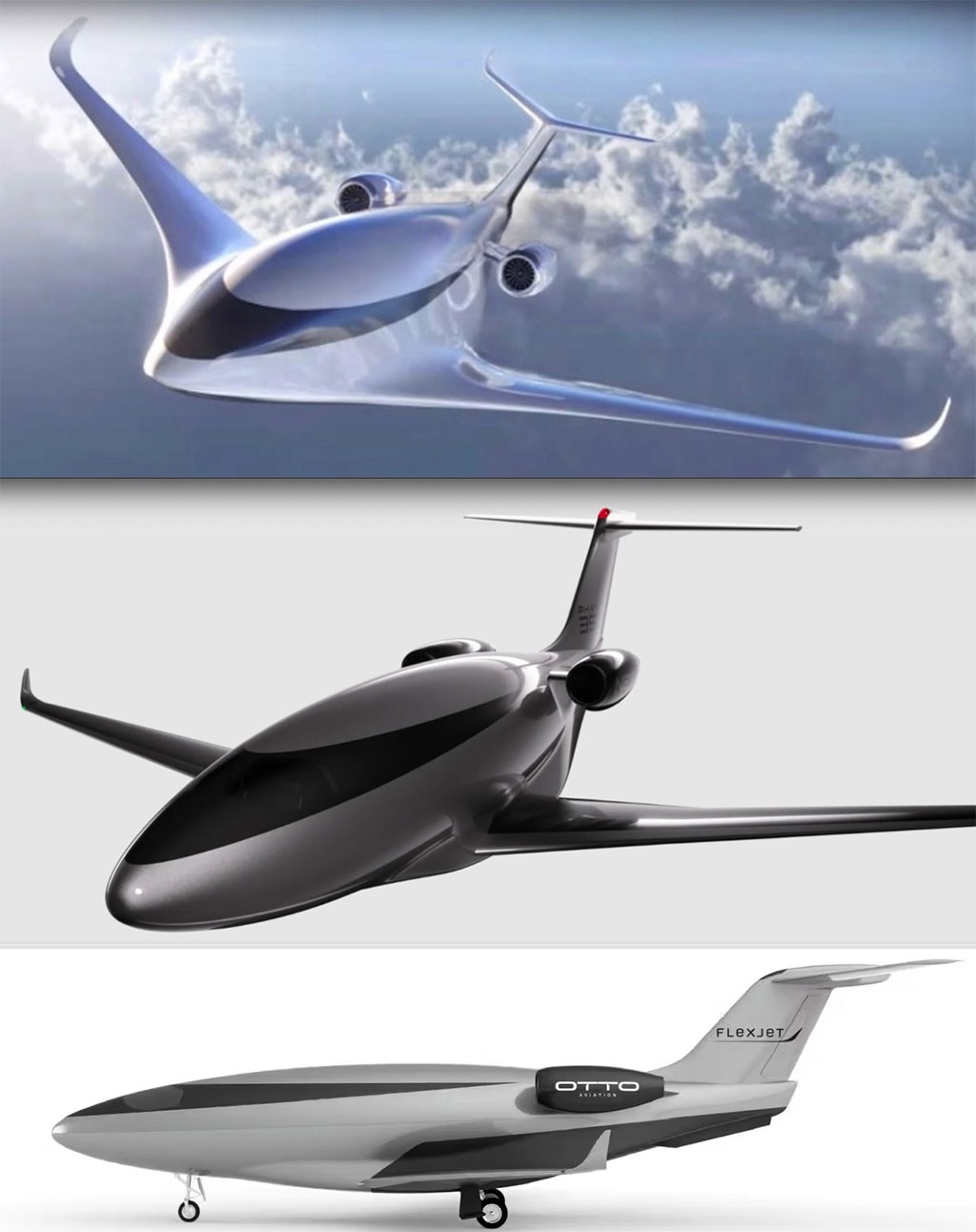
The Otto Aerospace Phantom 3500 is an aircraft expected to break new ground in the aviation industry: not just for the business jet segment, but for aircraft design as a whole. From virtual windows that enable a lighter airframe to a laminar-flow design intended to reduce drag and increase efficiency, Otto Aerospace has set lofty goals.
But how will these developments change the onboard experience? And how will the Phantom 3500 compare with existing aircraft on the market today? Here, we explore some of Otto’s promised features from a passenger’s perspective.
A BLENDING OF CATEGORIES
Looking at the Phantom 3500’s specifications, one might be forgiven for assuming some typographical errors have been made.
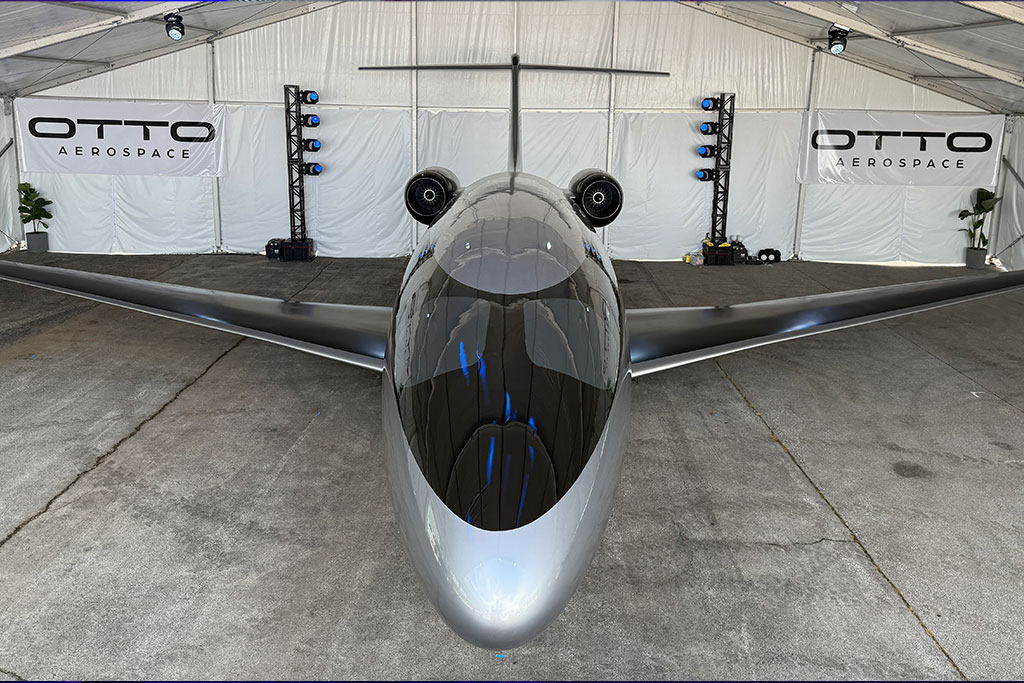
On one hand, the aircraft closely resembles an Embraer Phenom 300 light jet. The projected maximum takeoff weight of 19,000 pounds is only 450 pounds heavier than the Phenom. Additionally, the Williams FJ44 engines produce almost exactly the same amount of thrust as the Phenom’s Pratt & Whitney Canada PD535. From the perspective of thrust and weight, the two jets are nearly identical.
Scroll down to the cabin specifications, however, and the Phantom begins to resemble a much larger jet. The cabin layout depicted in Otto’s marketing material indicates 9-passenger seating, which is on par with super-midsize aircraft such as the Bombardier Challenger 350/3500 and the Embraer Praetor 600.
Additionally, with an interior cabin height of six feet, five inches, the cabin is some 18 inches taller than the Phenom 300, and even two inches taller than the ultra-long-range Gulfstream G650 and G700. While it should be noted that the top of the Phantom’s fuselage is in the shape of a continuous arc and therefore much of the cabin height will be less than the claimed maximum figure, the cabin should nevertheless feel more voluminous and spacious than any light or super-midsize jet on the market today.
To a passenger, this unique blend of specifications translates into a compelling combination of a super-midsize cabin and light jet fuel burn. If the figures come to fruition, it will almost certainly prove the most cost-effective way to provide nine passengers with a roomy, stand-up cabin and a range on par with existing super-midsize types.
VIRTUAL WINDOWS COULD DELIVER REAL BENEFITS
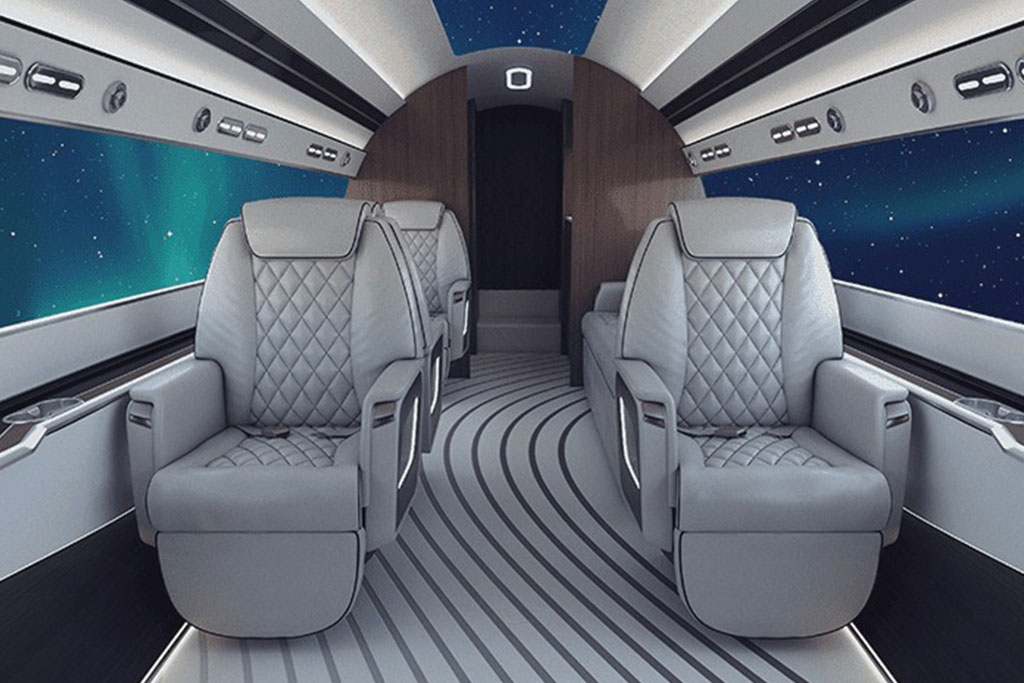
The announcement of the Phantom 3500 has generated significant buzz both within and outside of the aviation industry, and Otto’s proposal to replace all cabin windows with large screens has dominated that buzz. Indeed, the notion of flying in an aircraft with no physical windows naturally gives most passengers pause and raises doubts about the resulting onboard experience.
However, provided Otto delivers on their promise of visually accurate, high-resolution, real-time depictions of the view outside, passengers can expect some significant benefits as the technology matures:
- Reduced motion sickness – One of the primary contributing factors to motion sickness is the lack of a visible horizon. This has the effect of disconnecting one’s senses from their actual physical orientation, exacerbating the effects of motion sickness. By depicting a clearly visible horizon during flight at night or in reduced visibility, these effects could be greatly reduced.
- Calming effect for nervous flyers – The skies we fly in are not always friendly and welcoming. Heavy snow or rain can be disconcerting for nervous flyers, particularly at night when the aircraft’s strobe lights illuminate the raindrops and snowflakes in unusual ways. Additionally, while aircraft routinely fly at a safe distance from active thunderstorms, frequent lightning can be unsettling for many.
With the right software, virtual windows can depict a scene that accurately reflects the aircraft’s position and attitude while displaying a realistic-looking, calm sky. Particularly when combined with active turbulence reduction, this could significantly reduce the stress levels of those aboard. - Enhanced wellness and reduced jet lag – Otto isn’t the only company on board with virtual windows. A recent Gulfstream patent reveals a new application focused on reducing the effects of jet lag on longer flights. By depicting the actual lighting conditions, sun position, and weather at the faraway destination, passengers can acclimate to that location more easily. Gulfstream even proposes a touchscreen slider control that enables those conditions to be introduced as quickly or gradually as desired.
Additionally, by eliminating windows from the cabin, the airframe would theoretically be better able to withstand a higher differential pressure. This means the cabin could be set to a higher pressure and, correspondingly, a lower cabin altitude, further reducing the effects of fatigue and jet lag. The Phantom 3500’s proposed 51,000 maximum cruise altitude might be made possible by this. - Innovative onboard experiences – In the world of privately owned aircraft, imaginations are rarely limited by finances or resources. Indeed, as virtual window technology matures, it will likely unlock cabin design concepts that have yet to be explored.
For example, while current virtual windows are depicted to create seemingly translucent cabin walls and even a glass ceiling, as shown in the aforementioned Gulfstream patent, the technology wouldn’t necessarily be limited to those surfaces. A bold designer could, in theory, install screens beneath a protective floor surface to create a virtual “glass-bottom” aircraft, with commanding views of the landscape directly below.
Similarly, screens could be installed on the forward bulkhead, providing a real-time view of the flight deck and of the view ahead of the aircraft. Such a feature would make the forward bulkhead appear to be made of glass and would make the cabin feel notably larger and more voluminous.
LOOKING AHEAD
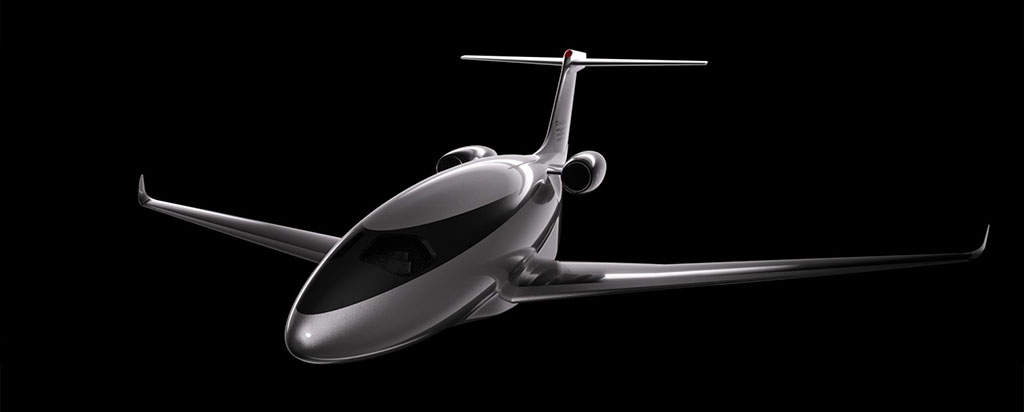
Implementing the technologies proposed by Otto represents a formidable undertaking, especially within the ambitious timeline the company has set: bringing their design from concept to certified aircraft by 2030 leaves little margin for delay. Much of the Phantom’s performance can only be achieved through the realization of Otto’s “laminar flow” fuselage, which requires a completely smooth and clean surface.
Additionally, there may be significant certification hurdles to overcome regarding passenger egress. Presumably, the Phantom will incorporate emergency exits, but occupants will need to be able to access them quickly and unencumbered. Otto might also have to provide a backup means for occupants to observe the environment outside the aircraft before evacuating. This could ultimately involve installing a small window in each emergency exit door solely for that purpose.
However, if Otto successfully overcomes these challenges, the Phantom 3500 will undoubtedly set a new standard for super-midsize efficiency.
Topics Related To: MODERN AVIATION
EAA AirVenture 2026 From the Goodyear Blimp
FAA Retires and Auctions Bombardier Global 5000 Business Jet