

AW609 Civil Tiltrotor: 3 Things to Know About Leonardo’s Path to 2027 Entry Into Service
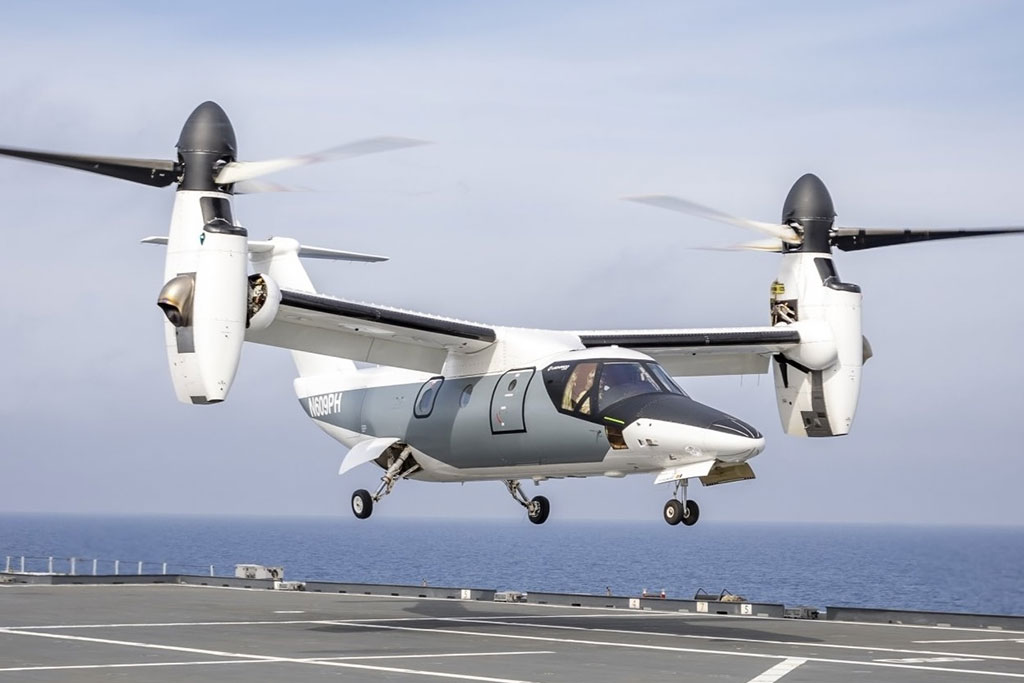
With the first tiltrotor aircraft flown in the 1950s and the military V-22 Osprey first flown in 1989, Leonardo’s AW609 now stands ready to become the first civil-certified tiltrotor in history, targeting a 2027 entry into service. Leonardo’s progress toward certification has been steady, including in-flight icing tests and an accumulation of nearly 2,000 flight hours, as the company moves from prototype testing to manufacturing customer-ready aircraft.
The path to certification has taken clearer form through three recent milestones that move the AW609 program from prototype to production reality.
Shipboard Operations Proven
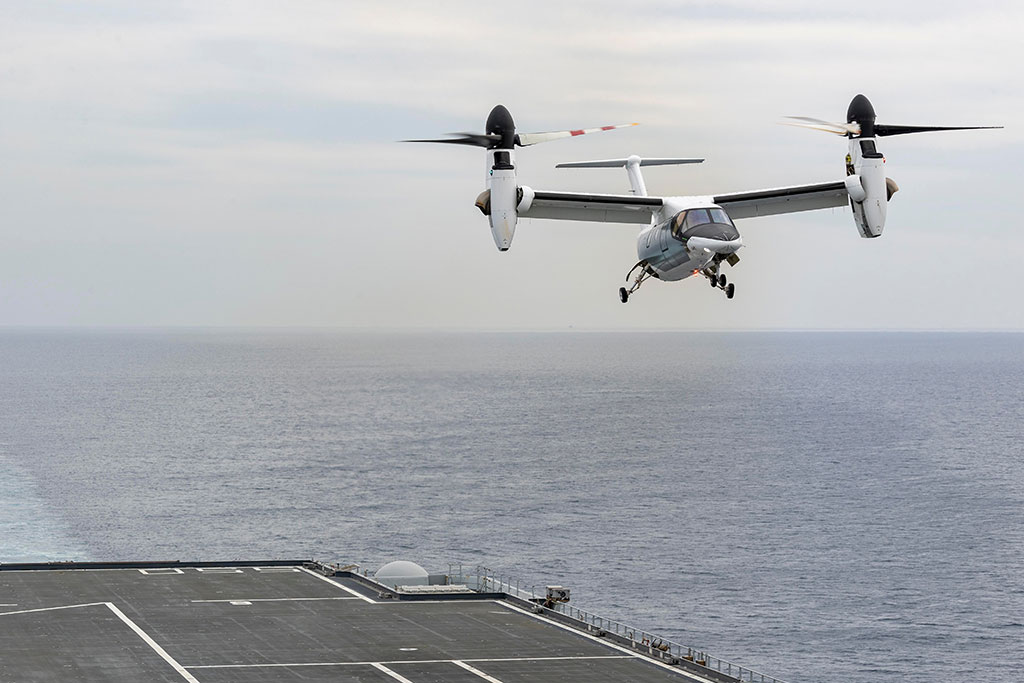
Beginning in a development/engineering simulator, test pilots began ship trials and evaluated the AW609’s flight characteristics with a preliminary assessment of shipborne takeoffs, landings, and maneuvers. Pilots and engineers conducted simulated flight operations across a range of wind conditions, approaches, and deck exits. The experience and data collected prepared the team for the real-world ship trials that followed.
In April of 2026, test pilots and flight test engineers, supported by Italian Navy personnel, departed from an Italian Navy base in Grottaglie and flew 20 nautical miles to the Italian aircraft carrier Cavour. There, they successfully completed a full test trial that included the AW609’s approach, stable deck landing, touchdown, and takeoff capabilities.
The success of these trials helps to position the AW609 as a multi-mission solution that could encompass government, military, and search-and-rescue operations. Additionally, the data collected will likely help Leonardo position the AW609 as a solution for private/VIP customers to access helipad-equipped yachts. This effort reflects Leonardo’s view that the AW609 is best suited to passenger and VIP transport.
FAA Powered-Lift Certification Underway
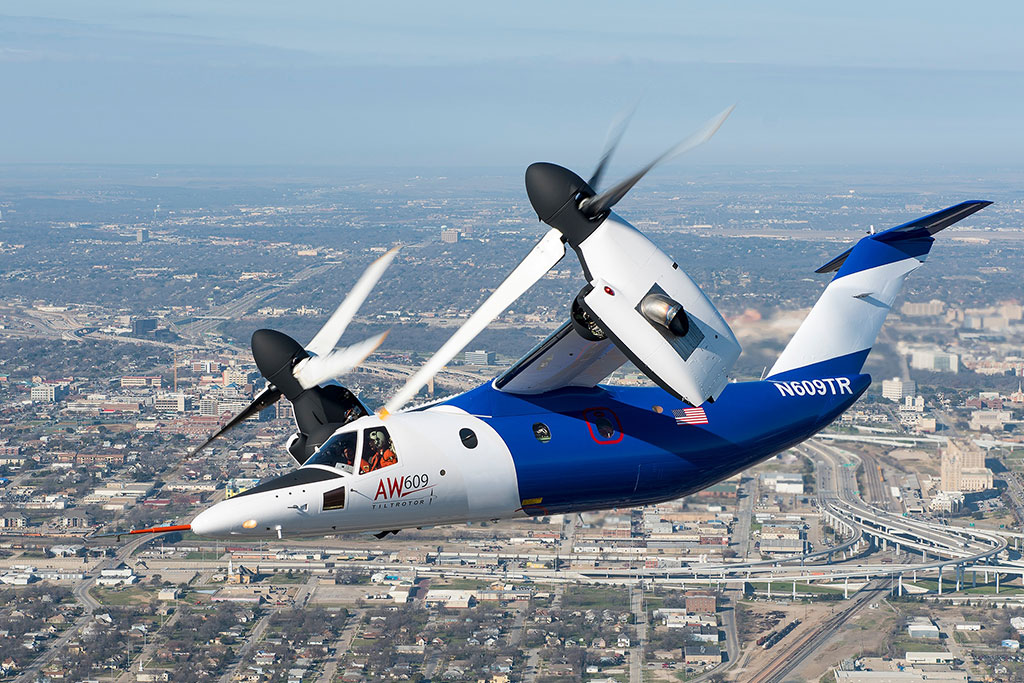
Existing aircraft certification pathways are complex. But in the case of the AW609, the certification process breaks new ground in regulatory complexity. Tiltrotor aircraft fall under the FAA’s powered-lift category that encompasses an all-new regulatory framework.
The new framework is unique in that it combines helicopter and fixed-wing requirements into a single set of standards. As part of this process, FAA test pilots flew certification flights themselves to evaluate handling characteristics, systems operation, and performance data directly rather than simply reviewing Leonardo’s data alone. This process requires 150 hours of function and reliability testing to prove that the aircraft performs consistently and predictably across its full operating envelope.
For this FAA certification process, Leonardo dedicated one AW609 to the effort. It began flying in 2025, becoming the sixth prototype worldwide. With actual production aircraft in various stages of assembly, momentum toward full certification and entry into service is well underway.
Next-Generation Tiltrotor Technology Already Flying
While the AW609 approaches certification, Leonardo has already flown its successor. The Next Generation Civil Tiltrotor (NGCTR), a technology demonstrator based on the AW609, has completed its initial flights at Leonardo’s Cascina Costa facility in Italy.
Built on an AW609 fuselage, the NGCTR incorporates several evolutions from the existing tiltrotor’s design. One of the most noticeable is the fixed engine layout that utilizes General Electric CT7-2E1 engines, as used in the AW189 helicopter. Rather than the entire engine rotating between vertical and horizontal positions, only the prop rotors and a portion of the gearboxes pivot, keeping the engine in a fixed position.
Other changes include an experimental V-tail design that reportedly improves control effectiveness, a new wing with large flaperons to reduce drag in vertical flight, and a new swept-tip prop rotor blade design that creates more lift and generates less noise. Leonardo is reportedly already exploring the possibility of incorporating the new blades into the AW609.
Whether all of these emerging concepts will find their way into production aircraft is anything but certain. But perhaps more importantly, Leonardo’s investment in the NGCTR signals its long-term commitment to tiltrotor aircraft in general and to civil tiltrotor aircraft in particular.
So, when will the AW609 be certified? If all goes according to plan and momentum is maintained, 2027 appears to be a realistic target.
Topics Related To: AVIATION NEWS
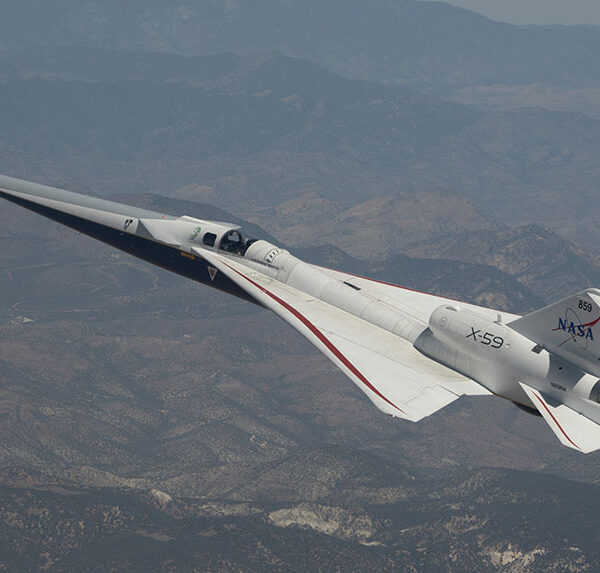
NASA Releases New X-59 Photo as Test Flights Top 55,000 Feet
A newly released image shows NASA’s X-59 from above, highlighting the airframe designed to eliminate sonic booms. Recent flights have exceeded 55,000 feet and have approached 900 miles per hour.

CFM’s Open Fan Engine Clears Key Milestones, with Flight Tests Targeting Late-2020s
CFM International completed critical design reviews for its Open Fan engine. Flight tests are on track this decade, with efforts aimed at achieving 20% better fuel efficiency than today’s engines.
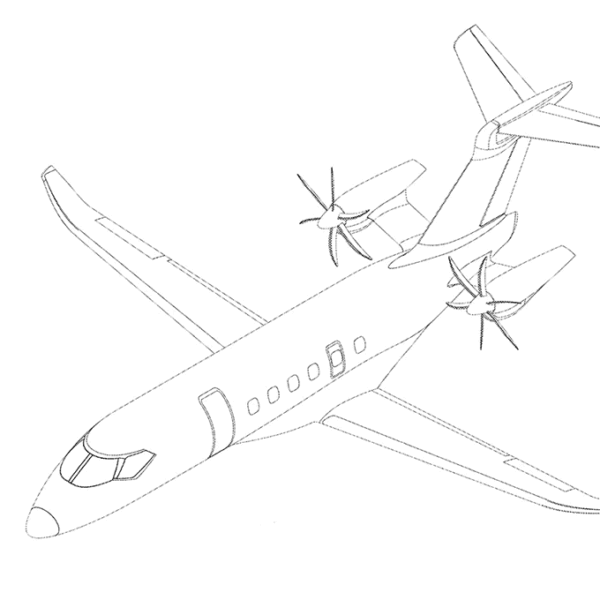
Embraer Energia Patent Filing Shows Concrete Steps Toward Hybrid Turboprop Development
Embraer’s Energia concept moves from marketing to protected IP with granted design patent USD1130272. Analysis of four hybrid-electric turboprop configurations filed in 2022.
