Sabreliner: Early Business Jet Mockup
These rare photos show a full-scale mockup of a short-lived design concept of the North American Sabreliner business jet. With initial design beginning in the mid-1950s and the first flight taking place in September of 1958, the Sabreliner was one of the very first business jets developed.
While the production version placed the engines in the now-traditional location at the tail of the aircraft, the mockup shown here proposed wing-root mounted engines. This engine placement was similar to British designs such as the de Havilland Comet, Vickers Valiant, and Handley-Page Victor.
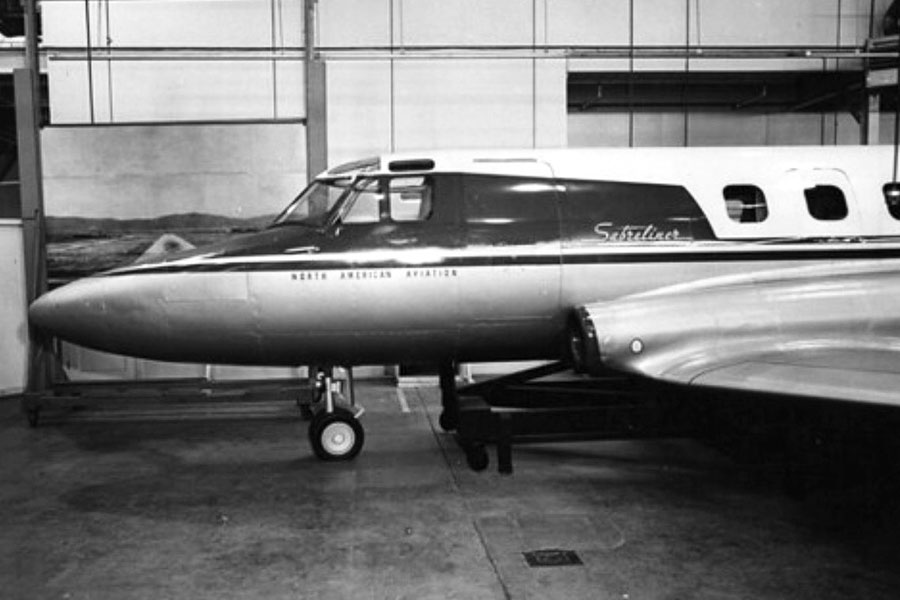
While the production version placed the engines in the now-traditional location at the tail of the aircraft, the mockup shown here proposed wing-root mounted engines. This engine placement was similar to British designs such as the de Havilland Comet, Vickers Valiant, and Handley-Page Victor.
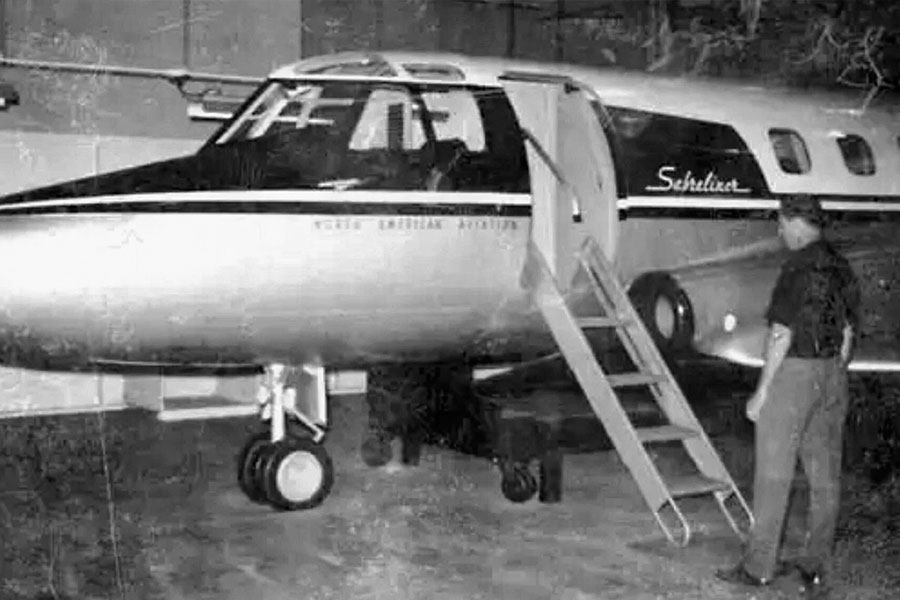
Most likely, however, the primary disadvantage would have been related to aerodynamics. With the intakes being placed so close to the side of the fuselage, it would have been challenging to ensure undisturbed airflow would have been provided to the intakes in all phases of flight. While tail-mounted engines are mounted close to the fuselage, they are positioned significantly farther away on pylons, and the aft section of the fuselage is more easily sculpted to control the airflow in this area.
Topics Related To: AVIATION HISTORY
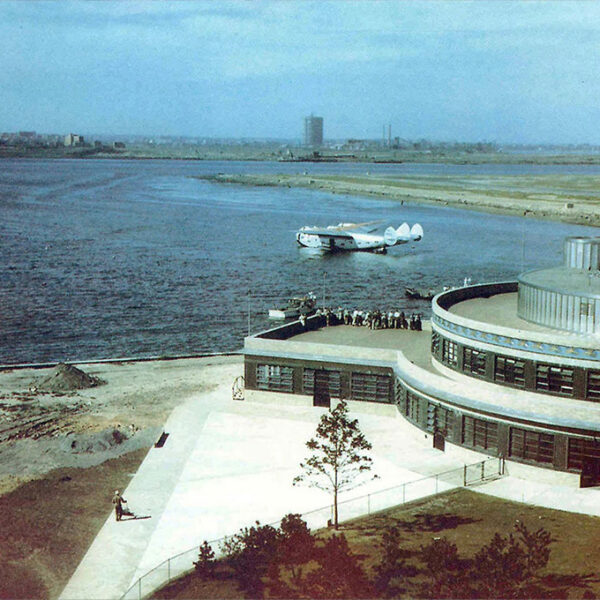
LaGuardia Airport, Circa 1941: Home to Luxury Transatlantic Flying Boats
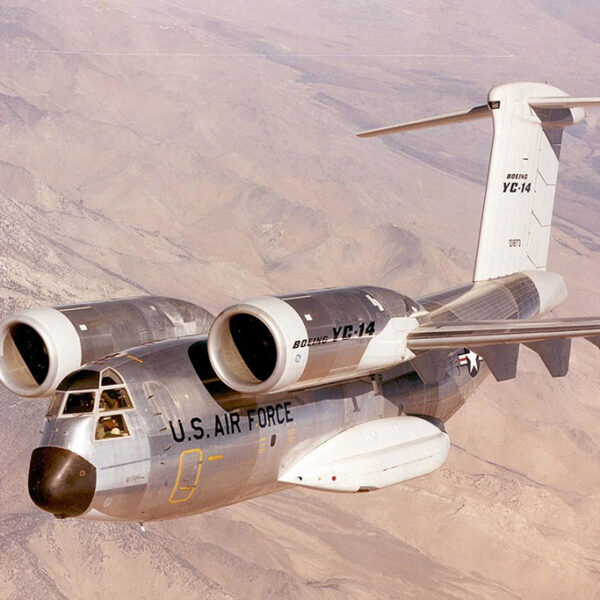
Boeing YC-14 Transport Jet Prototype