

German Manufacturer Horten Unveils New Flying Wing Aircraft
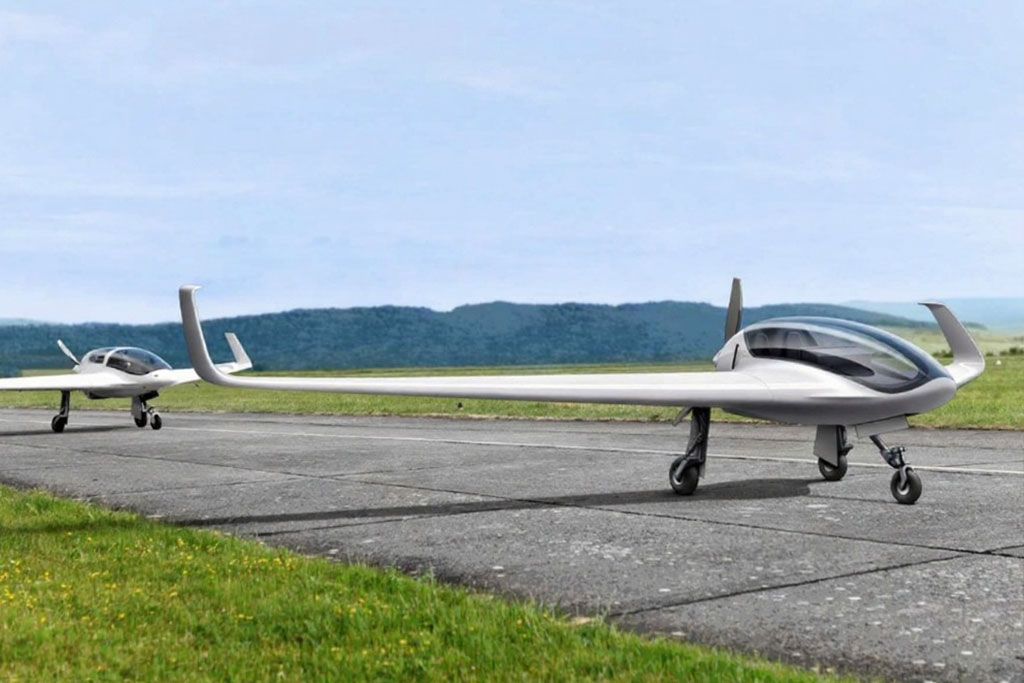
German aircraft manufacturer Horten announced on January 14 the development of a new flying wing aircraft, the Horten NG2. Based on the HX-2 demonstrator, which was flown extensively in 2019, the forthcoming NG2 is positioned as an evolution of the design with expanded capability.
With a direct lineage to some of the earliest flying wings in aviation history, Horten is well-positioned to capitalize on its unique design. While the modern iteration of the company has no direct ties to the WWII-era company that built the Ho-229 fighter/bomber, the original founder, Reimar Horten, contributed to the design of the HX-2’s predecessors that were built and flown in the late 1980s and early 1990s.
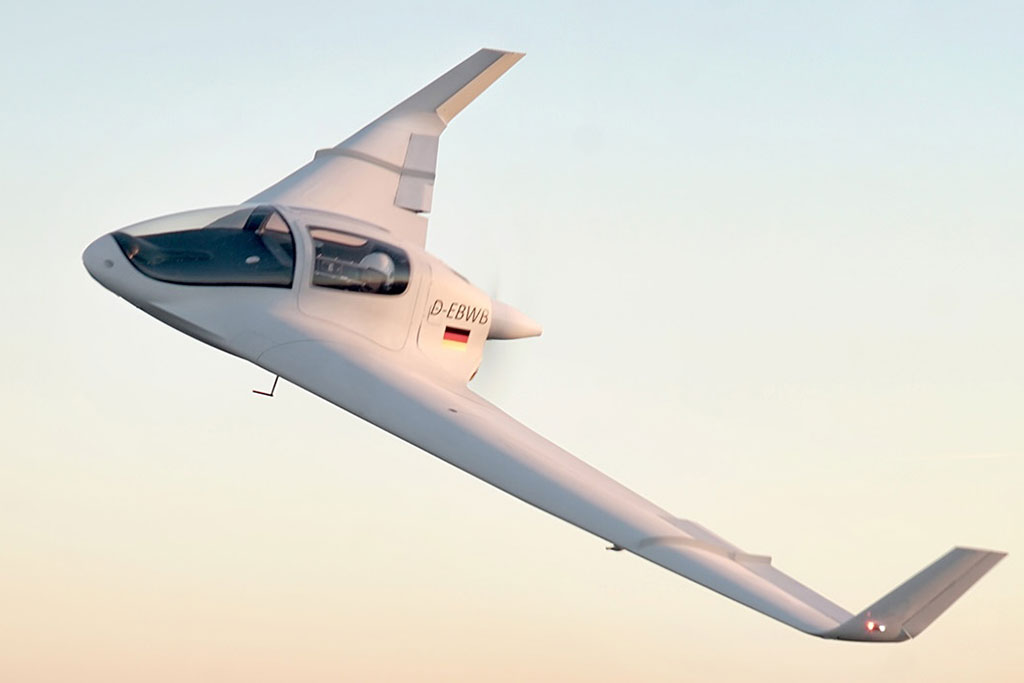
Serving as a proof-of-concept aircraft, the HX-2 had a 32-foot wingspan, two seats, and was powered by a 100-horsepower Rotax 912iS engine. This configuration enabled it to cruise at 87 miles per hour while burning approximately 2.5 gallons per hour, yielding a fuel economy of nearly 33 miles per gallon.
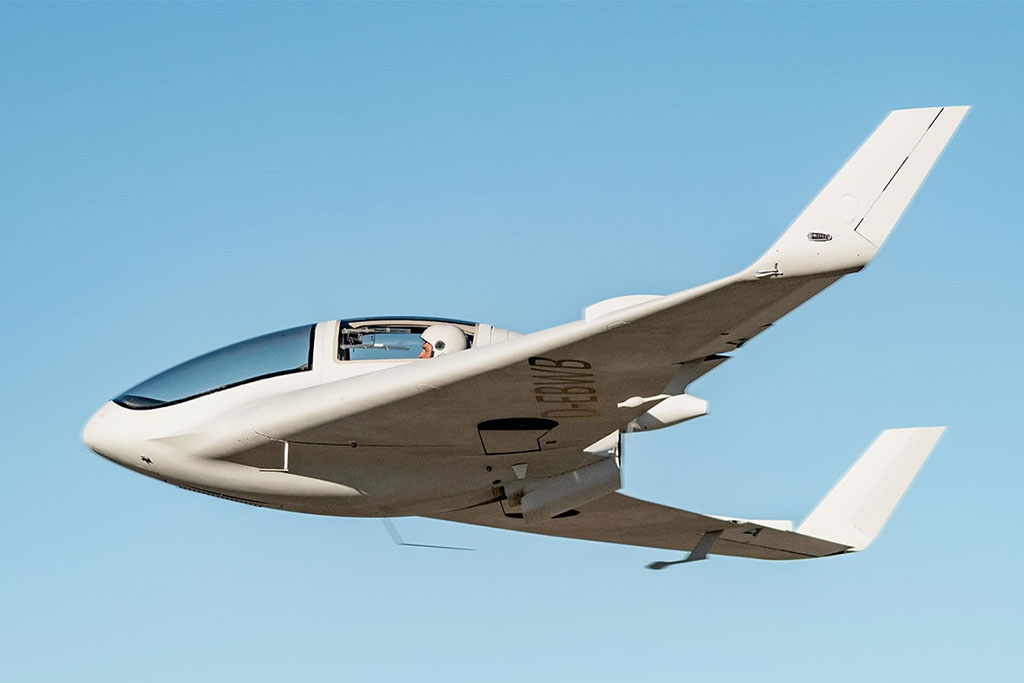
Although Horten has not released detailed specifications for the NG2, the company has released some basic information. Most notably, the engine will be upgraded to the more powerful, 160-horsepower Rotax 916iS. Although the larger engine adds approximately 50 pounds to the aircraft’s empty weight, the greatly increased power should result in a notable boost in speed and capability.
Compared to existing conventional designs, the flying wing concept offers several benefits. Most notably, the airframe inherently provides substantial internal volume. This can be utilized for fuel storage to enable exceptional endurance and range of approximately 20 hours or 2,000 miles, respectively.
Alternatively, the internal volume could be utilized for cargo capacity. Indeed, with most four-place, single-engine piston aircraft missions involving one to two occupants with baggage, the Horten would naturally align with the needs of many four-place operators. Moreover, it would do so more quickly and efficiently.
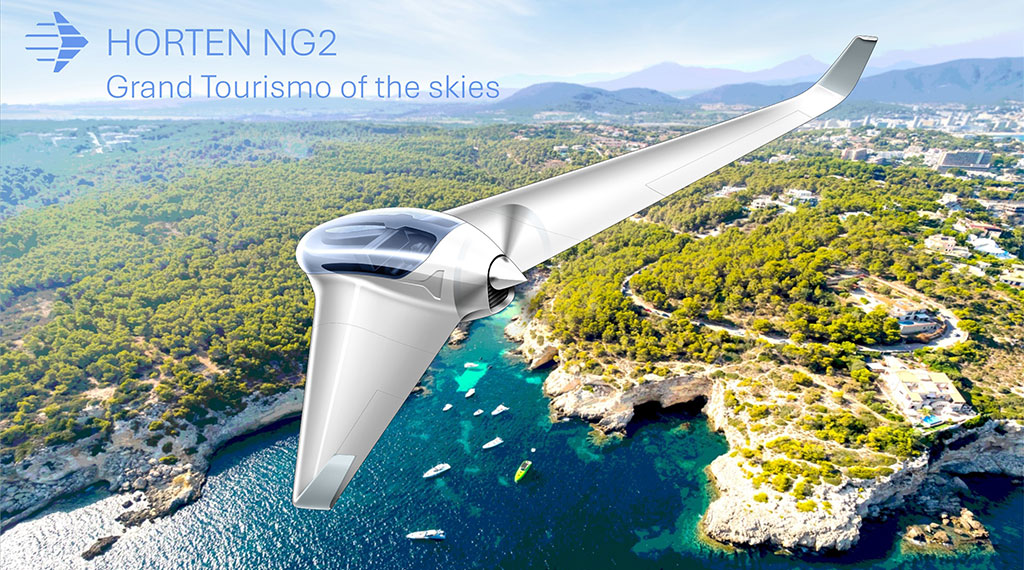
Renderings show the NG2 fitted with a three-bladed propeller, which should further increase efficiency and potentially increase the propeller’s ground clearance. This is an important factor for any aircraft with a pusher propeller, both in terms of propeller clearance when the nose is raised and in resistance to foreign-object damage to the propeller itself.
Yet to be seen is any fender or shield to deflect debris from being thrown upward by the nosewheel – another concern inherent to pusher propellers. The design of such fenders can be challenging when retractable landing gear is involved, as their bulky shape must be accommodated within tight internal bays when the gear is retracted.
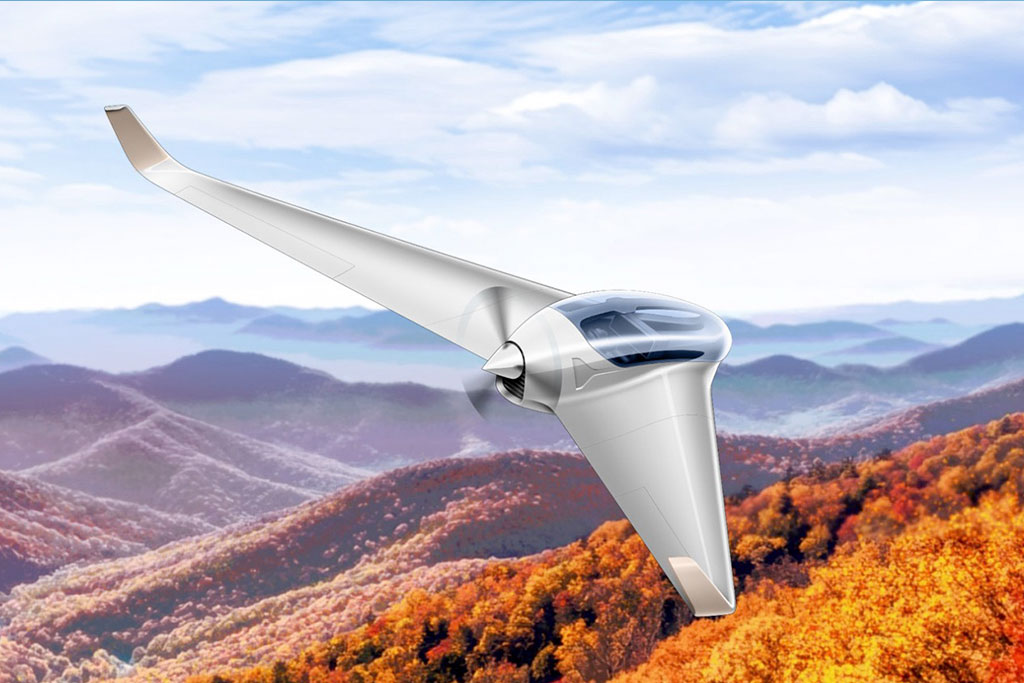
The NG2 will also integrate a ballistic recovery parachute. Here again, it will be interesting to see how Horten integrates the feature into the aircraft, as the proximity to the propeller and large canopy present some inherent design challenges. A full Garmin avionics suite is planned, which, in theory, could later integrate Garmin’s Autoland autonomous landing capability as an additional safety measure.
Presently, Horten “is targeting investors and strategic partners with an international campaign” to bring the NG2 into full-scale production. Unlike many upstarts, however, there are some factors at play that stack the cards in the company’s favor. Most notably, the aircraft and concept have been proven through the pre-production HX-2. While the NG2 introduces many changes, the baseline layout and configuration are consistent, boding well for future development.
Additionally, the market is evolving in Horten’s favor. By introducing the MOSAIC (Modernization of Special Airworthiness Certification) framework, the FAA has drastically simplified the cost and complexity of aircraft certification in the US while simultaneously expanding the potential market to buyers with Sport Pilot certificates. Previously, Sport Pilots were limited to lower-powered aircraft with fixed landing gear.
Alongside the NG2 announcement, Horten announced a potential future aircraft, the NG5. Essentially an upsized, multi-engine development of the smaller NG2, the NG5 would incorporate five seats in a unique cabin layout, with the four passengers positioned side-by-side in two rows and the single pilot seat centered in the front.
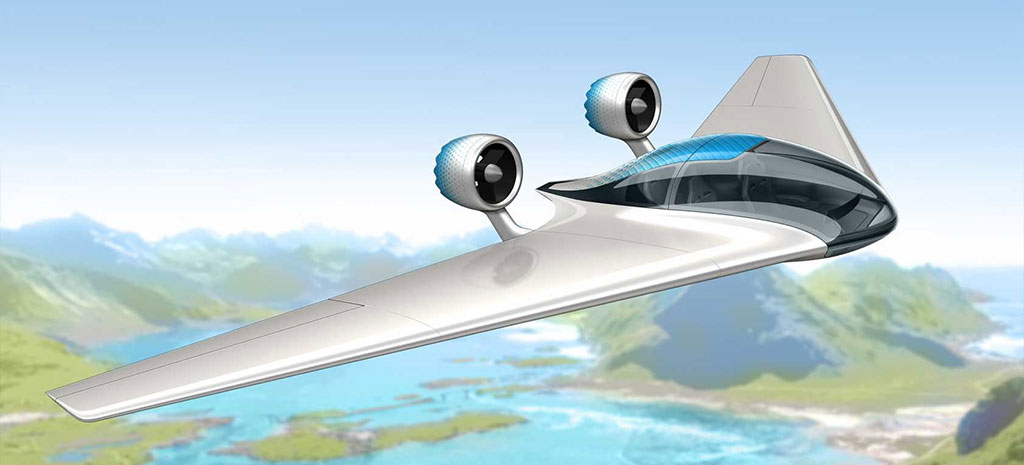
The NG5 rendering depicts the aircraft with two unspecified ducted-fan powerplants, described only as “alternative propulsion.” Given the inherently voluminous airframe and previous indications from the company, it is likely that Hydrogen power will be utilized. The NG2 is also slated to utilize “higher cockpit automation addressing general aviation and regional advanced air mobility.”
For now, Horten is focusing on securing the necessary funding to proceed with the development of the NG2. With any luck, the effort will be a success, and the flying wing concept will take flight worldwide in the near future.
Topics Related To: AVIATION NEWS
NASA Releases New X-59 Photo as Test Flights Top 55,000 Feet
A newly released image shows NASA’s X-59 from above, highlighting the airframe designed to eliminate sonic booms. Recent flights have exceeded 55,000 feet and have approached 900 miles per hour.

CFM’s Open Fan Engine Clears Key Milestones, with Flight Tests Targeting Late-2020s
CFM International completed critical design reviews for its Open Fan engine. Flight tests are on track this decade, with efforts aimed at achieving 20% better fuel efficiency than today’s engines.
AW609 Civil Tiltrotor: 3 Things to Know About Leonardo’s Path to 2027 Entry Into Service
Leonardo’s AW609 tiltrotor targets 2027 civil certification as three milestones, including a flying next-generation prototype, demonstrate progress toward certification.
