

First Flight of NASA’s X-59 Brings Domestic Supersonic Flight Closer to Reality
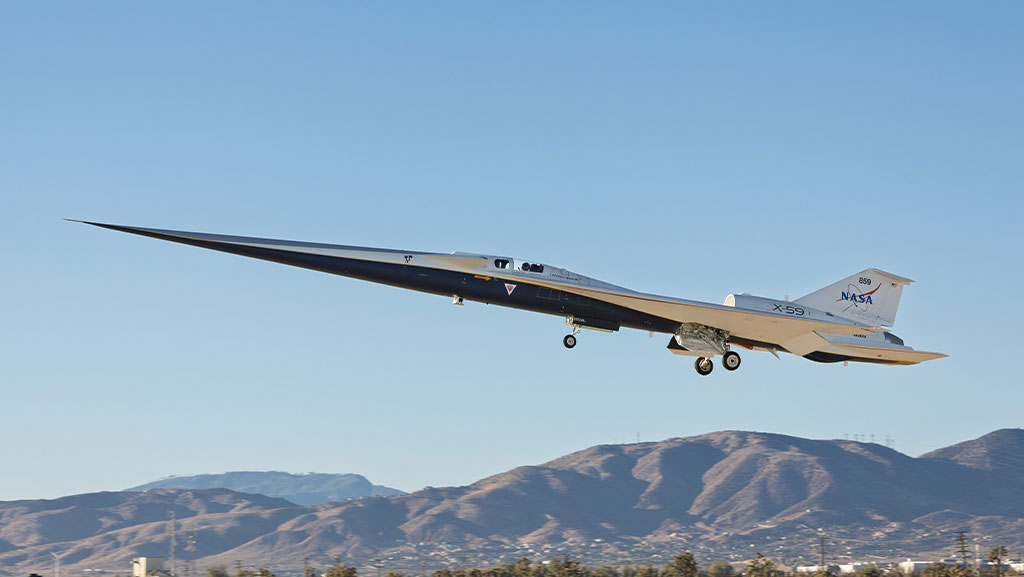
The day is approaching when supersonic aircraft will take flight across the US on a routine basis, and on October 28th, 2025, the first flight of NASA’s X-59 marked significant progress toward that goal.
The mission known as Quesst – “Quiet SuperSonic Technology” – is being conducted by NASA to evaluate whether new technologies will enable future jet aircraft to exceed the speed of sound when flying over land.
For decades, legislation has prohibited this. In 1973, four years after the first flight of Concorde and three years before its entry into airline service, supersonic overflight of the US by civil aircraft was banned. The intent was to prevent supersonic aircraft from subjecting people and property to the effects of sonic booms – loud and sudden bursts of noise generated during supersonic flight that can disturb people and damage property on the ground.
To explore how advanced design and emerging technologies might reduce the effects of a sonic boom and enable supersonic overflight of land, NASA launched the Quesst program in 2016. Beginning with scale models in wind tunnels, it advanced to a full-scale, manned aircraft capable of flight at Mach 1.5.
The program has two primary goals. First, to design and build an aircraft equipped with new technologies to reduce the loudness of sonic booms and then measure and evaluate the effectiveness of the design. And second, to fly the aircraft over several communities to gather data from public responses concerning the overflight.
The longer-term aim is to use the collected data to inform future revisions to supersonic overflight legislation. In the long term, the combination of new technologies and updated legislation may enable aircraft manufacturers to develop new supersonic aircraft for the civil market. Initial types would most likely be business jets.
The X-59’s first flight took place at subsonic speed, between Air Force Plant 42 in Palmdale, California and NASA’s Armstrong Flight Research Center at Edwards Air Force Base. Initial flights will be conducted at lower altitudes and at a relatively slow speed of approximately 240 miles per hour as systems integration and airworthiness are evaluated. Airspeeds and altitudes for subsequent test flights will gradually increase as data is gathered.
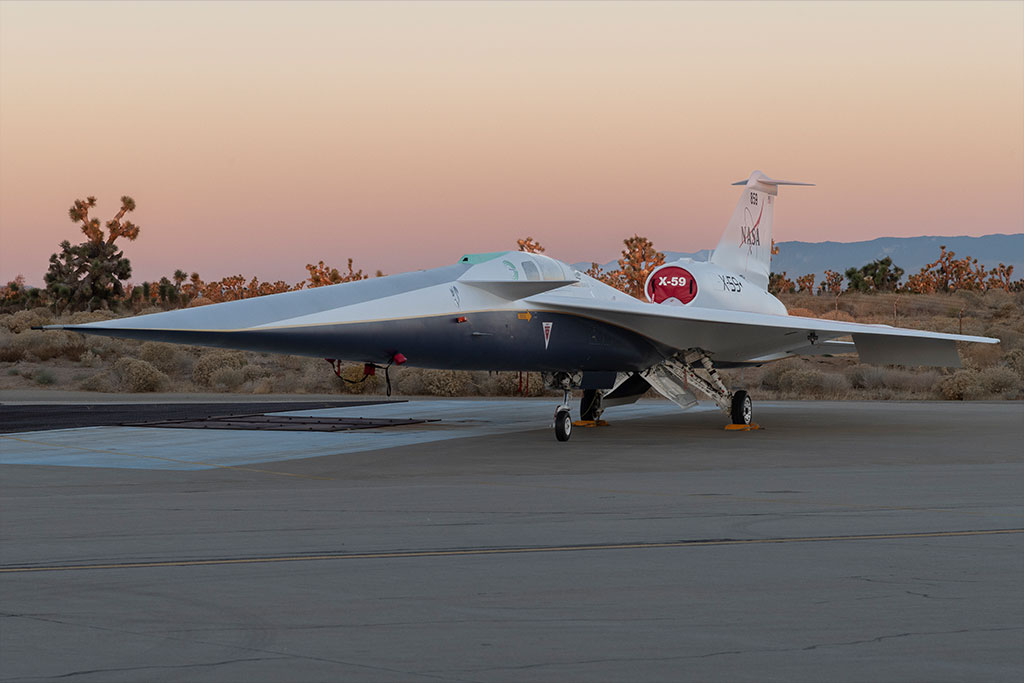
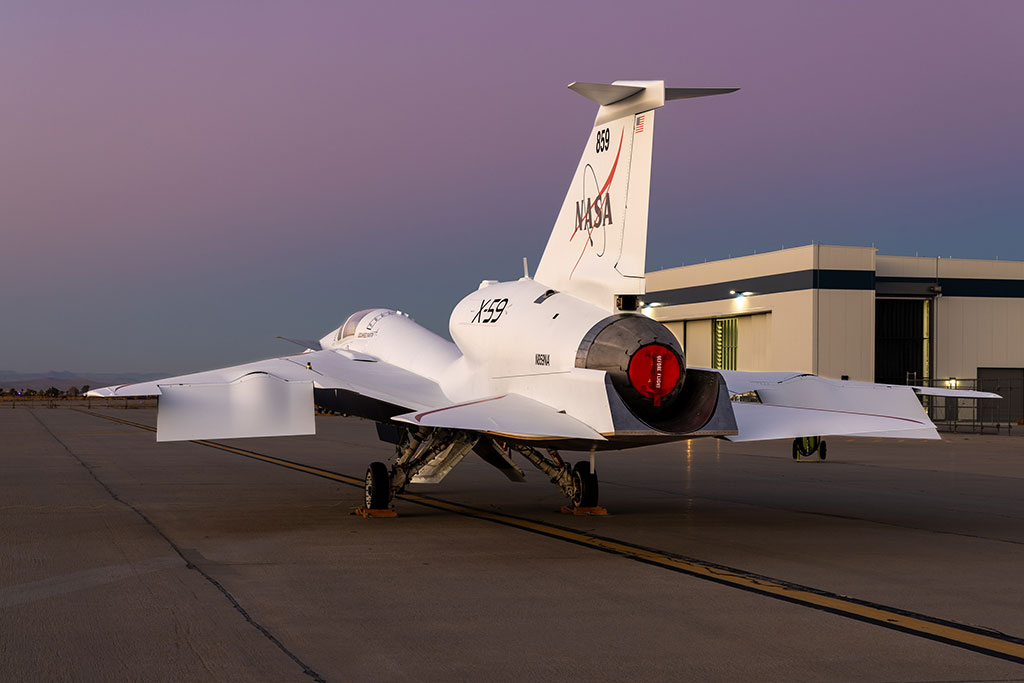
Built specifically for this testing, the X-59 utilizes several existing components from other supersonic aircraft. The General Electric F404 engine is the same type used on the Boeing F/A-18E/F Super Hornet, the landing gear is from a Lockheed Martin F-16 Fighting Falcon, and the cockpit, ejection seat, and canopy are from a Northrop T-38 Talon. Utilizing such “off-the-shelf” components significantly reduces the time and effort required to develop and certify each component separately, thereby expediting the program.
Topics Related To: AVIATION NEWS
AW609 Civil Tiltrotor: 3 Things to Know About Leonardo’s Path to 2027 Entry Into Service
Leonardo’s AW609 tiltrotor targets 2027 civil certification as three milestones, including a flying next-generation prototype, demonstrate progress toward certification.
Embraer Energia Patent Filing Shows Concrete Steps Toward Hybrid Turboprop Development
Embraer’s Energia concept moves from marketing to protected IP with granted design patent USD1130272. Analysis of four hybrid-electric turboprop configurations filed in 2022.
Dassault Falcon 10X Makes First Flight
Dassault’s Falcon 10X completed its maiden flight on June 19, 2026, positioning it against the Gulfstream G700 with a slightly larger cabin despite slightly reduced speed and range.
