

Repurposed for Rescue: How the Challenger 604 Business Jet Found Its Calling Over the Southern Ocean
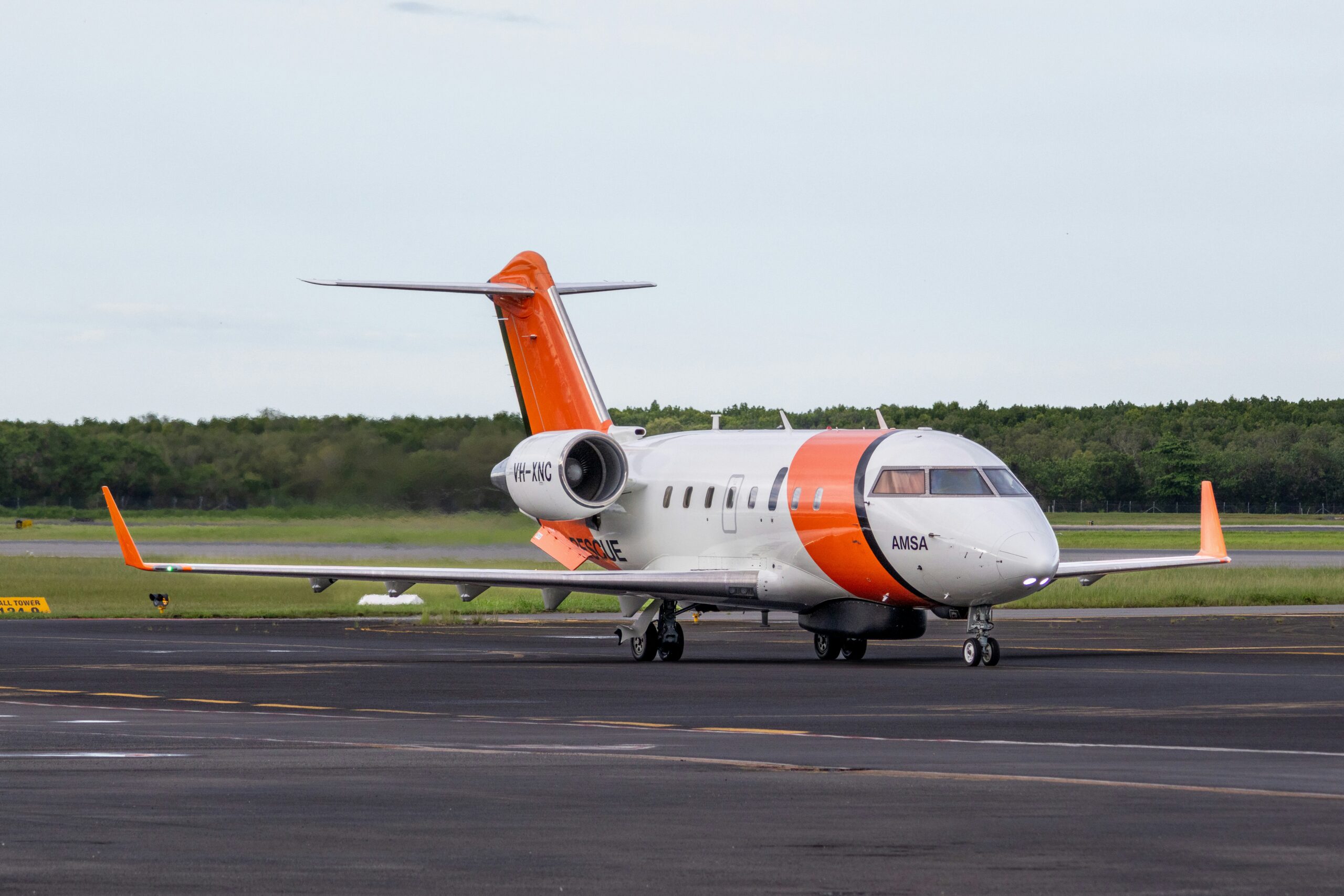
When Canadair first developed the original Challenger 600 in the late 1970s, and Bombardier updated the aircraft and created the Challenger 604 two decades later, both companies targeted one mission in particular: luxurious business travel for nine to eleven passengers. With a range of up to 4,000 nautical miles and a roomy, eight-foot-wide, stand-up cabin, it was marketed as one of the most comfortable intercontinental business jets available.
Although Canadair’s initial marketing plans included an airline version with high-density seating for up to 19 passengers, as well as a dedicated freight version, it would be years before search and rescue materialized as a potential role for the Challenger. In 2016, the Australian Maritime Safety Authority (AMSA) acquired, modified, and commissioned four Challenger 604s as special-mission aircraft to provide search-and-rescue services over land and sea along the entire 16,000-mile coastline. 2026 marks the ten-year anniversary of the aircraft’s use in this role.
MISSION SCOPE
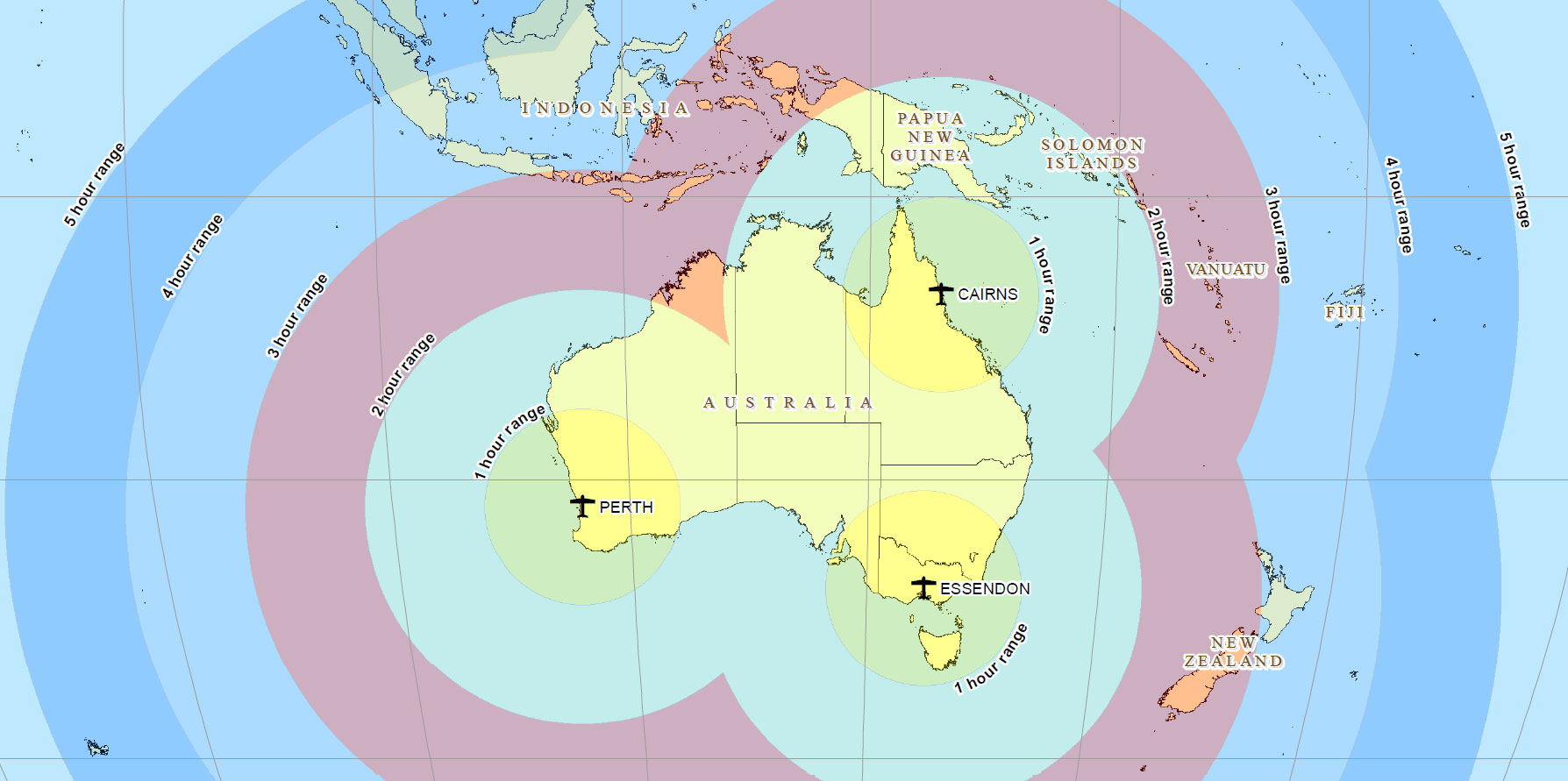
While typical search-and-rescue missions often use slow-flying helicopters and propeller-driven aircraft, faster jets make sense given AMSA’s location and jurisdiction. Taking into account the organization’s international agreements, the service region covers approximately one-tenth of the Earth’s surface. Their mission, therefore, encompasses a unique range of capabilities, including fast transit to a target location, as well as the capability to assess situations and deploy lifesaving and rescue aid to people on the surface.
To cover this area, AMSA utilizes three bases: Perth, Melbourne, and Cairns. Together, these provide complete coastline coverage around Australia’s perimeter. One Challenger is assigned to each base, with a fourth serving as an operational spare and enabling 24/7 availability.
AIRCRAFT MODIFICATIONS
While modified extensively for their mission, the AMSA Challengers’ flight performance is relatively unchanged from stock Challengers serving traditional business jet roles. The search-and-rescue jets fly at speeds of roughly 400-465 knots (Mach 0.75-0.83), with a range of up to 3,800 nautical miles and an endurance of up to 8 hours.
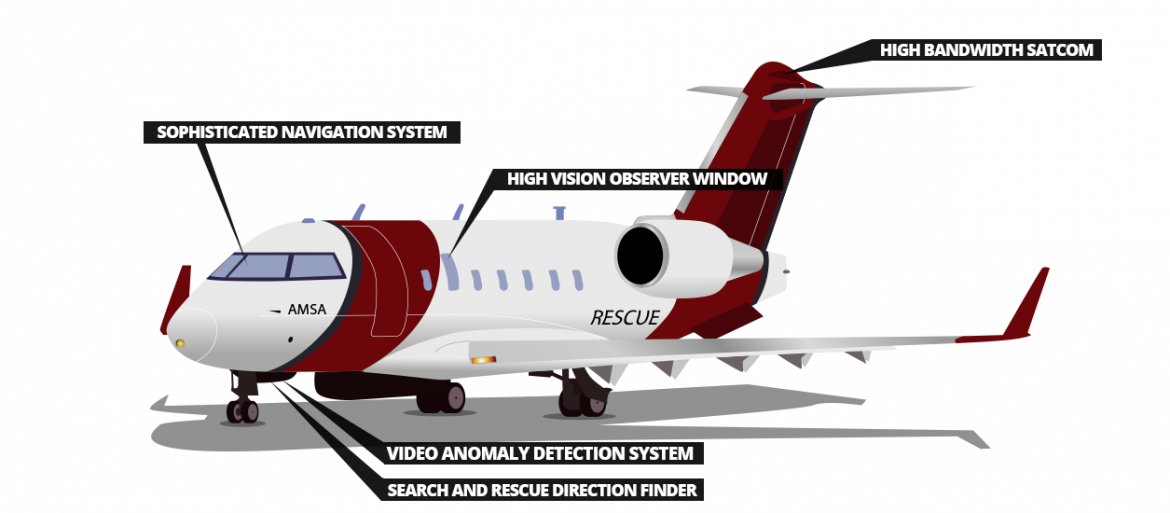
Visually, the jets are easy to differentiate from typical Challenger business jets. Beyond the bold orange stripe livery, several exterior modifications are visible. A large ventral radome on the belly houses search radar. Because it is mounted forward of the wing, this introduces some aerodynamic stability concerns, so two ventral fins are mounted on the underside of the tail to maintain directional and longitudinal stability.
Up front, two large observation windows provide rescue crews with clear views of the land or water below. The windows sit well ahead of the wing, offering an unobstructed view ideal for spotting people and vessels in distress. Despite being far larger than the Challenger’s standard cabin windows, their robust design enables full cabin pressurization, leaving the service ceiling unchanged.
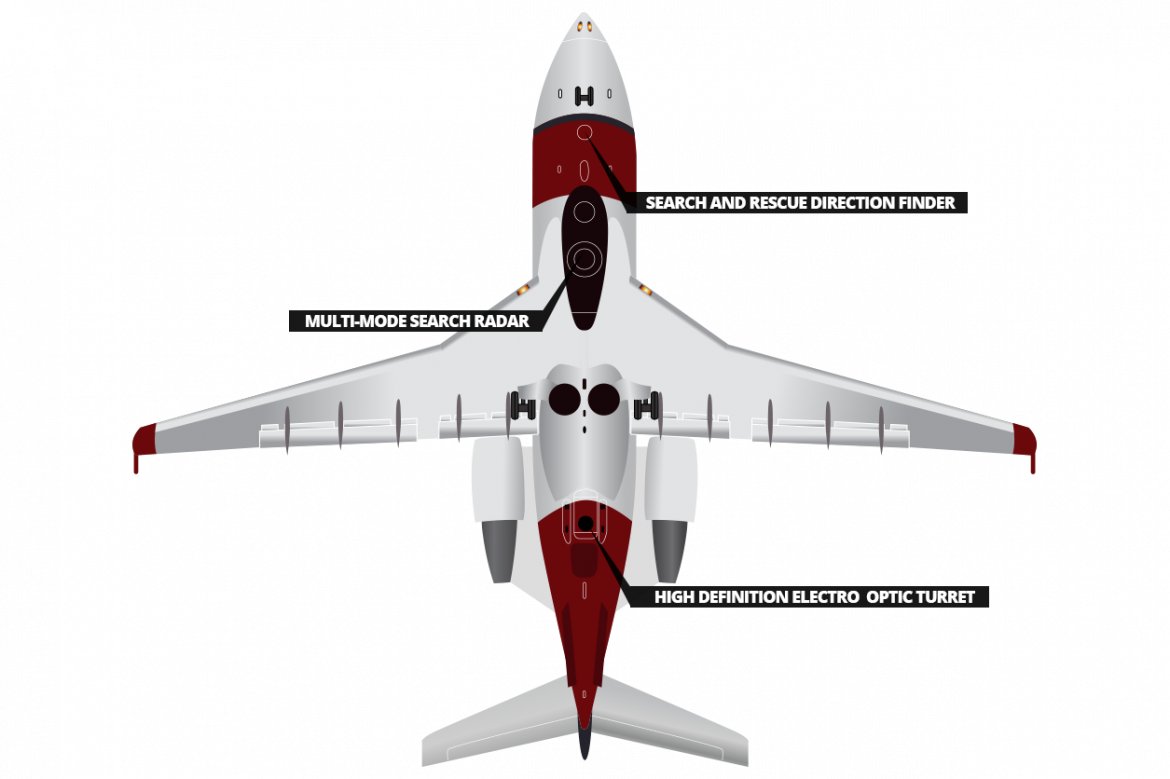
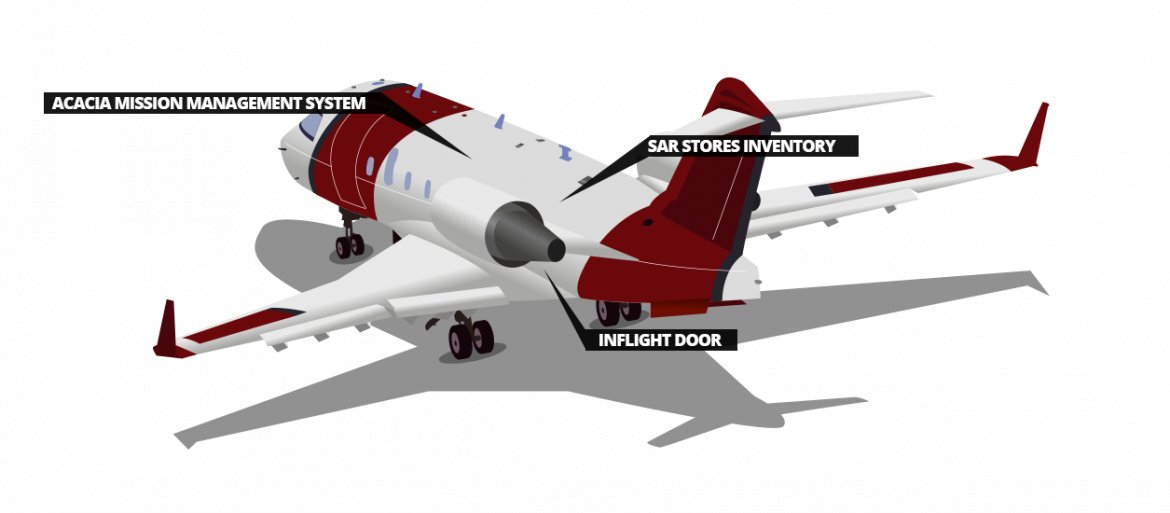
The sensors and rescue equipment are less obvious. An X-band surveillance radar provides 360-degree coverage, and an electro-optic turret provides daytime and night imaging, as well as infrared imaging. The aircraft also have the ability to see underwater with anomaly-detection software.
Once the aircraft locates people in distress and reaches their location, the Challengers can drop survival equipment, including life rafts and satellite phones.
A DECADE OF SERVICE
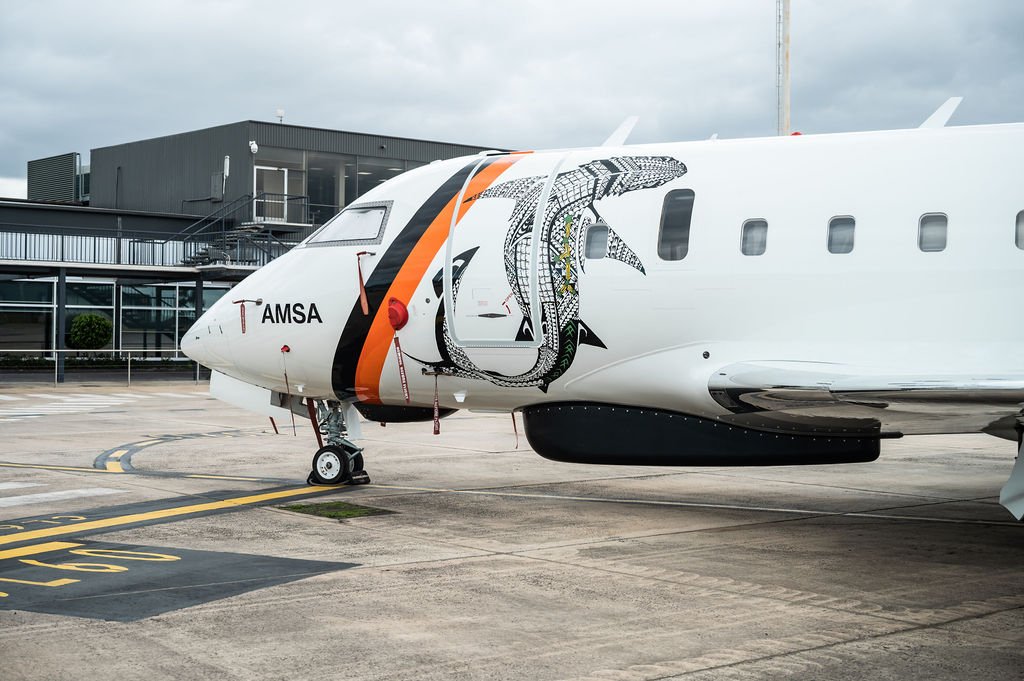
Since their introduction to service in 2016, the fleet has marked ten years of service. While the original contract was slated to end in 2028, AMSA has exercised a 2-year extension, taking it to 2030. Thus far, only one livery change has been made: in 2023, the Cairns-based Challenger was painted in a striking design from Badu Island artist Michael Nona.
Topics Related To: MODERN AVIATION
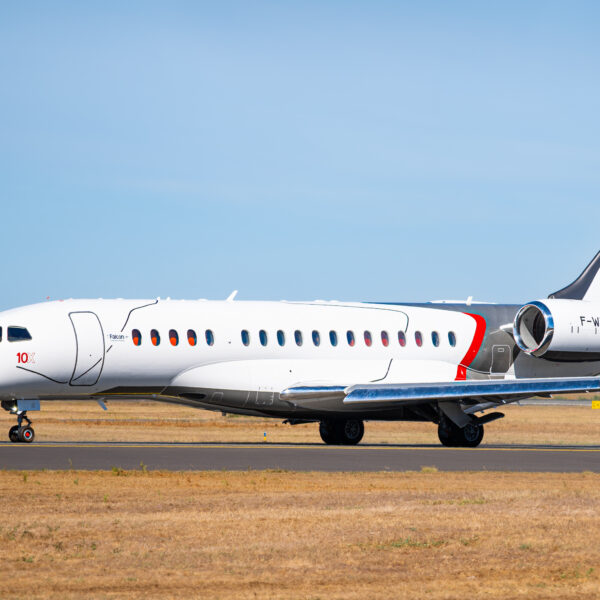
Second Dassault Falcon 10X Emerges to Support Certification Plan
The second Dassault Falcon 10X airframe emerges from final assembly, advancing the test and certification process with an anticipated 2029 entry to service.
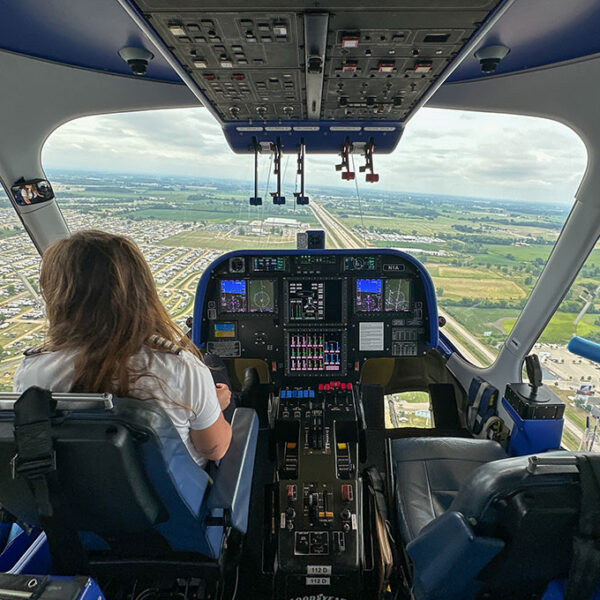
EAA AirVenture 2026 From the Goodyear Blimp
A panoramic view of the 2026 EAA AirVenture fly-in, as seen from one of the Goodyear blimps.
FAA Retires and Auctions Bombardier Global 5000 Business Jet
The Federal Aviation Administration fleet evolves with the retirement and auction of its Bombardier Global 5000 “Flying Laboratory.”
