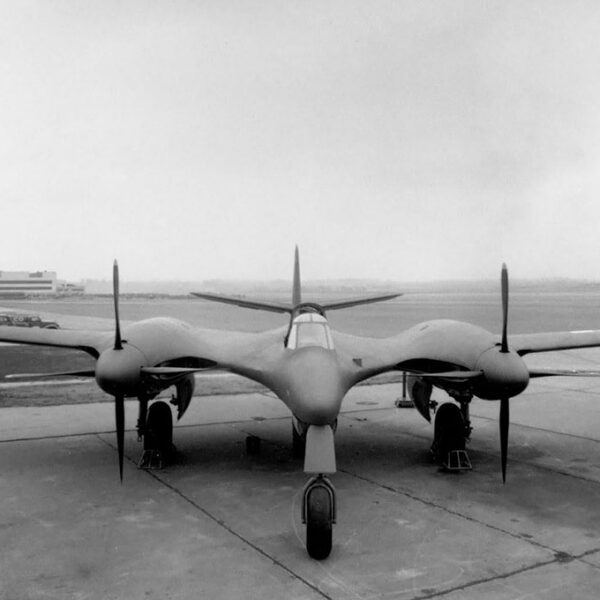
1942 Aircraft Design
In 1942, WWII was in full swing – and so was aircraft production. During that time, every US automaker was tasked with shifting production from cars to aircraft to assist with the war effort. Ford was no exception, and it dedicated its workforce and facilities at Willow Run Airport near Detroit, Michigan, to the production of Consolidated B-24 Liberator bombers.
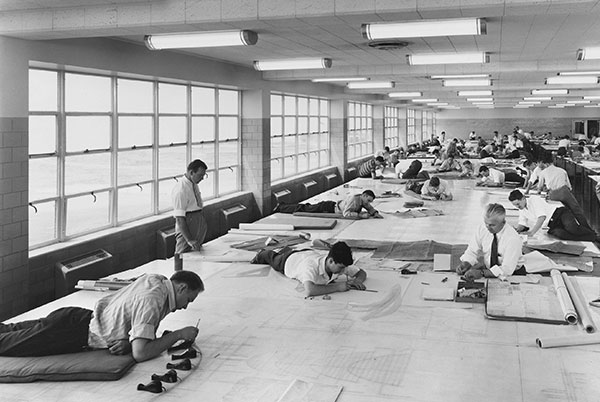
This crisp black and white photograph shows a rarely-seen part of B-24 production – the drafting and design department. One of the only areas flooded with natural light from walls of windows, drafters lie prone on massive tables as they create full-size blueprints for the aircraft being produced elsewhere in the building.
At its peak, the Willow Run plant turned out one B-24 bomber every 63 minutes. A separate area housed over 1,000 cots for flight crews to use while waiting for their aircraft to roll off the assembly line. Ultimately, Ford produced approximately half of its 18,000 total B-24s at the Willow Run plant.
Topics Related To: AVIATION HISTORY
The Spacemobile: NASA’s Secret Weapon for Winning America’s Hearts
The Goodyear Gizmo: A 290-Pound Helicopter, Inflatable Rotors, and Convertiplane Dreams