Private Jet Design: Cessna Citation X Engine Testbed
In the late 1980s and early 1990s, Cessna was motivated to develop the fastest business jet ever built. The new aircraft would become the Citation X and would ultimately go on to achieve a maximum speed of Mach 0.935 – nearly the speed of sound.
To achieve this, Cessna started with the proven fuselage design of the Citation 650 and developed a clean-sheet wing and tail section. Additionally, the engines were upgraded from the existing Garrett TFE731s that produced 3,650 pounds of thrust each to the far larger Rolls-Royce AE3007 that produced nearly 7,000 pounds of thrust each.
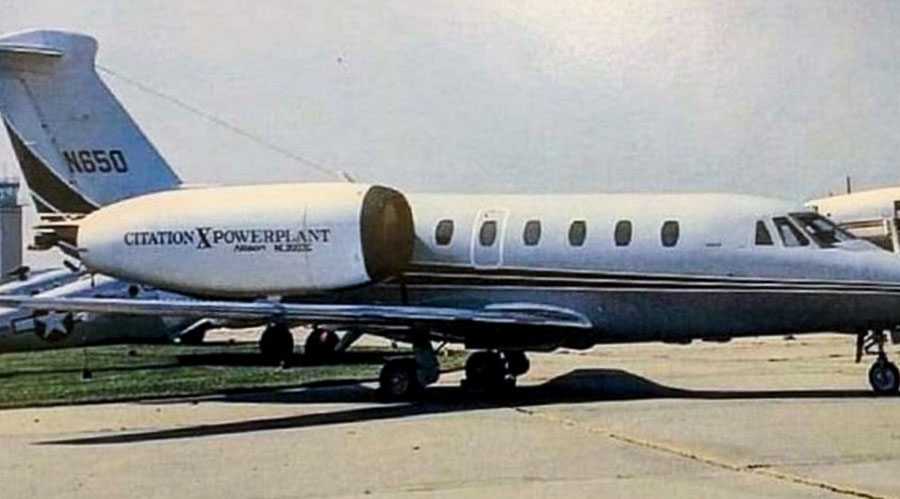
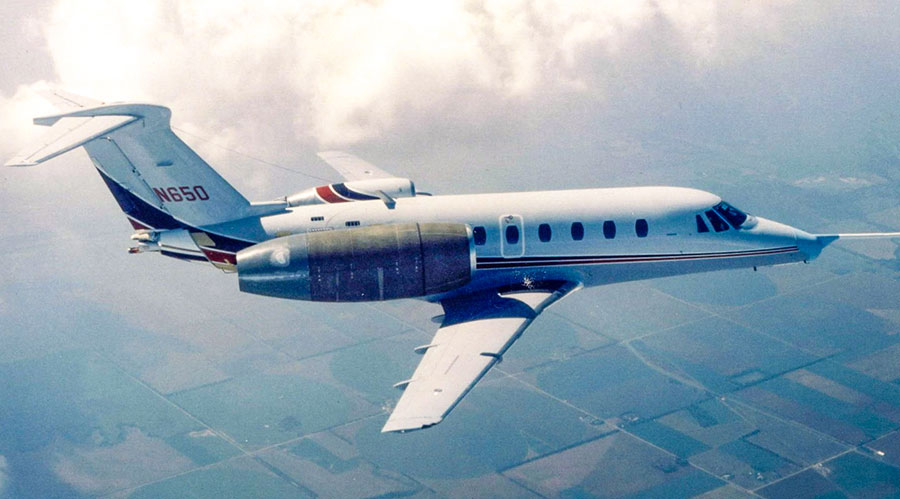
The testing and certification of a new aircraft can only progress so far on the ground. Eventually, Cessna had to evaluate the engine in flight, onboard an actual aircraft. To achieve this, they utilized an existing Citation 650 as an airborne testbed, flying it with dissimilar engines – one of which was the massive AE3007.
As these rare photos show, the resulting configuration looked decidedly unconventional. The program was a success, however, and Cessna would go on to produce some 339 examples of the nearly supersonic Citation X.
Topics Related To: AVIATION HISTORY
LaGuardia Airport, Circa 1941: Home to Luxury Transatlantic Flying Boats
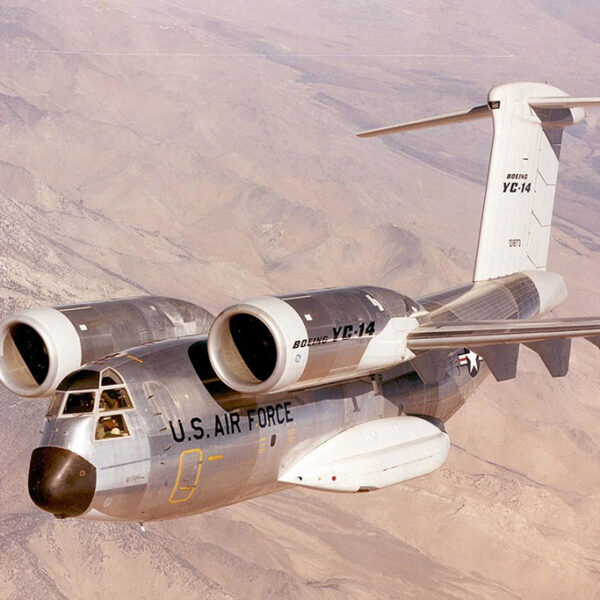
Boeing YC-14 Transport Jet Prototype